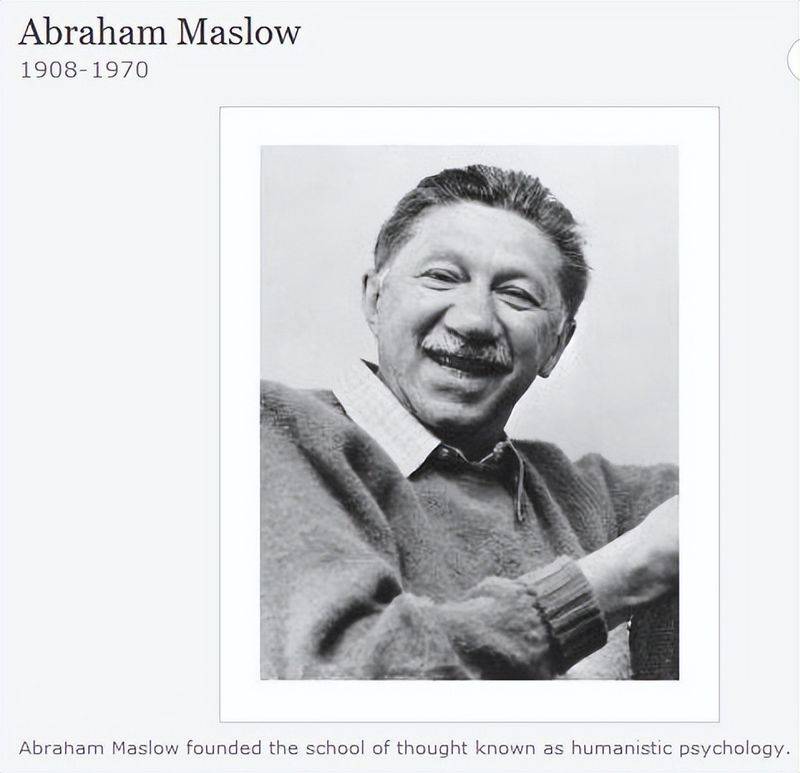
The maslow demand-level theory is the psychological theory that is often used, and here's the story for you。
Who's maslow
Abraham maslow, a leading american social psychologist and founder of third-generation psychology, introduced humanist psychology combining psychoanalytic and behavioural psychology, in which he integrated his aesthetic thinking。
Among his main achievements were the introduction of humanist psychology, the presentation of the maslow demand-level theory, which represented the works of motivation and personality, the psychological exploration of the existence, the context of human performance, etc。
Ii. Context of the mazlo state of need
In 1943, maslow introduced the theory of demand level。
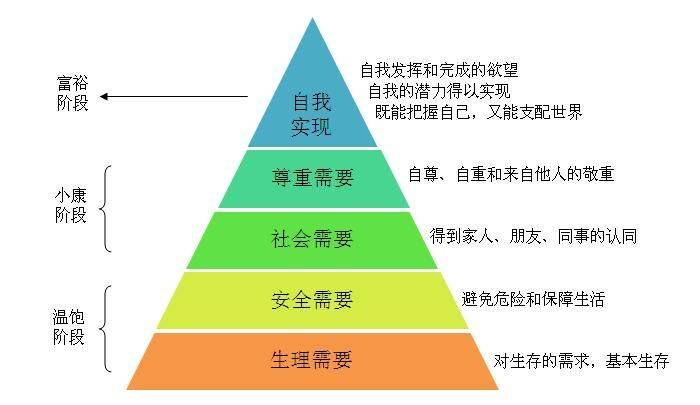
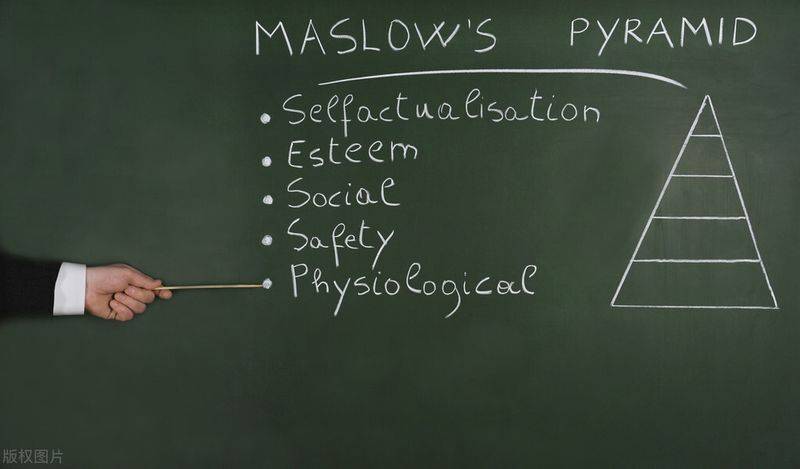
In his view, all human behaviour is triggered by need and requires systems that include five different levels, from lower to higher: physical needs, safety needs, need for belonging and love, need for respect, need for self-realization。
1. Physical needs: food, moisture, air, sleep, sexual needs, etc. They are the most important and powerful of human needs。
Security needs: people need stability, security, protection, order, freedom from fear and anxiety。
3. The need for belonging and love: a person requires emotional ties or relationships with others. Example: making friends, pursuing love。
The need for respect, expressed in self-esteem and respect for others, in recognition of their strengths and achievements, self-confidence, independence, desire for appreciation and evaluation, respect for prestige and reputation, etc。
5. The need for self-realization: people seek to realize and perfect their abilities or potential。
Iii. Relationship between the level of demand
1. The minimum level of need is biological, the intermediate level requires security, belonging and love, the need for respect, and the highest level needs self-realization。
Two or five of them need to be upscaled like the ladder. Often, when lower levels of demand are met, they move towards higher levels of need, such as the saying: “small lust, hunger and fear”, which is an image of the upward and downward shifts in demand。
3. A person may have multiple needs over the same period of time, but there is always a dominant demand that is decisive for conduct。
4. Levels of needs are interdependent and overlapping, demand will not disappear, and when high levels of demand are realized, low levels remain, although the level of behavioural impact will be reduced。
5. Levels of demand are not absolute, and sometimes people seek higher-level needs (e. G., self-realization) before lower-level needs are met。
Examples of application of the demand-level theory
At the level of enterprise management, a reasonable incentive system based on a demand-level theory
At the marketing and management levels, five consumer markets can be designed and divided at the level required, with different product combinations, marketing and marketing strategies tailored to different consumer markets。
Theoretical expansion of the demand level
The maslow demand-level theory was later extended to eight levels, including cognitive, aesthetic and self-realization needs, in addition to the original five levels. However, the five-tier theory is more widely disseminated。
Vi. Theory evaluation
The maslow demand-level theory holds an important place in modern behavioural science and is an important theoretical issue in behavioural science. It is one of the five theoretical pillars of the theory of interpersonal relations in management psychology, the group dynamics theory, the authoritative theory, the theory of need-level theory and the theory of social measurements。
But the theory has both positive and negative aspects。
Positive aspects
(1) the maslo level of demand theory points to a process of development of human needs from lower to higher levels, which is to some extent consistent with the general pattern of human development。
(2) the theory of the hierarchy of needs suggests that one needs to dominate at every time, while others are less urgent than the other, which is instructive for management。
(3) maslow needs hierarchy based on his humanistic psychology, the inherent strength of the human being being different from that of the animal, the human nature of the human being's demands for the realization of intrinsic values and inherent potential, the conscious domination of human behaviour, the purposeful and creative nature of human behaviour。
Negative aspects
(1) there are humanistic limitations to the need for hierarchy. Human motivation is the cause of behaviour, while the demand-level theory emphasizes that human motivation is determined by human needs。
(2) the demand level of the demand-level theory may not fully explain the complexity of human needs and there is a tendency to overlap in classification。
(3) the criteria and extent to be met are vague。
(4) most acts are motivated, i. E. Determined by multiple basic needs, and the hierarchy theory is not entirely clear。
References: encyclopedia