Scientifically effective performance appraisals are the subject of each enterprise manager, and sound performance appraisals not only stimulate the potential of employees but also contribute to the overall performance of the enterprise. This paper will provide you with six practical performance appraisal management methods to help you build a sound performance management system。

I. Importance and challenges of performance appraisal
Performance appraisal is at the heart of enterprise management, and it aims to optimize talent allocation, stimulate staff growth and enhance organizational effectiveness through a systematic assessment of staff performance。
A good performance appraisal system should be characterized by equity, interoperability, motivation and development. However, many enterprises often experience difficulties in data collection, vague assessment criteria and lack of feedback mechanisms in practice, leading to a formalization of the examination。
With the acceleration of digital transformation, the use of professional software tools for performance management has become a trend. Such tools not only automate data collection and analysis, but also provide an objective basis for assessment and significantly improve management efficiency。

Ii. 6 methodology of scientific performance
1. Kpi key performance indicators method
Kpi is the most common way to assess staff performance by setting quantifiable key indicators (e. G. Sales, customer satisfaction, etc.). Key elements of implementation include a control of the number of indicators at 3-5, strong job responsibilities and easy access to data. Following the kpi appraisal of a retail business, the performance of the sales staff increased by an average of 27 per cent。
2. 360 degrees full assessment
This method collects all-round feedback from superiors, colleagues, subordinates and clients and provides a comprehensive assessment of staff performance. The advantage lies in a multi-perspective and objective evaluation, which is particularly suited to managerial positions. Studies have shown an average increase of 35 per cent in employee satisfaction among enterprises using 360-degree assessments。
3. Okr objectives and key results approach
Okr emphasizes goal alignment and challenge, initiated by intel and widely used by google. It sets challenging targets (o) and 3-5 measurable key results (kr). With the introduction of okr by a technology company, the project completion rate has increased from 60 per cent to 85 per cent。

4. Balanced scorecard (bsc)
The bsc is an integrated assessment of the four dimensions of finance, clients, internal processes, learning growth and is suitable for middle and senior management. It helps enterprises to balance short-term performance against long-term development, with a 40 per cent reduction in the rate of staff loss following the use of bsc by a manufacturing enterprise。
5. Conduct anchor rating method
This approach corresponds staff behaviour to specific performance levels and is particularly suited to jobs that are difficult to quantify. Reduction of assessment subjectivity through a clear description of behaviour. When adopted by a service enterprise, the consistency of the assessment was increased by 50 per cent。
Deployment of professional tools to support performance appraisals - for example, in the case of the local intellectual shield software
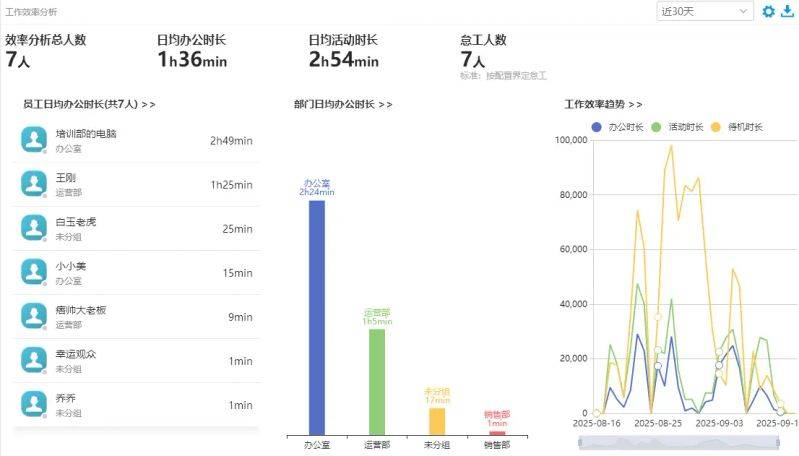
Analysis of work efficiency
Software automatically measures the effective working hours of staff on office software on a daily basis. By analysing the percentage of staff time spent using core office software, such as word, excel, cad, code editor, the system produces a “work efficiency curve”, which helps managers to identify high-impact employees and inefficiencies and provides an objective basis for performance ratings。
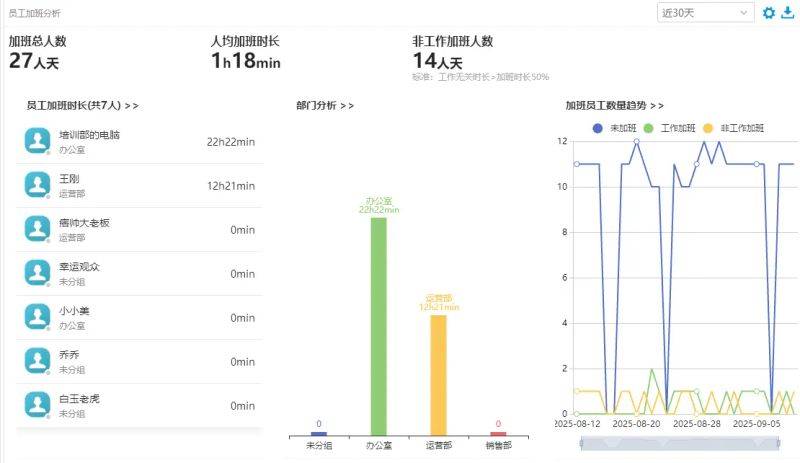
Overtime staff
Overtime is not equivalent to efficiency, but long periods of overtime may mean unequal or inefficient assignments. The software records the use of computers by staff during their daily off-duty hours, non-working hours and generates reports of overtime. The manager can therefore assess the intensity of the work of the staff and avoid “ineffectual internals” and identify and give reasonable incentives to the staff who actually do extra work for the project。
Online tracking
Short videos and shopping sites are “invisible killers” that affect efficiency. The software provides detailed records of the staff's web page access history, chat content (optional), and application usage. Managers can regularly view reports, alert or train staff who fish frequently and create an efficient working environment。
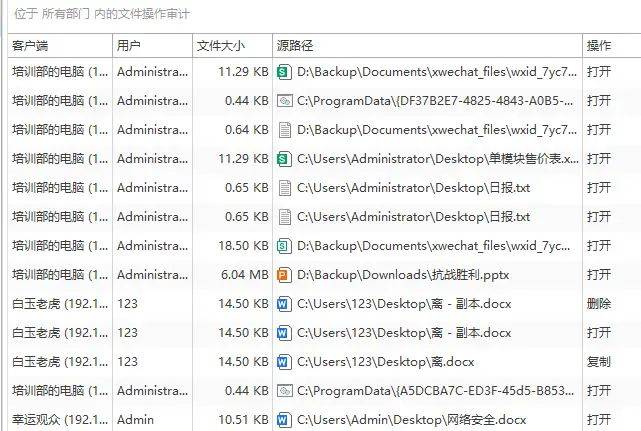
Document operation audit
Does the employee complete the document on time? Are important documents frequently modified or deleted? The software fully records the creation, opening, copying, deleting, printing, outgoing, etc. Of files. Managers can assess staff progress and accountability through document operations logs, while protecting against the risk of data loss due to error or malicious acts。
Key success factors in implementing performance appraisals
Regardless of the methods and tools used, successful performance appraisal systems require the following attention:
Clear communication objective: to enable staff to understand evaluation criteria and expectations
Focusing on development orientation: evaluation should not only be an evaluation, but also promote staff growth
Maintaining moderate flexibility: regularly aligning the indicator system with feedback
Combining incentives: linking evaluation results to promotions, bonuses, etc
Training of evaluators: ensuring managers have assessment skills to avoid bias

Iv. Conclusion: building a virtuous performance ecology
Effective performance appraisal is an important lever for business management. Through scientific methods and appropriate tools, enterprises can transform their appraisals from "necessary evils" to development dynamics。
Remember that the best appraisal systems are those that stimulate staff potential and contribute to organizational development. With technological advances, performance management is becoming more intelligent and human. Select the appropriate tool to combine business practices and create a powerful engine for growth。
Editor: sasha