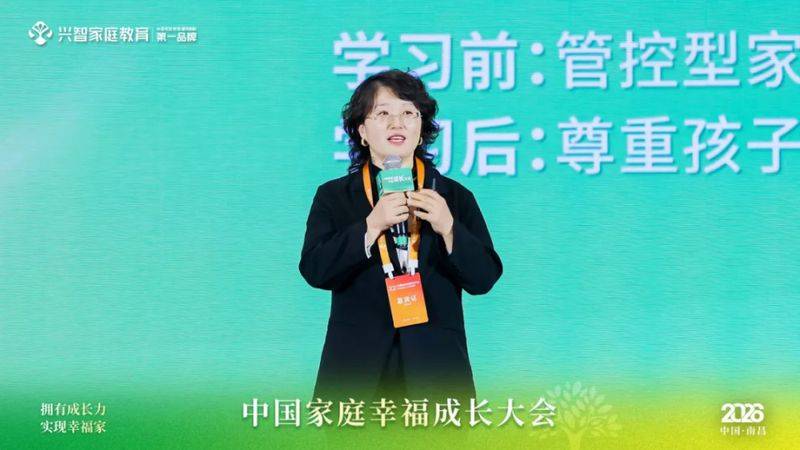
We see a general family dilemma: parents do their best to plan everything for their children, in exchange for alienation and even confrontation. Gansu's two-year-old mother, li jung chae, once devoted all his energy to his child's grades, forced him to make amends, to stare at his homework, to yell at his high frequency until the first three sons collapsed and shouted “mommy, let me live”。
This “perfect control” in the name of love is rooted in a “perfect illusion” that is criticized by existential philosophy — that parents try to take control of an otherwise uncontrollable process of growth, ignoring their limitations in intelligence, abilities and vision。
Transition is not a vague concept, but a list of specific actions that can be dismantled and implemented. It involves at least three dimensions that must be synchronized。
Communications switch, from quiz to developmental questions
From the point of view of developmental psychology, when a child enters adolescence, its core task is to construct a self-identity and answer the question “who am i?” at this point in time, questions like “does the homework work out” and “how did it work out” are not valid because the signal it sent to the child was “i don't trust you”, not “i support you”。
The real move is to shift the focus of the dialogue from outcome evaluation to process support. When a child's exam fails, replace the words “why is it so bad” with the words “which subjects make it difficult for you” or “what have you learned from this examination”. This way of asking questions allows the child to move away from psychological defence and towards self-reflection。
Deeper communication mechanisms are structured and in-depth exchanges with children in consultation, such as a weekly, undisturbed family dialogue, a focus on growth-oriented topics such as “how do you want us to support you” and “how does this thing feel” to lead the dialogue to a common exploration rather than one-sided discourse。
Layers of power delivery, from discretionary to border empowerment
Empowerment is not just a hand out, but a fine cutting of power by type of business and stage of growth. For parents, the greatest anxiety to overcome is the fear of “out of control” and the constant fear that children will turn around and make mistakes. But the theory of self-determination in development psychology suggests that autonomy, competence and belonging are the basic psychological needs of people and that empowerment is the key to meeting these needs and awakening the underlying dynamics。
In practical terms, decentralization can be done at three levels: full decentralization of personal preferences, such as what to wear, how to put toys, so that the child can experience the sense of “my choice”; firmness in safety ethics matters, such as excessive use of electronics, disrespect for others and the need for parents to implement the rules with moderation and determination; and mutual consultation in intermediate matters, such as daily screen time, pocket time, and communication of common agreement rules through parents and children。
More critical power delivery took place in the wrong scenario. When the child faces setbacks, the “breeders” need to restrain the urge to work for the child in the first place and instead direct the child to extract psychological capital from the experience. The question can be asked: “what did you learn from this?” “what are the different ways to try next time?”
It is more important to create a sense of responsibility than a hundred lectures to allow children to bear the natural consequences in a safe environment, for example, by leaving their homework behind and facing criticism from their teachers。
Evolution of role positioning, from life-sitter to stage consultant
The most profound change in the transition from “all-powerful parents” is the recognition of the role of parents as a process of dynamic decline。
The education specialist li higui has proposed a clear framework for a phased role: the school age (6-12 years) plays the role of “service parent” and allocates resources according to the cognitive development of the child, but not as a substitute for decision-making; the adolescent (12-18 years) retires from the “general manager assistant” and respects the “sovereignty” of the child, providing advice only when he or she takes the initiative; the adult period (18-25 years) is transformed into a “bank clerk”, providing only risk tips and information support, and the scepter of decision-making is handed back to the child。

The core value of parents is no longer to give “right answers”, but to help their children identify their interests and development at a critical point in their lives, such as volunteering and career choices. For example, “what are the advantages and disadvantages of different choices” in the direction of employment in this profession。
The ultimate purpose of this transition is to promote parent-child relations from vertical “care and upbringing” to equal “dialogue and co-development” and, as children move towards independence, parents also need to complete a decent “exit” from space to psychology。

A re-establishment of family relationships without losers
From the dismantling of the three dimensions, it is clear that the alternation of communication has solved the problem of “quality of dialogue”, that the hierarchy of power delivery has solved the problem of “control of borders”, and that the evolution of role positioning has planned the “pacing of exit” from the axis of time. Together, they form a whole support system, ranging from “all-powerful parents” to “growth supporters”。
In practical terms, this path of transformation is truly effective. As a result of the above-mentioned transition, the sons of li went from a full-class countdown to 13, the daughters grew into self-confident independent workers and took a double test of guidance in family education, and the family atmosphere shifted from a “root dog jump” to a warm collaboration。
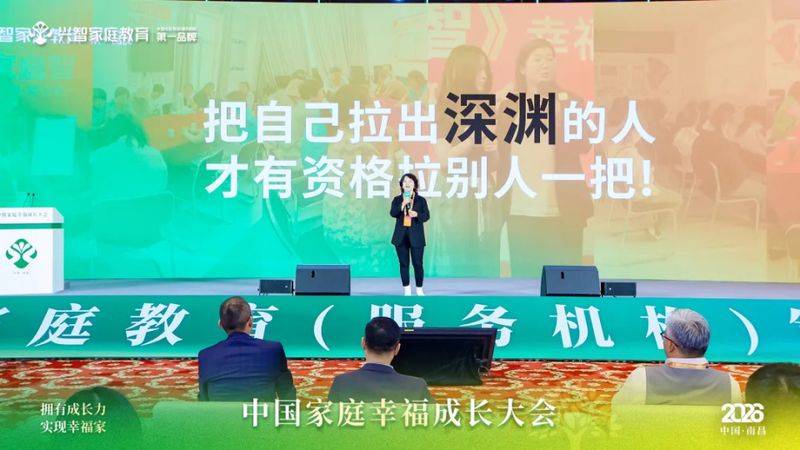
Sophie jaffi, the united states relationship adviser, also moved from “order-confrontation” to “equality-cooperation” through de-emocratization and restitution of autonomy。
At the heart of the transition lies not in “minus” or “multiple” but in the fundamental re-establishment of parents' self-perception — the acceptance of their own limitedness, the renunciation of “control” over their children's lives and the provision of precise “support”. For children, this means the activation of self-determined decision-making, a sense of responsibility and psychological resilience; for parents themselves, it is a self-fulfilling exercise that drops “perfect parents”。
Ultimately, families evolve from an anxiety-driven control system to an enabling system based on trust that supports the inner growth dynamics of children, a shift that has no losers。