Step 1: conducting analytical work
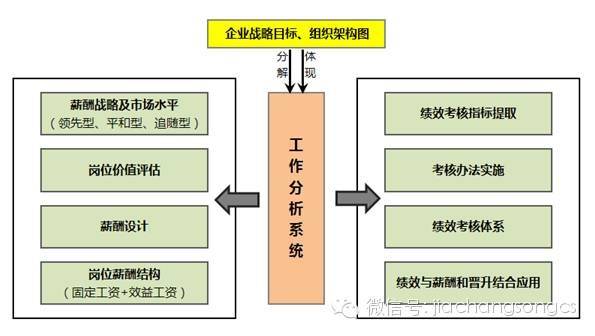
Work analysis is the basis for all human resources management, that is, the first step of the pay management system and the first step of the performance management system. [the content of this period is critical, recommended collection and forwarding]
The relationship between job analysis and the pay management system and the performance management system is shown in the table below:
Step 2: build a database of performance indicators, which is the foundation and core of the performance appraisal of enterprises。
Step 3: selection of key indicators
The indicator bank for the same job typically has more than a dozen or even 20 performance indicators, but the focus of the evaluation varies at different stages, resulting in different selection of key indicators. The selection of key indicators therefore needs to be based on the actual situation of the enterprise。
Step four: quantification of behavioural indicators, behavioural checks of business users and sustained development are of considerable importance。
Step 5: development of a performance appraisal
1 forward preparations
The development of performance appraisals is a central element of the performance appraisal system and a significant part of the overall process. In order to ensure that performance appraisals are developed in a more scientific manner and to achieve their role in promoting staff motivation and achieving their objectives, they need to be prepared sufficiently for a fixed period (expected one week) to be carried out jointly by the general manager, the finance department and the human resources department, as follows:
1) clear strategic planning established
2) development of scientific and accurate job analysis tables for posts
3) identification of annual strategic objectives
4) development of performance indicators library
5) setting standards for performance indicators
6) determination of the periodicity of the examination of posts
Role of the performance appraisal table
1) disaggregation of corporate strategic objectives can be checked through performance appraisals to be firm and implementable;
2) performance interviews based on scores from the performance appraisals to obtain managerial competence to respond to needs
(b) to promote the training component in order to achieve the goal of improving the overall cadre;
3) quality performance through performance appraisal;
(4) the selection of the company's cadres through performance appraisals;
5) a reasonable distribution of income through performance appraisal。
Step six: pass rating
The scoring points directly determine the results of the performance appraisal, which relate to the income of the person being evaluated, such as pay for performance, reward benefits, etc., and are of the greatest concern to the employee。
Step 7: develop a performance appraisal management system
[note]: the content of the performance appraisal management system needs to detail the application requirements for combining performance appraisal with pay, promotion and other accompanying assessment methods, implementation requirements (e. G. Statement of objective responsibilities, competitiveness ranking)。
Step 8: performance appraisal training
Upon completion of the development of the performance appraisal forms, the department of human resources shall organize training for relevant department personnel on:
The purpose and significance of performance appraisal, highlighting the positive impact of performance appraisal
Methodology and operational modalities for the development of performance appraisals, in particular attention in training operations
Performance communication, including pre-valuing performance communication and post-scoring performance interviews
Performance appraisal indicators and improvement of the appraisal process
Step 9: introduction of performance appraisal
The implementation of performance appraisals by enterprises is not a system that is promulgated, and then begins to be so simple, requiring extensive training, psychological counselling, prior communication and basic conditions。
(i) conditions to be met by an enterprise in applying performance appraisal:
Chief responsibility
Establishment of standards of conduct
Corporate goals are clear
Match culture
(ii) performance appraisal to promote thinking:
1) the establishment of the performance appraisal board;
2) development and promulgation of a performance appraisal system;
3) the specification of the kpi indicator bank, the kpi examination form or the five-star test form;
4) setting objectives for the appraisal;
5) training (needs/appraisal purposes, methods, duty bearers, use of forms);
6. Attitudinal adjustment;
7. Performance appraisal on a trial basis. (note: the test application has maximum effectiveness in controlling resistance and conducting adequate kpi analysis and adjustment. On the other hand, after two to three tests, the company's kpi indicators were largely captured. This will require a review of the problems and progress made in the implementation of the test, and an open discussion to create a favourable environment for its formal implementation
8) linked to remuneration;
9) revision and feedback。
(iii) factors to be taken into account in the introduction of performance appraisals by enterprises:
1) the standard of forgery;
2) vertical interference;
3) contracting; (contracting means too much letting go or not. No contract is allowed within a company, only for persons with legal personality, which is defined differently as outside cooperation while internal employees are employed
4) no objective. All performance appraisal indicators must set the corresponding target values;
5) there is no training; (train is in fact an advocacy process for performance appraisal, with an adequate appraisal system in place to at least increase the success rate of the entire appraisal system by 20%. Performance appraisals are conceived and applied not only to middle- and senior-level training, but also to general staff, so that they can be considered in a mind-blowing manner. It is important that employees are constantly inculcated in their appraisals
6. Cultural irregularities;
It is important to note that performance appraisals begin with the chairman and the general manager, rather than with the staff, and that senior management lead by example. The order is top-down, not bottom-up。
7) poor principles。
Performance appraisals must be rational, principled and not randomly modified。
(iv) implementation of the first performance appraisal (first year)
(1) indicators to be evaluated
At the beginning of the first year of performance appraisal, the number of corporate-wide indicators ranged from 30 to 40, drawing indicators for performance indicators and management maturity indicators, during which time performance indicators could be appropriately tilted, focusing mainly on simple, easy-to-collect, current-stage and quantitative indicators。
2) targets to be evaluated
First, the critical talent of the enterprise is examined, then the full staff is tested, and the test is fully completed at the outset。
3. Periodicity of examination
Senior level of the enterprise, based on quarterly appraisal
Project work, based on project cycle appraisal
The lower the position, the shorter the examination cycle
4) the link between appraisal and proceeds
Performance appraisal is linked to performance pay, 40 per cent sales or profit. Performance and profit performance wages are not paid for the time being without taking part in the examination and without a performance rating。
(5) revision of the evaluation indicators
The performance appraisal indicator matrix was not static and would need to be revised as follows:
(a) the overall market and environment are subject to policy impacts and volatility;
B) there are significant fluctuations in the performance of companies in the same sector。
In both cases, companies should propose timely revisions to performance objectives and re-interview。
(6) examination agency
Generally, the examination of subordinates is conducted by a direct superior and the initial examination does not recommend self-assessment
Group-based companies with more senior management in the enterprise could set up appraisal committees to assist the ceo in the examination nuclear
(7) examinations
Access to his superiors
Access to the department of human resources
The right to appeal to the examination commission
One-on-one consultation, two-dimensional scan