Id | bmr 2004
The story is documented in the sony free travel: the song nation, a man who has been cleaning silk for generations, has an ancestral drug of “untouchable hand” (i. E., anti-frozen acne cream) in his home and can work in the cold winter without breaking hands. In the cold winter, wu viet was at war and was informed that it was an opportunity to gain a reputation and that the formula had been purchased with money. Trades and crafts negotiate with their families: “we have baptized this medicine for generations, and we have earned only a few dollars; now, once sold, we get the money. Why not?” once he had acquired the secret formula, he went to lobby the king. In the wet and cold climate of the gangnam, the viet nam army has lost both its hands and legs and its fighting power, while the wu jun has won a great deal because of this medication, which protects him from the cold acne. The man is also in a position to gain a remarkable future through a paper formula。
It is clear that the chinese know from time immemorial that the secret formula is not only a tool of production for craftsmen, but is more seen as tradable property, and that it can jump in value through exchange. However, such transactions are entirely dependent on voluntary agreements and there is no institutional guarantee. Once sold, the original holder permanently loses its rights and does not speak of the protection of intellectual property rights. Today we come to talk about the existence of a real intellectual property and intellectual property protection system in ancient china。
01
Knowledge: apprenticeships and stealers
The legacy of technology in all walks of life is faced with a similar dilemma: how to sustain the livelihoods and strengths of the heirs while ensuring its continuity。
The student system is the main system for the transfer of technical knowledge from ancient times, and the student needs to be tested from the standpoint of his master, at considerable cost. It is taught without a regular curriculum, but in daily work. In the construction industry, for example, the most sophisticated carpenter, it usually takes three to five years or more for apprentices to learn their crafts from their masters in their entirety。
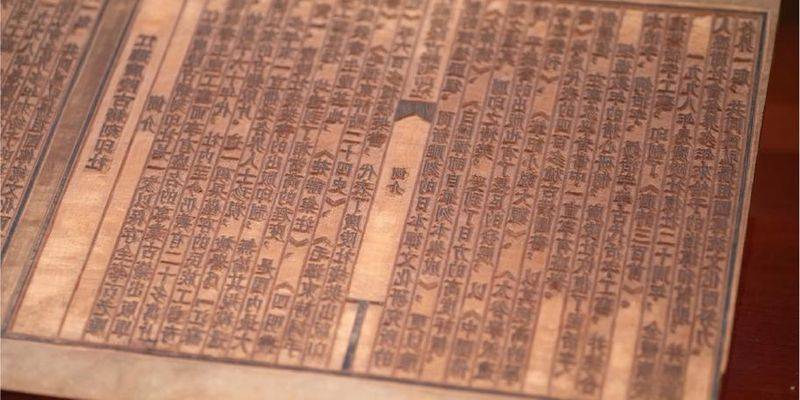
First apprentices are clearly limited in age, mostly between the ages of 123 and 14. The age is too careful to bear the burden of labour; it is too big to be easy to control. As a result, children were sent to their master's home and started working and studying。
The ceremony was solemn and contractual. Qingming's papers indicate that the apprentice is prepared to worship the teacher's gift, and that it is common to agree that sugar and meat are three pounds each and a set of tailor-made clothing and pants for the master, and that a colleague is invited as a witness to the prayer. The teacher must make three crumbs at the master sitting in the upper seat, first find a stone to put it on the ground and then have blood on it three times before he can worship him。
The parties are required to sign the instrument. In a number of competing works, it is stated that “life and death papers” are signed when worshipping a teacher, so-called “death and escape, and every destiny”. In practice, however, such usage is rarely observed. The key provision of the instruments concluded by the two parties, in addition to the identification, protection and years of schooling, is to make it clear that all work done during apprenticeships belongs to the master and to grant him the power of discipline — so-called “the abuse is the abuse”。
After entry, the actual situation of apprentices varies from teacher to teacher. If a person has sexual probity, he or she has earlier access to crafts, but most masters will put him or her to the test of long groceries, from housework to workshops, for a few months, for a year or two, often without the ability to touch a shovel or ax. This process, which is both intuitive and observational, strengthens the physical dependency of teachers。
Carpenters, as construction craftsmen's middle school, have the longest cycle of art, with the tradition of “three years and zero”. The so-called “three-year” is the stage in which basic work is performed. Apprenticeships are required to practice basic work such as sawing, scratching, scratching and cutting. After three years, it will continue for several months until a major festival, called a “section”, and the master has begun teaching core skills such as painting lines and production techniques. Even so, three and a half years is only the beginning. In the industry, there is the adage “six years out and eight years out”, which means that it takes eight to ten years to become a fully skilled carpenter。
Even after learning a lot, key skills are often deliberately retained by masters. For example, a simple “eye-screeching” process seems easy, but in fact, the production of zhidu requires a great deal of experience, which is called the “good learning of carpenters, difficult to scratch”. The precision and skill of the eyes are hard to tell, so masters often “leave one hand” and don't give away easily. This has also led to the expression “ancestral carpenters are highly skilled”, implying that real high skills are often passed on in secret between families or teachers。
In addition, masters often leave school when it comes to calculations. Such practical knowledge, known as carpenter mathematics, covers measurements, area volume calculations, conversion of scales, openings, etc., commonly found in ancient calculations, such as the zhou jiu jiu hau book of accounting, and is the essence of wood technology. As key technologies are being retained, a carpenter will often require 10 years or even decades of hands-on practice and search to become a master。
The legacy of technology in all walks of life is faced with a similar dilemma: how to sustain the livelihoods and strengths of the heirs while ensuring its continuity. Both the realization of value in secret transactions and the long academic cycles of masterry and the practice of “one hand” reflect the difficult trade-off between the transmission of knowledge and preservation. This pervasive contradiction, on the one hand, promotes the intergenerational transmission of technology and, on the other, shapes the historical trajectory of the traditional social monopolistic and slow development of knowledge。
02
Intellectual preservation: copyright and copyright
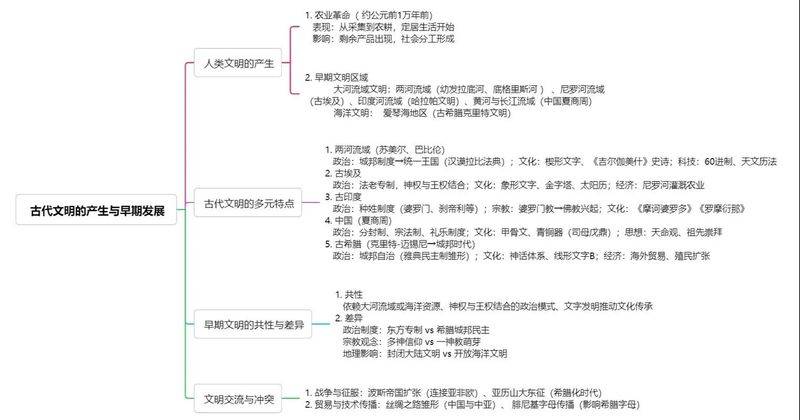
The reproduction and circulation of books is a matter of rights and interests — who has the right to control the publication and sale of a work? Is there a protection mechanism for modern copyrights in ancient china
The dissemination of knowledge using the word “book” is even more widespread when it is said that mastership reflects the technical legacy of “humans”. However, the reproduction and circulation of books from ancient times involves the question of rights — who has the right to control the publication and sale of a work? Is there a protection mechanism for modern copyrights in ancient china
During the writing process, the question of the signature, writing and forgery of ancient books has been blurring the title of some books. As far back as qinhan, in the war-torn country, there was a general disregard for the author, as in the case of the sun tzu law, for example, the words “the sun tzu”. In future generations, a sub-book named “a child” can be considered an early declaration of copyright。
Moreover, the ancient pen phenomenon is particularly common, which is in essence a disguised transfer of copyright. The writings of ancient writings, such as monuments, tombs, soothsays, public order, stairns, poetry, etc., should be available, especially in various applications. There has been a marked increase in academic work since the beginning of the day, such as the book and answer book written by the zhang mau sun, the book of the affiliated gardens and the catalogue of books written by the zaizens. From the early kings, fathers and sons, to the professional staff members who emerged in tang song, a stable supply-demand relationship has been established, whereby the signatories receive a written name or practical texts and the successor receives remuneration or livelihood security. This often separates the right to sign and create ancient chinese books。
It is also common for ancient books to be perjured. Whether it was widely disseminated by the name of the saint or stolen from him, it actually disrupted the relationship between the work and the author. There have been many scandals of theft in our history, such as the theft of guo ying to the show, the suspected theft of the king's cathedral, the theft of the shinjing book, and the theft of wang hong zaiwans and the ming dynasty. There are even cases of theft in the courts. Tang dynasty zhang zhang has written in "singhong zhi's poems" : "gon is the grass of the river and the heart is the last of spring." the concubines, as they are in the courtroom, have to be seen from the beginning, and the masters of the house have regularly changed their last words to “to be clear” and have argued for ownership of the poem. When the case was referred to the magistracy for decision, the sentence reads: “the poem belongs to hong zhi, the `twilight' is still established.”
Moreover, the use of the ancient literature is mainly in the form of “codification” and “copying”. The codification of books, general collections and annotated works is an important way of building and re-creating knowledge, but necessarily blurs the boundaries between original and new creations. The ancient practice of quoting “a bit of the text but a bit of the meaning”, unlike today's verbatim copying, has led to a deeper confusion between original and derivative, author and author。
This difference is particularly evident during the communications phase. The most common is the “workbook” before it is printed in hard copy. By definition, domestic service books are copied by someone hired to do so, as early as the time of war. According to wang jia, “the zhang yi and so qin, comrades are good at learning, with their hair cut, and they feed each other. Or writing a book without reading the words of a saint.” the famous east han historian ben was also a civil servant when he was very young. Since then, as a result of the massive spread of paper, which is easy to write, the domestic books industry has developed considerably and has created a working school class in society. Even after the proliferation of sculptural printing, there is still room for official and private literature。
Official publishing activities have become increasingly active since the widespread use of sculpture printing. In order to preserve the authority of the original, the accuracy of its content and to prevent the uncontrolled dissemination of sensitive information (such as calendars, national history, border regimes), the office has gradually established a publication control centred on the prohibition of unauthorized use. For example, tang dynasty has banned private printing of calendar days, and five generations to song's important statutes must be stamped with the permission of the state secretary. The nature of these prohibitions, mainly political and ideological regulation, is designed to monopolize the power of intellectual interpretation and publication, which is more similar to administrative concessions than to the protection of private rights。
With the boom in commercial publishing, libraries and imprinters have spontaneously developed a variety of protective measures to protect their huge investments and profits. They published the “no overrides” card to serve as a warning, and then actively sought official authorization from local governments and even from state inspectors to obtain “lists” or “public documents” prohibiting others from changing. For example, nam song wished muqi's " fan guang " had successfully applied for a local list authorizing him to punish the replicators and destroy their books. The core claim of these practices is to protect the labour and capital investment made by imprinters for editing and engraving and to prevent them from being “in vain”。
By ming dynasty, some publishers were working to prevent piracy and were specifically intended to add “placards” — similar to today's anti-false trademarks. For example, it says in an engraving note in the 44th anniversary of the moon's voice: "hang city's monopolitan bridge is published in the courtyard of li, for eight dollars each. If it's torn, it's to be treated." later on, the placard appeared in a graphy-and-sweet form. For example, in the examination book, a quaker is painted as a security mark for the book. Quisung's left hand holds the ink, his right hand holds the pen, stomps on his head, and his left foot rises. This is a complex graphic, demanding the precision of the sculptures, and it is difficult to imitate the rough-managers。
03
Logical dilemma: interests and ethics
The first written copyright law in chinese history was promulgated in 1910, marking the official foundation of the modern copyright system in china。