Automation and the spread of artificial intelligence are reshaping the underlying logic of human productive life, both as an “opportunity engine” that unleashes productivity, expands living convenience and conceals multiple risks, such as employment shocks, disclosure of privacy and misuse of technology. From smart robots in manufacturing plants to voice assistants in everyday mobile phones, from precision diagnostics in the medical field to smart wind control in the financial sector, ai has infiltrated all aspects of ordinary people's lives. This paper will examine the advantages and disadvantages of universal access to ai from the core dimensions of employment, life and security, combining authoritative data with actual cases, and will provide a technical, legal and personal perspective on a viable path to protect ai from abuse by outlaws in order to inform a rational response to the ai era。

I. The dual effect of ai's universal access: opportunities and risks
(i) good: efficiency leaps and life improvements
1. Upgrading the employment structure and creating new types of jobs
Ai is not a complete substitute for human beings, but a catalyst for the transition of employment from “repeated work” to “creative, collaborative work”. According to the world economic forum, by 2025 85 million jobs globally will have been replaced by ai, while 97 million new jobs will have been created, with a net increase of over 12 million jobs. The market is particularly marked in china, where demand for new occupations, such as ai trainers, ethics auditors, and human-machine co-designers, surged, with china's ai trainers growing at an annual rate of over 200 per cent in 2025 and salaries generally higher than those in traditional industries。
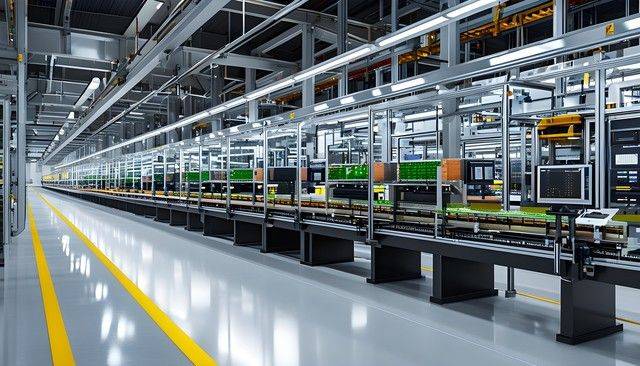
In specific scenarios, ai's enabling effects are more visible: in manufacturing, smart robots have welding precision of 0. 02 mm, far above manual levels, and “lighthouse plants” have increased productivity by more than 30 per cent, while reducing the risk of industrial injury; in agriculture, ai agricultural drones reduce pesticide use by 40 per cent, maize acre production by 15 per cent and support farmers by 30 per cent; and in the workplace, enterprises employ the “one-person + ai” model, increase effective working hours by 30 per cent, overtime by 40 per cent and programmers' income by 30 per cent on average, using ai tools。
2. Intelligence of life services to reduce the cost of living
Ai makes public services and daily consumption more efficient and inclusive. In the area of government services, there has been an increase of 70 per cent in the efficiency of the services provided by ai: in the area of health care, the ais has been able to complete the analysis of ct images of the lungs within five minutes, with an accuracy of 95 per cent, so that patients in remote areas also have access to high-quality medical resources; in the area of consumption, the electrician has recommended 85 per cent accuracy, customized services have reduced decision-making costs, a 40 per cent prevalence rate for smart households, and voice assistants have used more than 1 billion times a day, making life easier and more comfortable。
3. Knowledge and skills inclusion and capacity gaps
Ai has lowered the threshold for knowledge acquisition and skills learning. Ordinary people can learn expertise quickly through ai tools, such as ai, which generates learning notes, simulation interview scenes, and zero-basic people can quickly master skills such as office software, writing, etc. At the same time, ai promotes the equalization of educational resources, whereby students in remote areas can share resources for quality education with students in front-line cities through live ai classes and smart libraries, which is particularly important in areas where education resources are relatively scarce。

(ii) risks: challenges highlight the potential for risk
1. Increased employment shocks and increased risk of structural unemployment
Low-skilled jobs are replaced at a much faster rate than new jobs. The data show that the replacement rate of ai for positions such as manufacturing, passenger service and basic accounting is over 70 per cent, that after the introduction of ai by some of the shanghai internet companies, the proportion of former painters was 40 per cent, and that recruitment needs for positions such as primary paperwork, data entry were reduced by more than 30 per cent. The mckinsey institute predicts that 50 per cent of the world's occupations are at risk of being replaced by ai by 2030, and that over the next decade there will be or 400 million people globally at risk of unemployment, with manufacturing and services operators most affected。
The impact is also characterized by a “skill mismatch” in which the replacements are mostly low-skilled workers, while the creation of new jobs requires high educational and technical skills, leading to a contradiction between “no-one and no-one”, further exacerbating the gap between rich and poor。
2. Frequent disclosure of privacy and threats to data security
Ai relies on mass data training, and irregular data collection and use raises large-scale privacy risks. Global data leaks increased by 25 per cent in 2025, and companies such as clearview ai took billions of human face photographs without authorization for modelling training, triggering a dispute about “unsensible abuse”. In everyday life, devices such as smart cameras, social apps, etc. May expose the privacy of ordinary people to risk by collecting biological information, behavioural trajectories of users without permission, or even by speculating on the health of users, their ability to consume and their profit from data。

3. The proliferation of technology misuse, precision fraud and abuse
Lower technology thresholds dramatically increase the risk of ai being exploited by outlaws. In 2025, the national ai voice fraud case increased by 470 per cent over the same period, and technologies such as ai face change and voice-print cloning became “new tools” for fraud. Typical examples include: a transnational corporation's financial fraud by four senior executives of ai, resulting in the loss of hk$ 200 million, fraudsters falsifying the image of the executive through ai face change+scopy cloning, and completing transfers within seven hours of a layer of mating; the ai “grandsons” fraud against older persons, with over 38 per cent fraud rates and an average loss of $126,000 in individual cases, fraud by stealing samples of relatives' voices and accurate fraud with the ack voice。
In addition, there have been frequent violations by ai: in 2025, a platform used ai to impersonate an impersonator to carry false goods, violated the right to portraits and voice and was awarded $120,000 in compensation; and platforms such as shivering, tweets and other platforms disposed of the impersonating ai over 170,000 violations and blocked over 2,000 accounts. These incidents have not only caused damage to property, but have also affected the social trust system and the normal social order。

Core risk points and causes of ai abuse
(i) core risk types
1. Fraud and property abuse: the use of ai to falsify relatives, leaders, financial institution personnel, transfers, loan fraud; the use of ai to generate false contracts, refund certificates, fraudulent corporate or commercial funds; and the call by the ai voice group for mass fraud messages to reduce the cost of fraud while expanding the scope of victimization。
2. Torts and reputational damage: unauthorized use of portraits of others, sound generation of ai content for commercial promotion or malignation; ai generation of false rumours, negative videos, speed of dissemination and wide-ranging influence, causing damage to the person's reputation and making evidence and defence difficult。
Data theft and privacy disclosure: illegal access to personal information, business and business data through ai reptile technology; further theft of sensitive information using ai to analyse user behaviour trajectories and accurate delivery of malicious links or fishing websites; and irregularities in ai training data resulting in disclosure and misuse of user privacy data。
4. Public opinion manipulation and social harm: the use of ai to generate large numbers of false information, malicious comments, manipulation of online public opinion and misleading public perception; the creation of false social events videos and audio, causing public panic and destabilizing societies。
(ii) risk factors

1. Lower technology thresholds and sharp reduction in cost of evil
The generation of ai content, which used to require a professional technical team, can now be achieved with a few dozen dollars: the ai face change tool is as low as 20 yuan/minus, the acoustic cloning software can be purchased within a hundred dollars, the technical threshold and costs of ai fraud, abuse and abuse have been significantly reduced and the illicits are more likely to be involved. At the same time, the risk of misuse is further increased by the proliferation of open-source ai models, some of which do not have safety features and are subject to malicious calls that generate irregularities。
2. A lagging regulatory system and vaguely defined responsibilities
At present, ai governance is still at an advanced stage, and there are gaps in the laws and regulations against ai abuse: the cost of abuse, the lengthy process of obtaining evidence, notarizing, litigation, etc. For rights holders, the long lead times and high costs of advocacy, the platform's responsibilities, the lack of clarity on the auditing criteria for the content of ai generation, and the inadequate handling of irregular accounts. In addition, cross-platform, cross-border dissemination of ai content poses regulatory challenges and it is difficult for law enforcement to quickly locate and address abuses。
3. Weak personal protection awareness and inadequate digital literacy
Most ordinary people lack awareness of ai risks and a sense of prevention: groups such as the elderly are vulnerable to false ai information and lack a sense of identity verification; young people rely too much on ai tools to upload sensitive information such as personal photographs and sound at random, increasing the risk of privacy disclosure; and some people are weak in their ability to identify the content generated by ai, easily believing in false information and becoming victims of public opinion manipulation。
Iii. Multi-dimensional protection: the construction of a “security line” for misuse by ai
(i) technical level: construction of an ai safe “technical firewall”
1. Development of ai counter-measure technology to achieve precision identification and traceability
Under the leadership of the public security authorities, the institute of scientific research and science and technology has established a platform for the development of techniques for the detection of fraud in ai, focusing on critical technologies such as video sham detection, audio-sound recognition and real-time identification. Promote digital watermarking technologies based on block chains, add non-molecable markings to ai-generated content, trace content to the whole chain and quickly locate the source of abuse。
At the same time, the platform content review mechanism has been upgraded, semantic analysis engines based on large models have been deployed, malicious intentions such as “emergency pressure” “inducing privacy” have been identified, and the ai generation content has been graded, with a focus on personal security, minors. In 2026, the web-based services requested explicit labelling of ai synthesis information, and in 2025 more than 13,000 unmarked accounts were disposed of, with initial results。
2. Strengthen data security governance to achieve data protection throughout the life cycle
Implementation of the law on personal information protection of the data security act, which regulates “internal storage and security assessment” of sensitive personal information and important data from enterprises, prohibits illegal collection and use of biometric data. Using techniques such as privacy computing, federal learning, and so on, “raw data are unobserved, data are not visible”, and security barriers are created at the data collection, storage, use, processing, etc。
Regulate ai training data management, screen strictly training data, filter false and irregular content and prohibit unauthorized personal data training models; establish data use auditing mechanisms to regularly review data flows and detect and correct data misuse in a timely manner。
3. Optimizing ai model design and embedding safety protection mechanisms
Embedding a “security fence” in the development phase of the ai model to intercept malicious input, filter out irregularities and prevent the model from being misused to produce false and harmful content through techniques such as a rule library, negative sentencing model, etc. For ai models in high-risk areas (e. G., finance, government, medical), emergency measures such as “blasting” “one-key controls” are put in place to ensure rapid intervention to stop damage in extreme cases。
Increase model interpretability, clarify algorithm logic, and avoid "black box operation"; train the model confrontationally, reduce its risk of being injected into the alert, and enhance its resistance to interference。

(ii) legal and regulatory aspects: improvement of the "system of institutional safeguards" of ai governance
1. Improving laws and regulations and clarifying standards of responsibility and penalties
(b) expedite the improvement of legislation in the area of ai and introduce specific regulations such as the artificial intelligence security regulations to clarify the legal liability of ai for abuse and to increase the cost of fraud and abuse. The new cybersecurity act, which entered into force in 2026, introduced a “ai security control” chapter, requiring enterprises to establish an ai security management system and impose high penalties on offending enterprises。
The supreme people's court, in conjunction with the relevant authorities, has issued a special opinion specifying strict penalties for crimes committed using “deep synthesis” in accordance with the law, detailing the characterization of cases and the criteria for sentencing, and issuing typical cases to enhance the warning effect. At the same time, international cooperation has been promoted to sign the ai international convention on security governance and to work together to combat abuse across borders。
2. Strengthen regulatory synergies to achieve chain-wide control
Establishment of a dedicated ai security regulatory body and of a coordinated inter-sectoral regulatory mechanism to form a governance structure involving government, business, industry organizations and the public. A classification-based regulation of ai applications, a filing and periodic audit of ai applications in key areas such as finance, government and health, and strict control safety thresholds。
Strengthen the control of the ai technology platform and open-source communities by requiring the platform to establish a blacklist of ai content and to impose penalties such as blocking and freezing of account numbers that generate irregularities; and by urging open-source communities to improve model auditing mechanisms and prohibit the dissemination of malicious ai models。
3. Implementation of platform responsibilities and self-regulatory governance mechanisms
Clarify the primary responsibility for reviewing the content of the internet platform and require the platform to establish an ai-generated content identification system for timely disposal and retroactive reporting of non-compliance. Platforms such as tweeting and wireless have established an ai content governance mechanism, which cumulatively disposes of over 170,000 anti-fashion entries and ban more than 2,000 related accounts, providing industry with reference models。
Promote the development of an ai governance self-regulatory convention by industry associations, induce companies to comply with their own laws and regulations, strengthen internal compliance management, establish an ai security assessment and emergency response mechanism and proactively protect against abuse risks。

(iii) at the individual level: enhancing the "self-protection" of the ai era
1. Increased risk awareness and capacity for identification
Actively learning about ai security and other fraudulent techniques such as ai face change and voice cloning, recognizing that “the eyes may not be true, the ears may not be true”. Non-discretionary distribution of sensitive information such as personal photographs, sound, id numbers, etc., on social platforms, on unknown websites to avoid disclosure of privacy data; vigilance and lack of easy trust in the video, audio, contract, etc. Generated by ai。
2. Regulate operational behaviour and secure personal security lines
An “security code” was agreed with family members and colleagues, and in the event of urgent requests for transfers, loans, identification was verified by a code to avoid fraud by ai. In the case of large funds transfers, the principle of “three questions” is adhered to: identification of the other party, verification of the authenticity of the matter, verification of the transfer information and, if necessary, confirmation by means of independent channels such as telephone, face-to-face and so forth, without clicking on alien links or downloading suspicious software。
Groups such as the elderly, minors, etc. Need to be protected, and families can assist in the installation of ai security software and regularly conduct fraud prevention education to improve their ability to identify ai risks。
3. Improved digital literacy and proactive adaptation to the ai era
Active learning of skills in human collaboration and proper use of ai tools to avoid overdependence or blind exclusion of ai. Attention to ai security policy and cases, access to ai risk warning information through official channels, active participation in ai security awareness campaigns, and awareness-raising for themselves and others around them. At the same time, it actively participates in ai governance monitoring, providing feedback on ai abuse through official reporting channels, and working together to preserve healthy ai ecology。
Conclusion: balancing opportunities and risks
Automation and the spread of artificial intelligence are an irreversible trend of the times, which brings opportunities for employment advancement and quality of life to the general population, as well as risks such as employment shocks, disclosure of privacy and misuse of technology. Protecting ai from abuse by outlaws is not an obstacle to ai's development. Rather, it is a concerted effort to keep ai at the service of human well-being through technical, legal and individual synergies。
For ordinary people, there is no need to overwhelm the negative impact of ai. The key is to proactively improve digital literacy and risk-prevention capabilities and rationally manage the ai tool. For society, there is a need to continuously improve the ai governance system, balance innovation and security, and allow ai technology to develop well on the normative track. Only then can ai truly become a “positive energy tool” for enabling life and advancing social progress so that everyone can share development gains and avoid security risks in the ai era