From 27 to 31 march, the nuclear free campaign unit of the lung department of the marine school led a competition on prevention and control on the line of “breathing, mental health” at the u. Weihai city center for disease prevention and control, the weihai city tuberculosis control and control centre and harbin industrial university (weihai), shandong school of transport, shandong school of medicine and food profession, and weihai institute of professionals. The campaign aims to spread knowledge about respiratory diseases, raise health awareness among youth groups, disseminate knowledge about tuberculosis prevention in innovative forms and help build healthy schools。
The event was based on a web-based platform based on a micro-intelligence applet, with participants entering the platform via a micro-intelligence scan of 2d codes, completing 50 random grouping titles within 30 minutes, automatically scoring the system, and achieving a comprehensive assessment of the correct response rate and response time. The subject of the competition is a three-tier stereothesis library of basic cognitive, clinical and social prevention and control, in which basic cognitive topics cover core knowledge of the pathogenological characteristics of tuberculosis, typical symptoms, and the route of fluoride transmission; clinical treatments focus on diagnostic techniques, standardized treatment programmes and drug resistance to tuberculosis; and social prevention and control groups focus on school prevention and control points, and norms for close contact screening. At the end of the answer, 65 students, such as zhu ji yi and li chi-chul, received first-class awards, while a further 65 received second-class awards and 130 received third-class awards, with all the students awarded awards and fine prizes by the organizers. The activities cover the student population of the school and surrounding institutions of higher learning, and the participants are ready to respond to time-limited questions at any time, break geographical constraints and expand their outreach, fully reflecting the ease and dissemination of online activities。
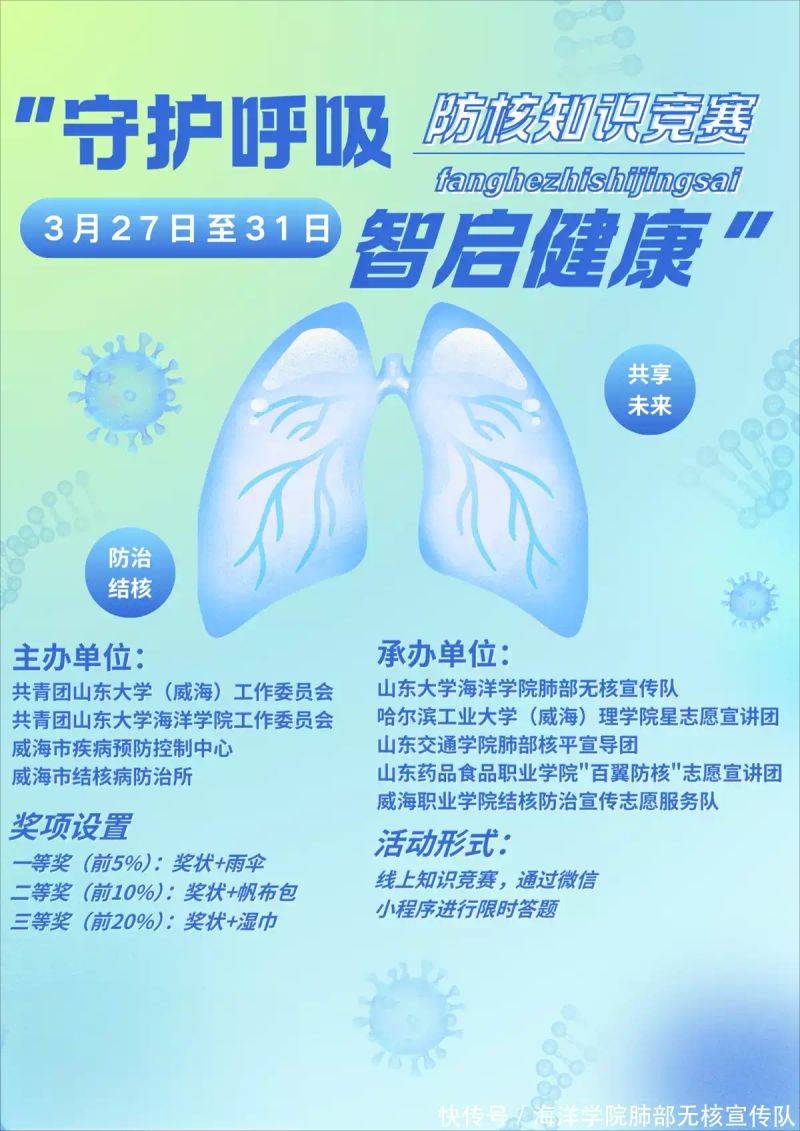
The total number of participants in the event reached 1290, which is the starting point for health education, as well as an innovative attempt at co-ordination and technological empowerment in schools, effectively raising awareness of tuberculosis among the youth population. The successful organization of the knowledge contest not only validated the effectiveness of online and offline communication models, but also provided practical experience in public health education, helping young people to grow from “health learners” to “public health practitioners”. In the future, the lung-free advocacy team will continue to be proactive and innovative in its forms and content, promoting the transformation of young people from “passive receivers” to “health advocates” and instilling youth power in building public health protection networks。