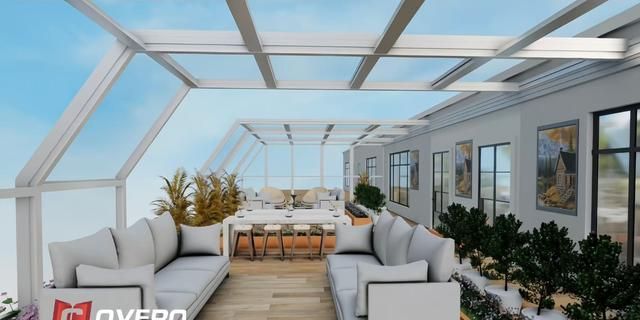
The construction of the sunshine house on the top floor is ushering in a shift from “capturing a glass house” to “building an intelligent microstructure”。
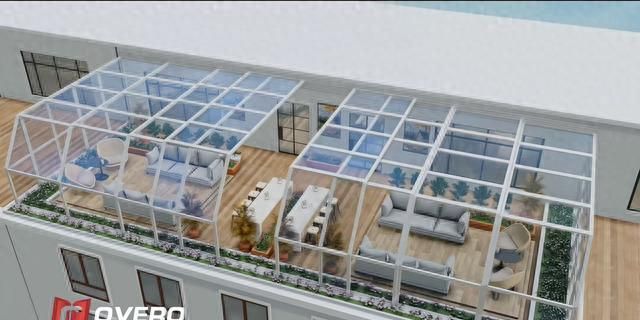
Over the past few years, a large number of owners have been at risk of demolition because the installation of fixed sunlight houses has been found to be counterproductive, and the industry is now reshaping this space through materials technology, policy compliance and smart equipment, which is being redefined from a legitimate, safe and comfortable perspective。
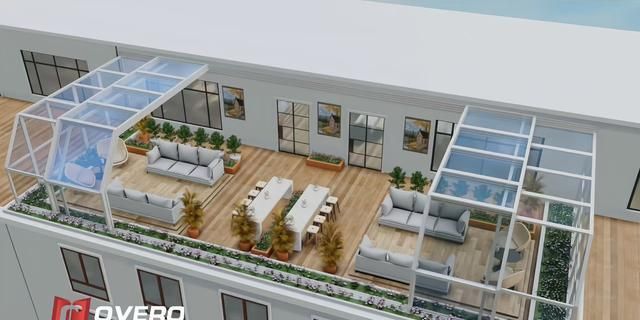
The greatest contradictions in sunlight rooms have always been concentrated on temperature control, water protection, structural strength and ventilation。
The top floor, unlike the garden house, has a stronger wind pressure and a higher temperature differential throughout the year, with more direct sunlight。
Many owners have experienced the “vapouring cage effect” in the summer, and winter has become a “crawl hole”。
There are many reasons for this。
Traditional monolithic glass or plain pc plate insulation is limited, and sunlight can rise by more than 10 degrees for hours。
The new generation of solutions emphasizes the insulation and the synchronization of the light, which can effectively reduce infrared penetration through double-gauge glass, anti-uv pc plates, and reduce body temperature in sunlight exposure by 8 to 12 degrees celsius, which is equivalent to a third of the energy consumption of air conditioning。
Waterproofness and structural stability are the second gates of the top floor sunshine house。
Many owners found pouring water in the rain half a year after completion, and the walls had a bad body as a result of inadequate drainage slopes and error in the design。
The top-light house must have a drainage slope of between 1. 5 and 2 per cent, and the width of the catheter must match that of the sewer pipe to avoid a return flow when the rainfall is excessive。
The silent flow system that emerges on the market, based on the tfl slider, not only reduces the noise at the time of discharge, but also conceals rainwater harvesting tanks at the bottom of the orbit, and discharges smoother, thus eliminating the constant “tinking” in the rain。
With respect to wind resistance, aerial-heavy aluminium and multipoint fixed nodes have become the mainstream design and remain equally resistant to deformation in upper environments above phase 8。
The issue of ventilation has been underestimated。
Many of the stationary sunlight houses are completely sealed, the summer air is non-frozen and the moisture condensed into fog, causing wear and tear to the interior furniture。
Electricly mobile sunlight houses create conditions for air circulation by opening roof structures。
Side-windows are designed to allow thermal air to rise naturally and the lower cold air enters from side to side, forming a “coast effect” ventilation path。
Some of the high-end models have also added automatic induction breathing windows, real-time monitoring of indoor humidity and temperature, self-regulating alignment and self-regulating of sunlight rooms。
The most difficult issue for building a safe and legal roof house is not technology, but compliance. Since 2024, the land administration has intensified its inspections of irregularities, particularly against the top-season stands。
Fixed steel structures that weld sunlight houses can be easily identified as changing the building body and falling within the category of illegal construction。
On the other hand, electric mobile sunlight houses are regarded as temporary facilities in most areas by means of disassembly, removable and mobile structures, and are not generally considered illegal as long as they do not change the weight of the subject and become residential space, through the property and municipal reporting procedures。
This type of structure is often defined as a “mobile sunshield”, which is a “low-volume-disturbing area” in many areas of the renovation filing standard and is not included in the calculation of building space, which also contributes significantly to the compliance of sunlight houses。
In addition to policy easing, another key to compliance is the “right to sunshine”。
A number of inter-resident lawsuits have shown that even high-end materials and installation regulations may be found to affect the interests of others and may be required for demolition if the sun room is so high that the neighbor's window is so heavily shielded that light is insufficient。
Owners should design to ensure that the overall altitude and external surface reflectivity are in line with the small area design guidelines, and that glass reflectors do not directly reflect neighbouring dwellings, a problem that many owners ignore but have a significant impact。
Intellectualization is bringing about a qualitative change in the sunlight room。
In 2025, brands such as copairo introduced the wind and rain intelligence response system, an integrated product network sensor technology。
When wind speeds exceed level 6 or a rainfall signal occurs, the system automatically closes the roof and locks the structure to avoid rain intrusion。
Such active protection is more reliable than manual manipulation for owners who often travel or leave their homes for short periods of time。
Smart electro-controlled luminous glass is also becoming widespread, inside it is an electro-controlled liquid crystal layer structure that allows glass to shift from transparency to sand through mobile phone control, while ensuring that light is extracted while preventing strong sunlight and ultraviolet light。
Such materials have an advantage over conventional low-e glass in terms of energy consumption and privacy protection, and some high-level projects have been standardized。
Energy use became a new feature of the sunshine room。
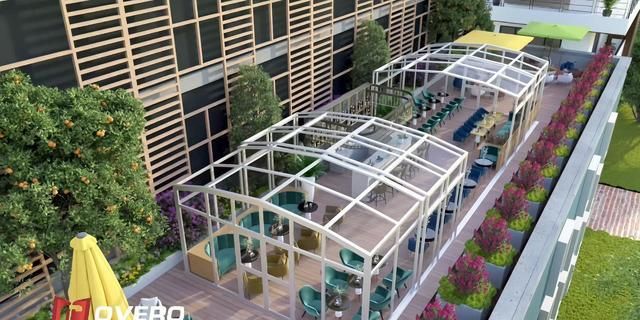
Some projects began piloting the integrated design of bipv solar energy, with flexible photofilms installed on the roofs of sunlight rooms, generating power that not only drives the electric roof system, but also provides lighting and ventilation。
For top-floor households, this has resulted in savings in electricity costs and self-cycle energy capacity in space。
This direction of development is in line with the distributed photovoltaic construction policy advocated by the state and has greater outreach value in urban renewal。
Thermal insulation and energy-saving standards are being upgraded as materials technology is upgraded。
The traditional single silver low-e glass is no longer sufficient to meet the needs of high-temperature areas, and the single silver low-e glass becomes a new mainstream product because of its ability to block more than 90 per cent of infrared radiation at high light。
While costs are higher, the long-term savings in energy consumption and comfort gaps in air conditioning are sufficient to offset initial inputs。
This difference is particularly evident for families wishing to use sunlight rooms as leisure areas or study rooms。
Safety remains the final bottom line for all designs。
The destructive power of high-level wind pressure cannot be ignored, and many owners have been exposed to the risk of swings and slippages due to poor connectivity to sunlight houses。
The use of aviation-grade aluminium alloys, thicker connectors and additional base anchor points has become industry standard, and some brands have added truncable seismic structures at connection nodes to absorb wind oscillations and extend their useful lives。
Structural security concerns not only property, but also the safety of top-level households and neighbours, and the entire chain of responsibility is held accountable once the high-altitude components are removed。
Sunshine houses are not just glass houses, but also extensions of residential functions。
For many families, it can be either a recreational area, a growing area or a gymnasium, which requires a comfortable environment, light and constant temperature。
In the past, many sunlight houses have been left idle because of too hot summers and too cold winters, and today smart sensor systems and new material technologies make this space truly available for four seasons。
The central step before installation was to identify needs: whether to make a teahouse or a rest area, and different uses determined ventilation, shade angles and lighting options, which also affected material selection。
The most often neglected aspect of building such a space is maintenance。
Although there is an automated system, orbits and sensors require regular clean-up。
Dust or leaves jamming drainage and sensory vents prevent the equipment from working properly。
It is recommended that owners inspect drainage vents and slides once a quarter and keep sensors clean to prevent miscalculation of automatic switches for weather conditions。
For housing authorities, the future approval of the sunshine house will be more intelligent and modular。
The focus of the compliance review will gradually shift from “closure” to “disruption of the main structure” and “dismantling capacity”。
This means that electric mobile sunlight rooms, light steel aluminium assembly structures will be mainstreamed and welding fixed structures will be phased out。
For owners, timely understanding of local policies, advance reporting and retention of construction drawings and product testing reports are the most effective means of avoiding later disputes。
In the longer term, the future of the sunshine house will combine energy conservation, intelligence and the rule of law。
Energy efficiency represents the evolution of materials and designs, the enhancement of intelligent representation of experience and security, and the rule of law represents the boundaries of sustainable use of space。
A legal, comfortable, low-energy sunlight house is not just a space for personal transformation, but a microcosm of the city's green architecture。
When the sun is used in science, when the wind and rain are automatically sensed, when regulation and technology find a balance, this top space can truly be a window of coexistence between man and nature。
Owners should consider compliance, materials, intelligent functions and long-term maintenance costs in a comprehensive manner, taking into account their own needs。
The emergence of mobile sunshine houses has allowed more families to see a viable alternative, which has addressed the pains of sunlight houses over the years and has responded to the trend towards sustainable and intelligent construction。
In the coming years, this light-quantitative, intelligent, microsystemized sunlight house will become a new windfall for urban housing upgrades, leaving the top floor no longer a blind zone in the storm, but the best stage for architectural aesthetic and technological integration。