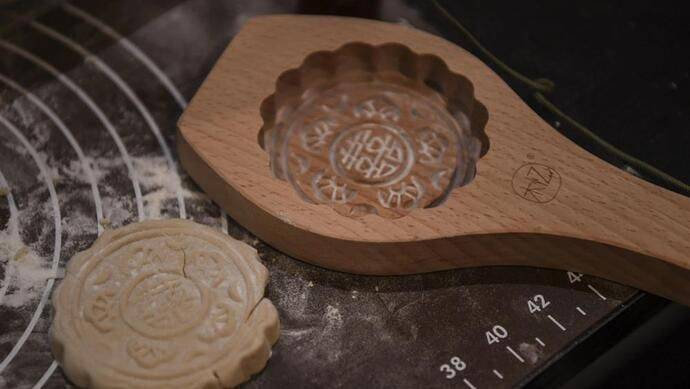
What is the "six animals" of the "sive valley"? How much do you know about the ceremonial manners of eating in the traditional chinese family, which is well known as the "house of bells, sons of poetry"? What generation does the modern man like to eat in a barbeque
China, which has a long history of eating and feeding, has also created a culture of excellence. A recent official exhibition at the national museum of china's ancient food and culture brought to the public a more historic “china on the tip of the tongue”。
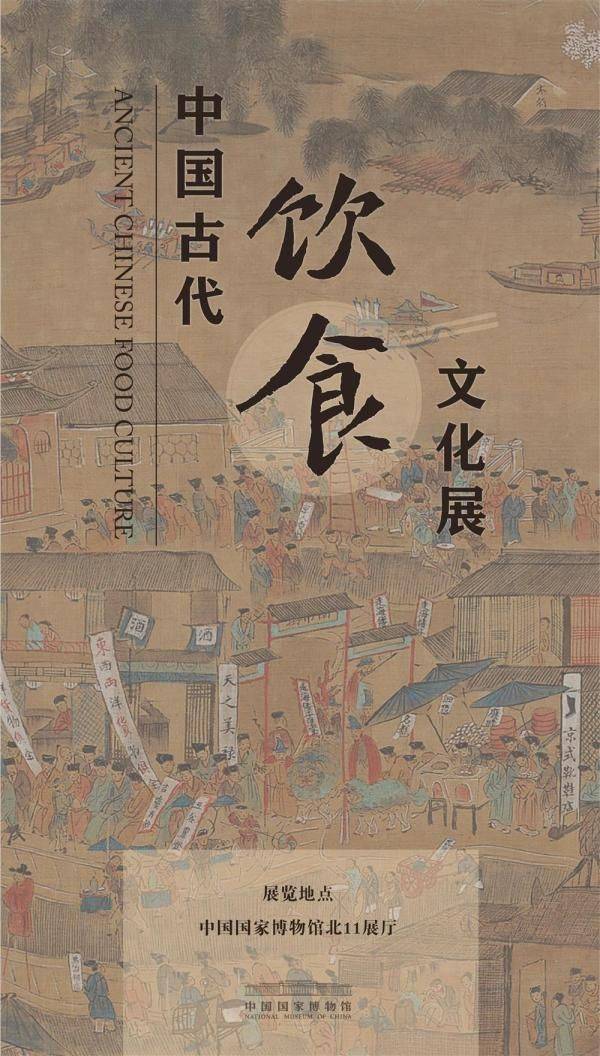
Posters
The exhibition was divided into five units, “the change in the chords” of “lin's spectrum” and “the first meal” of “the first meal” of “the first meal” of “the choreographer” of “the spectrum”, with over 240 items (sets) of selected objects, from different perspectives, such as food products, appliances, crafts, etiquette, etc., which presented a comprehensive picture of the evolution and cultural content of china's ancient eating and eating culture and provided an in-depth account of the chinese eating culture。
The first module of the exhibition, “from all sides”, shows the origins of food, meat, vegetables and vegetables, the spread, breeding and storage of livestock. The display of carbonized rice from the western slopes of mothorn hills, the ancient city of neostone, shows that china is the origin of two major crops, imitation, and the first place to domesticate animals such as dogs, pigs and chickens。
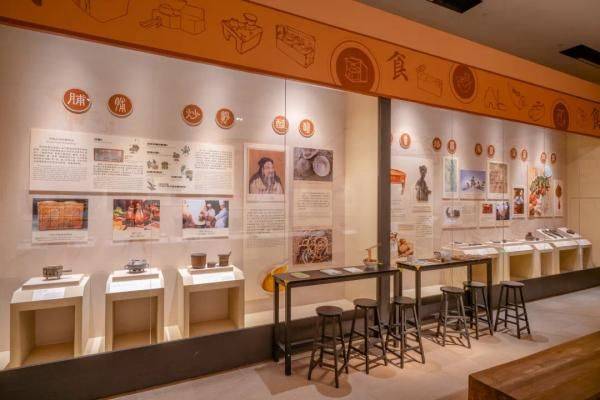
Exhibition site
The dietary patterns of chinese food and meat are well established in prehistoric times. Compared to the western structure of carnivores, chinese diets are more scientifically rational. It enables the human body to obtain a rich and balanced nutritional component from all types of food. It also fully reflects the cultural diversity and unity of chinese diets。
The second module, “tea fragrance”, presents the culture of the birth, processing, drinking and derivative of wine and tea。
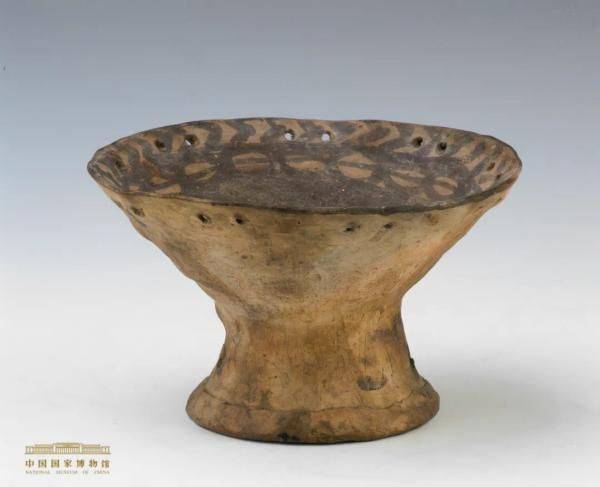
Taste beans, neo-stellar culture (3200 b. C.-2000) 11. 5 centimetres high, 18. 6 centimetres caliber, 11. 2 centimetres diameter
The chinese pioneers had acquired the technology of brewing wine long ago, and the making of alcohol should also be brought into being. More than 4,000 years ago, a large amount of alcohol was found in the dragon mountain cultural heritage site, and it is known that the wine was made on a considerable scale。
For culture, there is much more to drink. The display of “twirling water flow” refers to an ancient wine gathering in front of which a river of water flows down a glass of wine in front of the stream, and whoever floats in front of it, will drink it all up and will sing poetry. It can be seen that it is the quantity of alcohol and the text that is needed to get to this table。
Alcohol and tea make the diet of the ancients more artistic. The poems on wine and tea written by the literary ink also together constitute a rich culture of chinese wine and chinese tea。
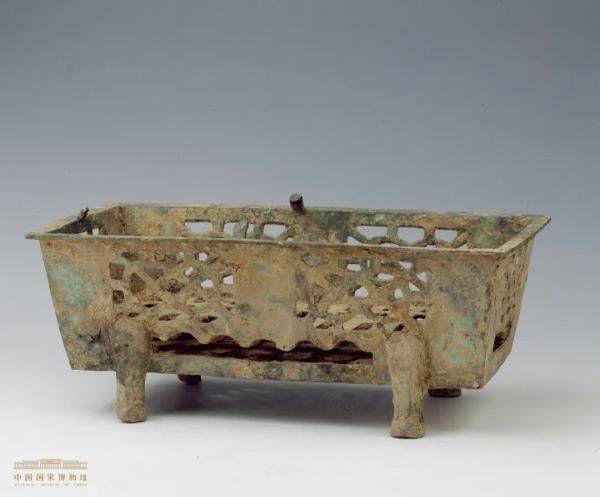
Bronze oven, han. 39. 5 cm long, 22 cm wide, 15. 2 cm tall
The third module, "lin xiaomei" , is based on dietary appliances of various materials, demonstrating their importance in the ancient chinese eating culture. From the beginning of the new stone age to the generation of pottery, metal and china-based food appliances, china has witnessed the evolution of its civilization。
The display of a neo-rockite-era culture-colored pottery mouth with 18 piercings, with dark brown twilight folds, shelllines and grid threads drawn from top down. Since the new stone age diet is based on the presence of people sitting on the ground and the utensils are placed on the ground, the colours in the beans can be seen by the eaters and have the added value of eating。
The fourth module, “changing through,” presents the processing of food products, cooking of vegetables and literature on diets, and the cultural ideas that have been developed. As the saying goes, “water is not good,” but the wise ancient chinese have made “fire is good” in cooking: if there is a thin separation between water and fire, they can coexist. For thousands of years, chinese cooking has been dominated by steam and cooking。
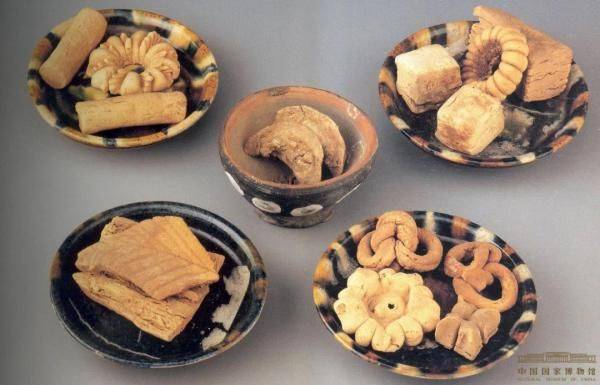
Creaming, don
The display of the han bronze barracks is already close to the “baking” stove that modern people love. The hande society has a popular diet of roasted wine. Bronze ovens are the tools that people use to roast. When used, there is a coal fire inside the stove, with a meat string or a large piece of meat on it。
The handai is also an important period in the history of china's dietary culture, which has laid down a basic diet for more than 2,000 years in the next century in a variety of areas, including food storage and processing, staple food production, cooking and eating habits. The food culture of the different peoples is constantly assimilated to the chinese food culture, which has evolved into a unique chinese food culture in the world。
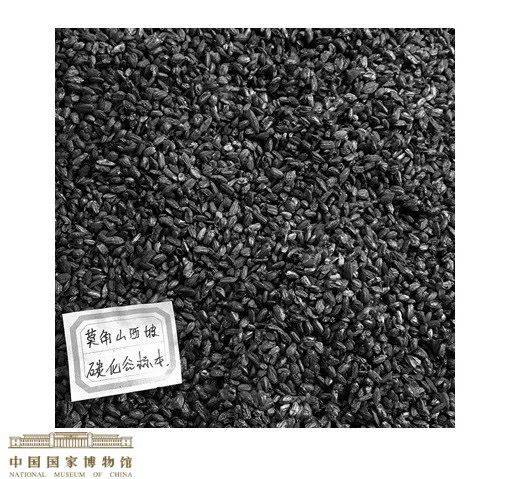
Zhejiang province institute of archaeology
Also included in the exhibit are snacks from 1972 at the tomb of astantan in xinjiang. Over a thousand years later, the word “favourable” was retained. The main food structure of the people's diet changed during the period of hutang, and the main food staple, the wheat-like alien army, surged and became the main food staple in the north. Pasta has reached all levels of society and there has been a significant increase in pasta processing and cooking. This period ushered in a new era of pasta. The well-developed policies of transport and openness have resulted in a steady influx of extraterritorial pasta varieties and methods of production, and have been favoured by the “frozen spots” of waffles, luós, etc。
The fifth module, "eats at the beginning", describes the relationship between "eats" and "girls" and explains the evolution of the diet and its profound impact on chinese culture。
“the beginning of the gift, the beginning of the diet”, the symbol of ancient chinese civilization, is based first and foremost on diet. The practice of worshipping ancestors and gods must precede the diet, which has intensified since the birth of the neostone era, until the week of commerce. The rituals from the combination of the name of the food organ to its use, from the form of the meal to the level of cooking, from the way the food is fed to the level of the feast, all of which emphasize the hierarchy. The qin scriptures of the qin era give a detailed account of the food rituals, many of which have had a profound impact on future generations。
Editor-in-chief: li juna