Executive summary: freud's personality theory contains two basic ideas: that a person's behaviour is determined by his character, which is determined by the complex experiences of his childhood, so that a person's choice of conduct in a moral context is not much “free will”. Among the factors of personality, the power of reason is weak, and the power of domination is irrational. These ideas challenge the traditional notion of free will and reason in ethics, which must be accepted。
In modern psychology, freud was the first psychologist to systematically study the personality, and his work was extremely far-reaching and incalculable in promoting research on humanities and human behaviour in relevant disciplines. Although freud is a psychologist, today many people acknowledge that his mind is even more influential in many humanities than in psychology。
In freud's psychology, personality is seen as a psychological mechanism of internal control behaviour, which determines the character or pattern of behaviour of a person in all given situations. Freud believes that a person's personality is made up of three systems: me, myself and beyond. Among them, i am made up of the energy of the various biological instincts of human beings, the force of congenital genetic factors in the human body, which are at an entirely unconscious level, the only function of which is to satisfy biological needs in an instant to remove stress. The way i ask for physical needs to be met is through primitive reflectors in the human body and psychological processes of origin, i. E. Wishes, such as the contraction of the stomach of a baby as a result of hunger, and the corresponding desire or imagination for food. I am irrational, not bound by the rules of reason and logic, and without any elements of value, ethics and morality, but by the principle of happiness. I am at the heart of human biological instincts, the source of all the dynamics of human behavior。
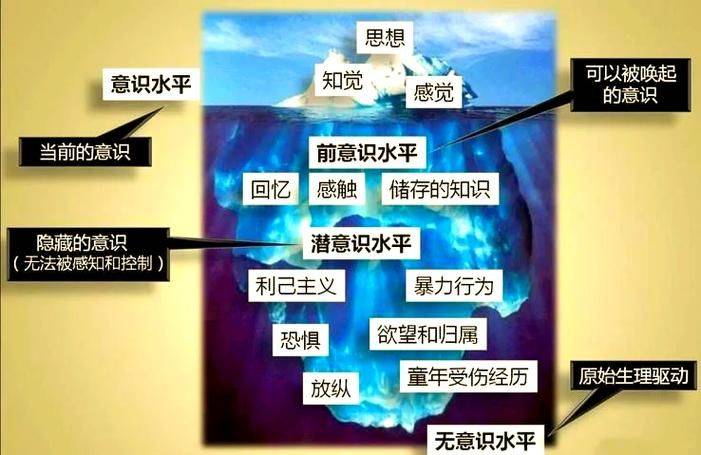
Reflections and aspirations, however, do not actually meet the physical needs of the human being in order to effectively eliminate tensions. In order to be able to meet physical needs, the second part of the personality — a follow-up psychological process — has developed itself. The role of a new psychological system that has evolved since i was “interacted” between man and the outside world is to serve my needs in accordance with the “realistic principles”. Self-fulfilling needs can be done by postponing the release of my energy and by developing plans through thought and reason until the objects that really satisfy them are found or produced. Because of its self-understanding of my needs and external realities, it operates both at the level of consciousness and at the level of unconsciousness. At the same time, because i am at my service, the principle of self-establishment is not to abandon the principle of happiness, but simply to suspend the principle of happiness, which ultimately leads to the principle of happiness。
The third component of personality is beyond me. I am more than a moral component of the human personality, internalized by non-conceptions and standards of good and evil among parents and other social authorities, and shaped mainly by the children's experience of rewards and penalties. I am made up of two different parts, one of conscience, internalized by the child's experience of parental punishment. The other part is self-image, which is internalized by children's rewarded experience. Freud believed that, as children grew up, when the experience of the rewards and penalties for external control had evolved into a psychological mechanism for internal control of behaviour, i had developed a superior personality。
My role is to control and direct my instinctive impulses to prevent my immoral behaviour. It's a contradiction to what i'm asking, but it's not a direct relationship with me, but a self-control of my impulse. Me and myself are irrational, both of which distort and distort reality, and both of which meet their demands. I am forcing myself to think of the world as what it should be, in accordance with its subjective ideals or standards; i am forcing myself to see the world as i wish. Because of their conflicting and irrational demands, the psychological situation is very complex and their own work extremely difficult. As i seek to satisfy my desire for happiness, on the one hand, and to bring behaviour into line with what is more than my own, on the other hand, self-role is important in the context of the stability of the human person, since i want to “combin” or “integrated” the three parts of the human personality, so that they can be a unified whole. In freud's view, this element of stability in personality depends primarily on the satisfaction of the individual's biological diversity in self-development as a child, as well as on the individual's experience with rewards and sanctions in dealing with the outside world. At this stage, it is possible to build harmony within the human person and enable him/her to interact smoothly with the outside world if he/she is well developed and properly able to play his/her integrated role. On the other hand, if i have not developed well at this stage and have not been able to integrate the three systems of personality well, then individuals cannot interact smoothly with the outside world. For example, if a person's personality is too strong for me, then he will be an extremely self-serving entertainer; if a person's power is too strong for me, he will be an extremely repressive, rigid moralist。

On the face of it, freud's theory of personality does not seem to have much to do with ethics, since it involves purely psychological rather than ethical issues, or it deals with what human behaviour “is” rather than what human behaviour “should be”. However, if we do not view ethics as a mere ideal framework for human behaviour, but rather as a system of theory based on some reasoning, and if we recognize that the propositions of “what human beings should be” in all moral doctrines must be based on certain propositions about “what human beings are”, then we cannot fail to take seriously freud's theory of personality. This theory raises serious questions about some of the basic premises of the traditional ethics doctrine。
We know that, in the vast majority of ethical systems, two basic assumptions actually exist: first, that a person is morally free. Secondly, human beings are subject to admissibility. These two assumptions are related to the principle of moral self-regulation. In ethics, moral self-regulation is generally understood to mean that a person should have the moral capacity and the right to self-legislation and should and should be able to use such ethical law, which he or she has developed or confirmed, as a norm to regulate or regulate his or her conduct. For, in the view of ethicalists, one of the major differences between ethics and law is that law is the external binding mechanism of another law, which, through the force of society, compels everyone to adhere to the code of conduct it affirms, while morality is primarily a personality. While each society has a broadly uniform moral concept and corresponding norms of conduct, they are not binding and, for each individual, are more the product of the individual's rational and free will. Thus, ethical scientists generally stress that human beings should be morally free, autonomous and self-controlled, and that they can establish or choose for themselves ethical norms and behaviour based on rational thought and are responsible for the outcome of such behaviour. As sutter cited, a young man had to make his own rules and should and should be able to make his own choices when he faced the choice between going to britain to participate in “free france” or staying at home with his older mother during world war ii。
However, freud's theory of personality undoubtedly challenges the above ethical views. First, freud argued that a person's behaviour (including that of a moral character) was determined by his personality, which in turn was determined by the complex experiences of his childhood. Freud also believes that a person's personality during his childhood is difficult to change in the rest of his life. Thus, this means that a person's conduct in a given environment is in fact “determined” rather than “free”. In other words, a person's choice of conduct in a moral context is not much of a “free will” but is largely determined by the strength of his personality. If he is autonomous and self-controlled, we can only say that he is determined and controlled by his own personality, not by the personality of others. Therefore, if a person's choice in a certain moral context is to be changed, it is not to change his personality. However, since the personality is extremely difficult to change, the moral values and choices of the human person are extremely difficult to change. This freudian theory is undoubtedly a serious challenge for ethical scientists committed to moral design with idealism. If freud's theory is correct, then the task and path ahead of ethical scientists committed to normative construction will be extremely difficult and long, meaning that moral construction must start with the education of children, without which a society will have little moral hope. However, the development of a child's good morals must be premised on good ethics among adults, and the moral prospects of this society will not be promising if there is no good morals among the adults who are responsible for educating the child。

Secondly, another major ethical challenge to the freudian personality theory is the questioning of reason. We know that, before the twentieth century, the vast majority of philosophers, ethicalists, sociologists and even scientists embraced the role of reason and firmly believed in it. They believe that the behaviour of human beings is dominated by reason, and that when people fully use their reason, they are able to create ideal people and create ideal societies. Freud's personality theory, however, reveals a great deal of irrationality in human behaviour, thus fundamentally shaking the superstition of reason. Freud pointed out that the human spirit was driven by biological instincts determined by congenital genetic factors, so that human behaviour was driven primarily by this unconscious instinct. In the three main systems of personality, i'm completely irrational, acting only according to the principles of happiness. And it is also irrational in nature that experience as a reward and punishment is embedded in the human personality, which requires that it act only in accordance with its subjective and ideal principles, without taking into account the actual needs and objective realities of the human person. While based on reality and rationality, i work under the double pressure of this and beyond. On the one hand, my main function is to satisfy my desire for happiness from a practical point of view; on the other hand, i have to limit my instincts by considering what i want, so as to reconcile my relationship with what i am. In this sense, self-determination is governed both by the principle of reality and by the principle of interest. Self must seek to satisfy my demands to remove physical tensions, but also to satisfy those that are superior to me in order to avoid punishment of conscience and to generate moral anxiety. Thus, in the three main systems of personality, the self is actually passive, and the force that dominates is irrational me and beyond me, not rational self. In sum, from the point of view of freud, the force of reason among the various elements of the human personality is very weak, and the most important factors determining human behaviour are human instincts and their fulfilment, as well as incentives and disincentives in the external environment. These factors determine people's behaviour and ethical attitudes. Therefore, to change human behaviour and morality, it is necessary to start with these factors rather than relying on human reason. This view is perhaps the greatest and most powerful impact freud's personality theory has had on ethical traditions。
Freud's personality theory, like many other theoretical systems, has not been scientifically proven. This does not mean, however, that freud's theory is unfounded or that it is not important or worthy of attention. As american psychologists hall and linddez say, “maybe freud is not a strict scientist and first-rate theorist, but he is a patient, careful, focused observer and tenacious, trained, courageous, creative thinker” (hegenhan: history of modern personal psychology, hebei people's press, 1988, p. 31). Since the beginning of the twentieth century, freud's personality theory has generated a violent shock in philosophy and in all social sciences related to human problems, and we still feel the echoes of that shock. The reason for this is that the freudian personality theory deals with subjects that are fundamental to human studies, such as “what makes up the personality?” “how does it come about?” “what are the forces driving human behaviour?” etc. On these issues, freud's point of view is both important and challenging, thus forcing all human-related disciplines not to lose sight of his theories. In ethics, if the discipline seeks to base its theory of “what human behaviour should be” on “what human behaviour should be”, it must attach great importance to freud's theory. Of course, freud's theory is not perfect, and its scientific nature has been questioned by many. For example, in the matter of personality development, it advocated the causal theory that the personality of adults was interpreted strictly on the basis of early experience, a view that was unacceptable to many ideologues. For example, the fact that it sees the moral component of the human personality as totally irrational and denies the ability of the individual to reflect on and rebuild the moral dimension makes it difficult to explain the evolution of human morality. But even if freud’s theory is only partially correct, it is sufficient to generate a rethinking and appreciation of many of its important concepts, such as free will, reason, self-regulation and even morality. Ethics must accept the challenge of the freudian personality theory. Either to refute freud's theory or to accept or partially accept freud's point of view in order to modify his original theory. If ethics avoid freud's theory or ignore the challenges of personality psychology, ethics lose its appeal and influence in an age when empirical science about humanism flourishes。