Epoxy resins are typical of thermal rigid resins, also known as artificial resins, artificial resins, resins and resins, whose main characteristic is that they do not produce free radicals when solidified, and thus have a high degree of heat stability, good heat resistance and outstanding mechanics, which are widely used in areas such as aerospace, car manufacturing, electronics and construction。
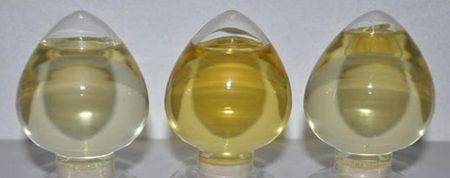
Epoxy resins are characterized by epoxy or epoxy rings as the primary service, with the simplest epoxy resins being 1,2-epoxy or a-epoxy resins not replaced on carbon atoms. The main chain of epoxy resin is equipped with different properties, such as water resistance and absorption machinery and heat stress. Despite the advantages of high chemical stability, high temperature resistance, electrical insulation and low cost, epoxy resins have low mechanics, aversion to water, poor oil performance, and most epoxy resin materials have fragile properties that make them vulnerable to incentives from various conditions during long-term use, leading to microfrackings that affect the long-term use of epoxy resins. As material use requirements continue to increase, epoxy resins need to be modified to obtain integrated and better materials。
Epoxy resins may be used in flame retarding paints, injections, laminates, etc.
For thermal pressure-resistant materials, adhesives, heat resistant coatings, sealing materials
3. Magnificent glitter sutures for the production of corrosive whole glass steel products, sandy floors and granite acid-resistant brick plates of various specifications
4. For various types of corrosive, temperature resistant tanks, troughs, earth floors, etc.
5. Be used as a leachate for the production of fibreglass
6. For epoxy paints, epoxy glues
7. Filling of electrical and electronic components, mainly for flame retardant laminates, plastics, glue, etc.
8. A new and highly performing additive flame retardant material is widely used in thermoplastic plastics such as pbt, pet, abs, nylon 66 and thermoplastic polyurethane。
Epoxy resin is a polymer consisting of epoxy and resin-based polymers whose chemical structure contains a large quantity of epoxy and a small number of double- and triple-keys, which gives epoxy resin excellent physical properties such as high intensity, resilience, resistance to chemical corrosion and heat resistance. The physical properties of epoxy resins are related to their molecular structure. In the molecular structure of epoxy resin, chemical keys between epoxy and resin-based sources lead to higher molecular and molecular distribution ranges. In addition, double- and triple-keys in epoxy resin molecules can affect their physical properties, making them more flexible and chemically resistant。
Epoxy resins can be used for adhesive, pouring, sealing, etc.; they are widely used in chemical, construction, electronic, electrical, food, etc。
Alteration of epoxy resin
The high quality of epoxy resins includes high intensity, high commitment to base materials, high electrical insulation, low toxicity, low contraction rates, low cost and high process and application adaptation. It can be used at temperatures up to 175 °c and with all standard enhancements. The fatigue is higher than the aluminium alloy. However, due to its inherent fragility, stratification and low fracture resilience, its wide application in many applications is limited. Many technologies have been used to improve the performance of epoxy resins, including chemical modifications, increased molecular content, reduced conjunctive density, and the addition of dispersed resistant phase particles (e. G., microsized particles) or large molecules with flexible chain segments in solid polymer matrices。
Jubo, cai huasu, sun nai wu.
Shen min-min, ha sung-yun.
Zhang shiping. New developments in the application of carbon fibre/epoxy compound materials. Scientific and technical information (scientific teaching), 2007 (24): 60-61.
Zheng yi hau, chang ho, zhang yunbo, etc. Experimental study of carbon fibres/epoxy emulsion shellfish structure resilience and performance optimization. Experimental mechanics, 2020, 35 (2): 190-198.
Progress in the study of the modification of epoxy resins.