1. Classification and composition of epoxy resin glue
Epoxy resin is a high-molecular compound that contains two or more epoxy groups in the molecule and has a lower relative molecular mass. The epoxy is a triad of one oxygen and two carbon atoms. The epoxy group is able to react chemically to the free radicals on the surface of the medium, so the epoxy resin is particularly adhesive. It has good adhesive properties for most materials, such as wood, metals, glass, plastics, rubber, leather, ceramics, fibres, and is less adhesive for only a few materials, such as polystyrene, polyvinyl chloride (pvc) and palladium, and has good chemical corrosivity, heat resistance, alkyl resistance, organic solvent resistance and good electrical insulation after solidification. In addition, resins are less condensed after solidification and can be reduced to 0. 1% - 0. 2% if appropriate fillings are added, and can be used for long periods of time under 150 - 200°c, with cold tolerance up to -55°c。
Epoxy resin adhesives consist of epoxy resins, solidifiers, plasticizers, resistants, promotions, diluents, fillings, impregnated agents, flame retardants, stabilizers, etc. Of these, epoxy resins, solidifiers, and irritants are essential components, while others are not。
The variety of epoxy resins is numerous and increasing, with epoxy resins of condensed glycer ethers, condensed glycerine esters, condensed glycerine, epoxy resins, epoxysylenes, epoxy resins of the hy, acetamines, epoxy resins of the aluminum, organic silicon epoxy resins, organic titanium epoxy resins, etc., classified by chemical structure. The aqueous glycerine ether epoxy resins include biphenol type a epoxy resins, biphenol type f epoxy resins, biphenol type s epoxy resins, biphenol p epoxy resins, bihydrophenol a epoxy resins, phenolic epoxy resins, brominated epoxy resins, adipose-coated glycerine resins, etc。
2. Synthesis and processes of epoxy resin
The most commonly applied epoxy resin in industry is binocol type a epoxy resin, which is in the first category and produces approximately 90 per cent of total epoxy resin production. Diphenol a-type epoxy resins are combined with diphenol a (diphenol-propane) and epoxy-chloropropane, which are reduced by alkaline catalysts:
Its polymerity is not = 0-20; n = 0, relative molecular mass is 340, and its appearance is slime liquid; n ≥2 is solid at room temperature. High relative molecular mass resins can be produced if the proportion of epoxy chlorpropane and diphenol a is properly controlled in the reaction, but due to the increase in relative molecular mass, the intersection density will be reduced and not suitable for adhesive use. Thus, epoxy resins commonly used as glues are low relative molecular mass resins with average relative molecular mass of less than 700 and softening points below 50°c. Varieties with relative molecular mass of over 900 are solid at room temperature, the main uses of which are coatings and laminated materials. The process of producing low relative molecular quality epoxy resin is described below, and the process processes are shown in figures 6-8。
Figure 6-8 epoxy resin production process
1- soluble pot; 2,9- gear pump; 3-reactive pot; 4-sodium hydroxide solution high gauge slots: 5-phenyl; 6-condensor; 7-receiver; 8-release dehydration pots; 10-filter; 11-benzene resin solution tanks; 12-dephenyl pots; 13-benzene underground tanks: 14-vapour pumps
(1) the plate number and the feedstock ratio of the feedstock to the lower relative molecular mass and the medium relative molecular mass epoxy resin are shown in tables 6-10。
(2) low relative molecular mass epoxy resin production process and operating conditions
1 diphenol-based propane (biphenol a) to the dissolved pot 1 and then to the epoxy chlorpropane, to activate the mixer, and to bind it into the vapour heating so that it warms and solutes。
2 insert the solution into the reaction pan 3 with an anchor mixer and activate the mixer with gear pump 2. The speed of the mixer is 70r/min。
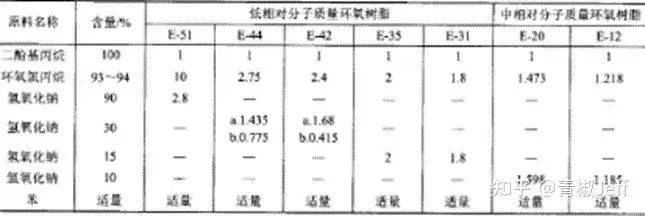
Table 6-10 epoxy resin formulation ratio (molby)
From 4 drops of sodium hydroxide solution cells a/ with sodium hydroxide solution, the temperature rises very rapidly when sodium hydroxide is added to a given quantity, when the clamour is put into cooling water to control the temperature of the response system。
At the end of the first phase of the reaction, excess epoxy is recovered by decompression, and the vapour of epoxy is recycled through the condenser 6 to the receiver after release。
After recovery, benzene dissolved with sodium hydroxide solutionb。
At the end of the post-phase reaction, the cooling of cold water is mixed, static, the upper benzene resin solution is pumped back to the water dehydration pan8 and the lower salt feet are re-extracted with benzene and then released。
Seven retrenchments run back to the benzene evaporated until it is clear. Cooled static, 10 through 11 filters and 12 debenzobenzo-plysed into debenzopots after deposition (normal pressure reduced)。
After debenzene, the finished epoxy resin is released directly from the pot。
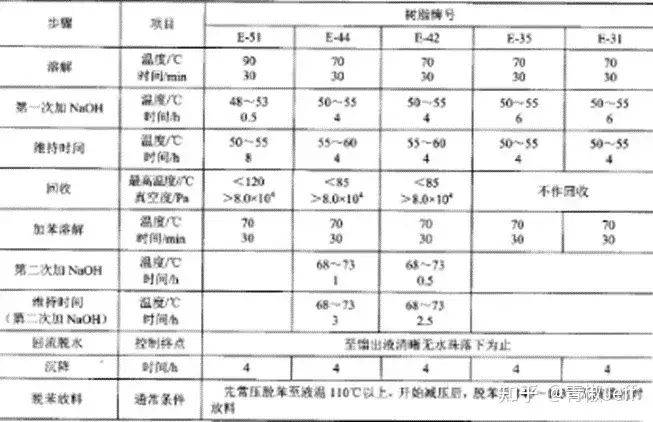
The purpose of reflow dehydration is to remove the trace moisture from the benzene resin solution in order to dissect the alkalin and salt in these waters. The presence of water, alkaline and salt all affects the quality of resins, so solvent extraction must return to dehydration. Operating control conditions for the steps in the production of low relative molecular mass epoxy resin are shown in tables 6-11。
Table 6-11 low relative molecular mass epoxy resin operation control conditions
(3) solidants of epoxy resins and solidants of epoxy resins can be classified as reaction-type solidants (e. G. Fatty and lipid meths, aromatics and low-molecules of acetic anhydride) and catalytic solidants (e. G., uncles, beams, borons, etc.). For example, a metamine solidifier is mainly a reaction to epoxy by “activated hydrogen”, which links resin solidification:
Catalysing solidants are mainly the epoxy openings, the epoxy resins are homogenized and the homogenesity of the ether key is produced. The use of solidants is related to the epoxy value of epoxy resin and to the characteristics of the solidants themselves, for example, the use of methamidoc solidants must be selected accurately。