Experimental knowledge point for fluorescent rods
A lot of people have seen the lights of the festival or camping
It's amazing. It's like a classroom demonstration or a small experiment that attracts attention
It also makes clear the basic concepts of chemical reaction and energy conversion. It's in plain language
Principles, materials, available safety experiments, influence factors, measurement methods and considerations
Clearly, it is easy to refer to in teaching or self-study。
I. Why the light
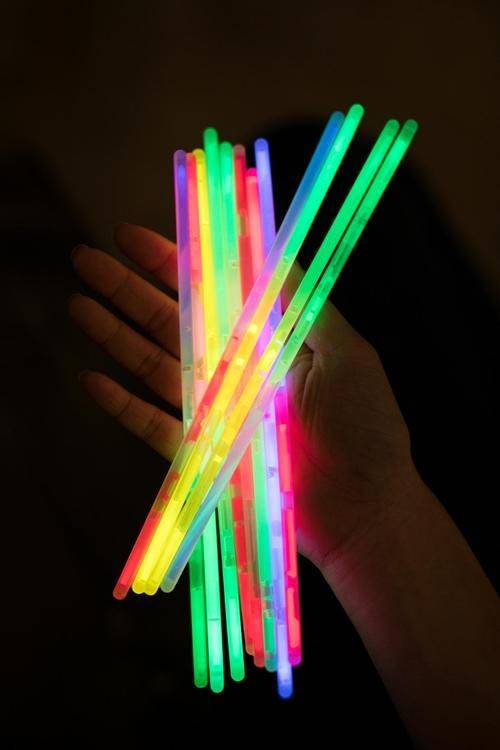
It's not because of batteries, it's because of chemical light
The other category is fluorescent, but the daily luminescence rod is mainly chemical. To put it simply, in the luminous stick
There are two separate liquids, broken glass or tube behind the inside wall, two liquids. Fuck
Coincidence. High-energy intermediates from the reaction pass energy to dye molecules, dyes
Put energy out in the form of photons. Different dyes release different wavelengths of light, so it's color
It's different。
One of the most common response systems is peroxide (e. G., double-oxywater) as an oxidizer
The other category is one containing oxidizing sensitive esters (commonly some herbate), plus one
Fluorescent dyes and organic solvents. The herbate and peroxide reaction produces a high energy four ring. Medium
The intermechanism, when this intermediate decomposes, transfers energy to the dye, which glows。
Ii. Materials and construction (no destruction)
There's a plastic tube outside the luminous rod, which usually has two-phase liquids: one with organics containing dye
The other is the water phase or other phase containing the oxidizer. The plastic tube is sealed, prevented
Volatile and leaking. For the sake of safety and ease of teaching, it is not recommended to unload the luminous rods
Liquid. You can do a variety of presentations directly using a full-fledged luminous stick。
Iii. Possible safe experiments (premises not to be removed)
1)
Impact of temperature on brightness and duration