Discovery process
Peroxide effects, also known as the karasche effect, were found in 1933 by m. S. Kharasch et al. Hydrobromo acid reacts with asymmetrical alkyl in light or peroxides, producing a product that is the opposite of that predicted under the markovnikov rule. The reason for this “unusual” addition is the free-base effect of the act of light or peroxide, and the free-kiss reaction, the added effect of which is known as the peroxide effect。
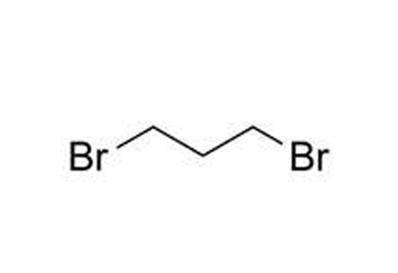
In the 1930s, a product of 1,3-dibromopropane was found in air or peroxides and produced with hydrogen bromine, which is an anti-marside product. Experiments have found that when there is an oxide, asymmetrical alkyl compounds react differently from hbr's main product due to differences in response mechanisms. The reaction with the effect of oxide is a free-base reaction, determined by the stability of the generated intermediate free base. However, the peroxide effects of the alkyl have only been adapted to hbr, hcl and hi. Because hcl is larger, it's not easy to split up to create cl. One
Response machine
In light or peroxide presence, asymmetrical brominated hydrogen and asymmetrical alkylocarbons are added to the anti-marsician rule, which is referred to as peroxide effects due to the presence of peroxides causing a reversal of the additional orientation. The reason for this is that the reaction under this condition is a free-standing journey. In light or other free-base triggers, the hbr co-priced keys both create hydrogen free radicals and bromine free radicals, which, because the latter are more active than the former, are first added to the two-key bromine free radicals, and the location of the reaction depends primarily on the stability of the intermediate carbon free radicals. Carbon free radicals can stabilize or supersynthesis with benzene rings, double keys or hydroxyl radicals, so bromine tends to be added to double-key carbon with more hydrogen, with the result that it is anti-marsician. Two
Peroxide effects occur only in combination with asymmetrical alkyl. This is because hydrogen chloride cannot be decomposed into chlorine free radicals by peroxides; although hydrogen iodide can easily be decomposed into iodized free radicals, it is less reactive and can combine itself into iodized molecules. Two
Practical application
Preparation of drug intermediates
Some important drug intermediates can be prepared using peroxide effects. Synthesis of 1-chloro-3-bromopropane in the intermediates of anti-inflammatory painkillers, oxatomide, etc. Two
References