The syllabus for engine-room simulator course numbering the new 0. 000000 original 13010640 hours/score 56 (1 week)/8 at the institute of wheel engineering, which opened the course, examined the manner in which the laboratory turbines that were subject to the specialized wheelwork (maritime) course were automating, dated 1 may 2008, the nature of the course and the mission turbine simulator were an important course of theoretical practice in the engineering profession. The course provides students with basic knowledge and operational points of the ship's cabin power system, masters the basic requirements and attention of the ship's main power units, such as mainframe, diesel generators, graders, axle-band generators, power stations, boilers, and ancillary equipment, routine maintenance and failure analysis, and, upon graduation, ship shipping workers
2. Build a solid theoretical and practical foundation. The engine simulator is carried out in a combination of theoretical and on-site learning, focusing on the development of students ' understanding and hands-on capabilities for the overall ship power system. Students are required to perform the following 10 tasks independently: a motor simulator hardware and software composition and basic operations. 2 sea/freshwater systems, structure of combustion/slipber systems, work processes, operational management and fault analysis. 3 compressed air system structural composition, work processes, operational management and failure analysis. 4 structure of the ship power plant system, work processes, operational management and fault analysis. 5 structured composition, work processes, operational management and fault analysis of the ship vapour generator system. 6 ship support systems such as oil purification systems, anti-pollution equipment, ice machine systems, sewage systems, desalination devices, rudder system structural formation, work processes, operation management and trouble analysis. 7 tanker oil and cargo and ballast system structures group
3. Completion, work processes, operation and operation management and related trouble analysis. 8 structural composition, work processes, operational management and fault analysis of ship active devices. Basic operations for the start-up of cold ships and the arrival of tankers for discharge. 10 the structure, composition and rationale of the uas. Ii. The course describes the engine simulator, which deals with the basic structure of the ship's engine power systems and installations, operating protocols, working principles and failure analysis methods and maintenance elements. Using the mc-90iv large tanker simulator as the main teaching tool, students are given an understanding of the composition, rationale and operational points of the ship power system and are able to analyse fault areas, causes and treatments based on failure. This course is preceded by various specialized courses in marine disciplines in wheel engineering, including motor automation, diesel fuel for ships, ship support, ship power unit technology and management, and wheeling english. Teaching object
4 for students above the third grade in the maritime field of motor engineering. Engine room simulator might be able to teach the basic rules, prince, fair economics methods and power systems
Five, take students master the position of marine power systems, princes and operatioAnd be able to find fair points, analyss fairness because, and family treatments taking place to secure phenomenon in parts of justiceMarine engineering autom
6 et al., marine diesel, marine auxiliary machine, marine power device technology and management, marine engineering engineering engineering, etc
7 operating regulations, mouse operating regulations, development of o-simulation training, ship emergency grid concept: belt pump, power pump knowledge point: role of emergency generators with differences between emergency and diesel generators methodologies and application: basic operating principles for emergency generators: the activation of the emergency generator speeding principle o (selection) case: many caselines for o compatible with teaching requirements, undefined; 3, the concept of seawater, freshwater systems: high/ low temperature cooling waters, knowledge point for high-low submarine gates: temperature control method for the marine/ freshwater system, method and application of resilient water boxes: basic operation of marine/fresh water systems, three principles of temperature regulation: the principle of automatic regulation of sea water/fresh water temperature, application of reflow temperature regulation in ships: many examples of o meeting the requirements of teaching, without qualification; and the concept of compressed air systems: point of knowledge for starting, controlling air: cooling, controlling air presses
8 the role of air production, pressure reduction and drying control of air, automatic control of air voltage, methods of inflating air cylinders and applications: basic operation of emergency air voltage, basic operation of main air system, control of basic operation of air system, doctrine: aerovoltage autocontrol principle case: o meets many of the teaching requirements, without qualification; 5 the concept of ship power station: electrical and discharge, load transfer, power station management model, generator priority phase voltage/power flow, wire voltage / current, power power power, no power power, shore knowledge point: diesel generators start up and adjust, and three combinations of electricity, main panel power supply equipment, grid insulation measurement / power supply method: diesel generator speed, generator power / no power regulation principle, and application: diesel generator basic operation, manual/automatic/automatic method, generator solver, charge transfer station, charge transfer station
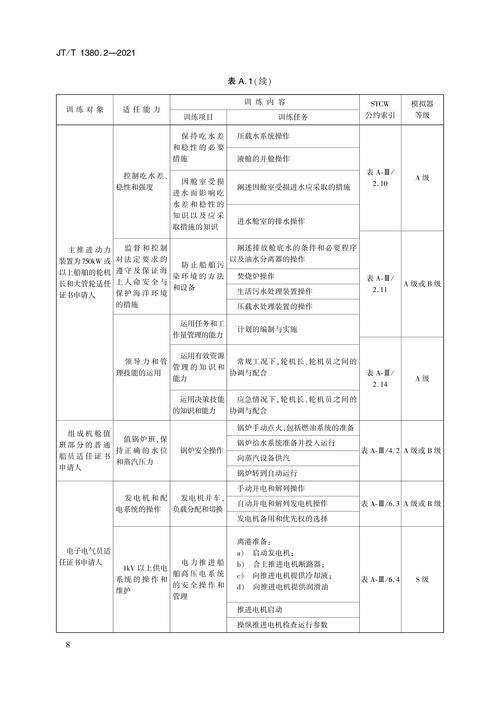
9. Use of mode o-sync tables, measurements of insulation voltage: o meets the teaching requirements, with no qualification; 5 concept of vapour-occupying devices: wind oil ratio, fog air / steam, false water level, tri-shot control, wet steam, saturated steam, super-heated steam, economy, overheat, steamer pre-empting, pre-burning, pre-burning, high / low-burning o-inert gas (selection) knowledge point: auto-combination management of boilers, operation of waste boilers, high-to-low combustion, boiler water level control method, boiler point time sequence of boilers boil burners type: wind oil compared to automatic control, automatic boiler combustion control, automatic control of boiler water level, performance of o-inert gas (select), automatic control of oxygen content, automatic control of waste boiler smoke boards and application: basic operation of the boiler from breaker to boiler, voltage, automatic control of the gas boiler boilers
10, hand / self-control, joint operation of fuel crossing and exhaust boiler: boiler ash blower, boiler for oil, steam heating, hot well water recharge cases: o meets the teaching requirements, does not limit the knowledge point of 6 steam turbines: tread-up generator advantage, vacuum condensor function, tight-up generator speed manoeuvre: vacuum condensor theory, tight-to-tramp generator speed adjuster method, tight-to-closer (select) method and application of the av method: power-to-closure (selective) method and application of a flatten generator to start up and run, maintenance of vacuum condensor and management of oil pumps, o-pressed water pump start-up and roll-out operation (select) case: many examples of o complying with the teaching requirements, no qualification of the concept of a 7-positive device: pressure booster brakes, master control of the mainframe, flushing vehicle, test vehicle, p-v display, p-o-o-o-o-o-s
11, figure (selection), knowledge point: the respective roles of main ski oil, gas tank oil, cam axis oil, the role of various graphs, the control of the side of the mainframe, the control of the central control room and the driver's table control, the principle of the o fuel emulsation (selection) during the work process of the host remote control system: the principle of fuel viscosity control, the principle of host pressurization, the method of operation of the host remote control system, the method of operation of the o emission reduction unit (selection), the method of automatic reverse filtering (selection) methods and applications: the preparation of the host fuel system, the preparation of the host slide system, the operation of the host air/control operation, the start-up of the host operation, the conversion of the host operation to the main part, the conversion of the host's light weight, the method of the host's cavities, the method of comparison of the host's casks ' temperature, the case of automatic control of the host fuel vises (option), and application of the 8 arcade: axle-band generator pros and cons: axle-band hair
12 / activation of low-gravity water cabinets, salinity controllers, vacuum damage valves, discharges, lifting of ice machine, emergency rudder-activated o-digger weight ring selection (selector) principles: rudder fundamentals, water machine working principles, salinity controller working principles, oil water separators working principles, ice machine working fundamentals, tail axle seal principle o oil subconcentration monitoring unit working principles, automatic rudder control method and application: fuel barge system basic operations, fuel/slipper/light oil sub-machine start-up and sub-oil operation, cabin wind engine start-up, rudder start-up and base operation, tail axle seal basic operation, water builder
13 basic operations, sewage systems, oil-water separators basic operations, incinerator base operation, ice machine basic operation, pressure water tank basic operating cases: o meets many of the teaching requirements, without qualification (ii) experiment 1. Experimental content of the cold ship start-up host vehicle: (1) start-up emergency generator (2) emergency distribution version (3) activation of sea water, freshwater system (4) start-up of diesel-powered pressurizer (5) start-up diesel generator (6) start-up diesel generator, main distribution assembly (7) start-up second diesel generator, grid-mounted, load-transfer (8) support system automated management unit operational. Experimental requirements: systems and equipment start-up correct and no unreasonable operation. 2. Preparation of fuel boilers, ignition of heat (2) mainframe heaters and fuel heating (3) preparation of mainframe fuel, ski oil, high-temperature fresh water, start-up air
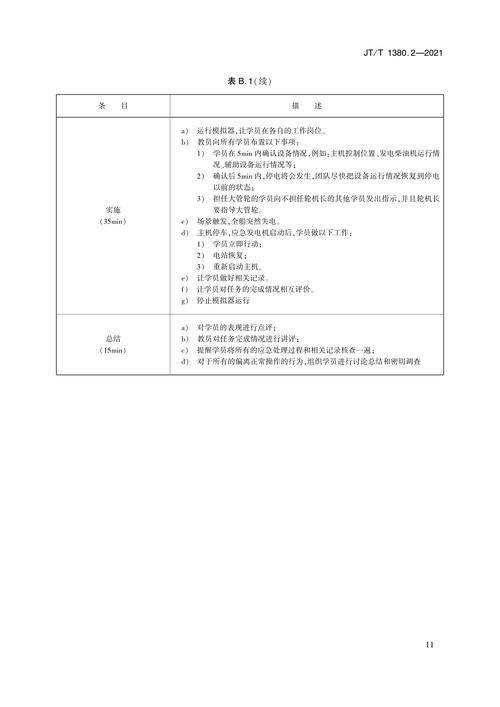
14 control of the air system (4) the wheel system (5) the wheel system (5) the wheel system (5), the flush, the test vehicle (6) the engine (6) starts the host to a fixed speed flight (7) the gas boiler is operational (8) the main oil refuelling generator (9) the power supply is grid (10) the engine is powered and the automated management unit of the power network (11) the operating laboratory requirements are: the system and equipment are operating correctly and without unreasonable operation. 3. Auxiliary system test content: 1) start fuel, ski oil sub-machine (2) modified bunker sewage system (3) start ice machine (4) start water-builder (5) fuel barge system (6) ballast system test requirement: the system and equipment are activated correctly and without unreasonable operation. 4. Experimental content of an anchor for oil discharge at port: (1) oil tank heating (2) host by heavy oil for light (3) host stop (4) air operation (start, stop oil pump) requirements: systems and equipment activated
15. Correct, no unreasonable operation. 5. Fault analysis experiments: (1) flammation, skiing systems and their failure analysis (2) the sea, freshwater systems and their failure analysis (3) the boiler and steam systems and their failure analysis (3) the ship power station systems and their failure analysis (5) the power plant failure analysis (6) the host remote control systems and their failure analysis (7) the other systems and their failure analysis experiments require that the failure cause analysis be correct, the failure point analysis is accurate, the failure management method is sound and the experimental report is written. Summary of the system of large tanker simulators with the total of 82 hours of the theoretical teaching hours allocation system in table 1
16 the application of the specialized experimental nature for content studies requires the operation/selection of a single cold ship to start a single main vehicle 8-wheeler (sea) complex, 2-wheeler (sea) complex, 6: 3-aid system 4-wheeler (sea) complex, 4-to-sea tank (sea) complex, 4-to-port oil discharge, 1-barrel 2-wheeler (sea) complex, 6 fail analysis 4-wheeler engineering (sea) complex, 6 test 2, 265 combined, 30 in the experimental examination standard experimental course, with the following rating criteria: 1. The experimental report (5 points) requires a comprehensive report, clear texture and correct operating protocol. The following three parts of the pilot report were recorded as unsatisfactory. 2. The experimental operation (15 minutes) requires that the experiment be performed correctly and that the equipment and systems required be successfully activated without faults or manifest error. Experimental operating system or device failed to activate by 10 points, system principle error by 5 points, non-principle error by 1 point
17, until 15 minutes. (theoretically wrongs refer to an error in the operation of the system or equipment that would cause damage to the equipment or a breakdown of the system over a long period of time, non-principle wrongs refer to a failure to meet the ship's basic operating procedures or energy saving requirements, etc. 3. The element of failure analysis (10 minutes) requires the analysis of the cause of the failure and the identification of the point of failure based on the phenomenon of failure, the correct description of the failure and the appropriate response measures given. Only the cause of the failure was correctly analysed at 3 points, giving the point of failure at 7 points. Theoretical course materials for the course and the reference book: self-programming of the engine simulator, zenghong, editor-in-chief zhang gudong: 1. Automation of the wheel, zheng feng tung, editor-in-chief of dalian maritime university press, 1998. 2. Qualifications of teachers for the experimental course: teachers with certificates of suitability for service on ships above or above the wheel. 8. Measures to be taken in order to achieve the objectives of the teaching of the subject1 shall be strictly enforced through a system of attendance and attendance. During the course of the experiment, students are required to comply strictly with the requirements of the instructors and to fully implement and complete the required experimental content. In the case of problems in the course of the experiment and the failure of teachers, students should think carefully, analyse, and by discussing ways to find solutions to problems, they can improve their ability to actually analyse problems and solve them。