1. What is a real-life foreign exchange trade
A: a person's real exchange transaction is a transaction between a person's customer in a bank that is freely convertible in foreign currency (or foreign currency). Individual foreign exchange transactions generally have a difference between real and false. Currently, under the relevant state policy, only real-time foreign-exchange transactions can take place, and no such transactions can take place. The following questions refer to the sale and sale of personal currency。
2. What is the difference between a person's real and a person's false foreign exchange trade
A: a person who buys and sells real currency, commonly referred to as “foreign currency treasures”, means a transaction between a person's customer in a bank that cannot be overdrafted in a freely convertible foreign currency (or foreign currency) through a cabinet service provider or other electronic financial services。
A person's fraudulent foreign exchange transactions is a transaction between a person's foreign currency (or foreign currency) which is magnified several times by the amount of the transaction that he or she makes after the bank has paid a certain deposit。
3. How does a person's real-life foreign-exchange business differ from a traditional savings business
Response: the traditional savings business is an accessible business with interest earned. A person's real-time foreign exchange trade is a business that is primarily designed to earn exchange-rate differences, and through which clients can also convert their foreign currency holdings into foreign currency with more potential for appreciation or higher interest, to earn a difference in exchange rate fluctuations or higher interest income。
4. How can the sale of personal currency help the general public
Response: the sale and sale of personal real currency is one of the most effective financial instruments so far to preserve the value added of personal foreign exchange assets. Since individual investors cannot invest in the b stock market and cannot exchange the rmb in exchange for foreign currency, personal real-time foreign-exchange transactions can serve the purpose of saving the value added of the foreign-exchange assets of a large number of citizens, and thus become a hot spot for financial investment after stocks and bonds。
5. Who can trade in real-life foreign currency
An individual resident in the country who has a valid identity document and has full civil capacity may make a personal exchange transaction if he or she has a certain amount of foreign currency (or foreign currency)。
6. What are the tradeable currencies in which a person buys and sells real currency
The type of foreign currency (or foreign currency) that can be traded by branches of the bank of china that have opened a personal exchange transaction varies slightly, but essentially includes major currencies such as the united states dollar, the euro, the japanese yen, the pound sterling, the swiss franc, the hong kong dollar, the australian dollar, and, in part, the canadian dollar, the netherlands guilder, the french franc, the german mark, the belgian franc and the singapore dollar。
7. What kind of currency transactions can be made between a person's actual foreign exchange transactions
The following types of transactions can be carried out by customers through personal exchange transactions: one, the united states dollar to the euro, the united states dollar to the japanese yen, the british pound to the united states dollar, the swiss franc, the united states dollar to the hong kong dollar, the australian dollar to the united states dollar (some branches can also carry out the united states dollar to the canadian dollar, the united states dollar to the netherlands guilder, the united states dollar to the french franc, the united states dollar to the german mark, the united states dollar to the belgian franc and the united states dollar to the singapore dollar). Transactions between the above non-united states dollar currencies, such as the pound sterling to the japanese yen, the australian dollar to the japanese yen, are referred to on the international market as crossboard transactions。
8. Can currency other than tradable currency be traded in a personal currency
Answer: no. If the client is required to exchange money other than the currency of the transaction, the personal exchange counter is not admissible. Clients can apply for foreign currency exchange rates at the bank exchange counter。
9. What is the base currency in a personal exchange transaction
Response: in personal exchange transactions, the pound sterling, the australian dollar and the euro to the united states dollar, the pound sterling, the australian dollar and the euro are the base currency, while the remaining currencies to the united states dollar are the base currency。
Can a customer trade in real-time foreign currency without foreign currency
Answer: no. Since the sale of personal currency is between foreign currency and foreign currency, and the renminbi is not a freely convertible currency, it is not permitted to trade in personal currency。
Do individual foreign exchange transactions require a single fee? What are the forms in which bank fees are expressed
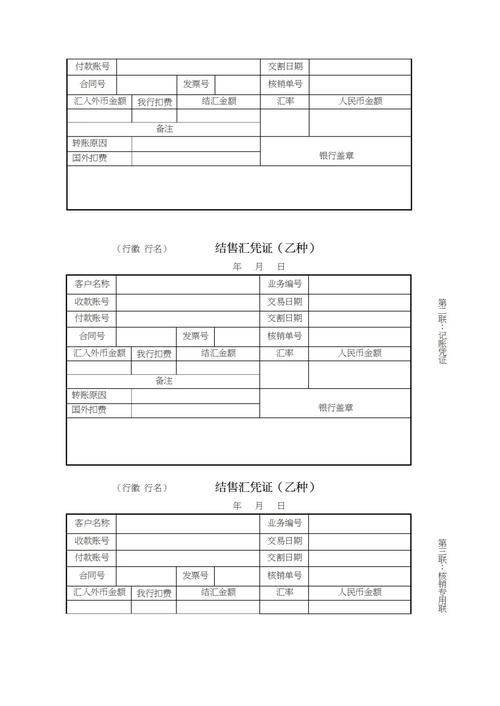
Individual foreign exchange transactions do not require a single fee. The bank's costs are reflected in different purchase and sale prices。
12. How does an offer for an out-of-book sale arise
Response: bank offers are based on international exchange market conditions and international practice. The price of an individual's foreign exchange trade consists of the difference between the base price and the purchase price. The purchase price is the base price less the trade differential and the sales price is the base price plus the purchase price difference. Because of the political and economic factors at the international level, as well as unexpected events, foreign exchange prices are often subject to sharp fluctuations, clients should be fully aware of the risks and opportunities that exist when dealing in personal currency。
Is foreign currency cash the same as cash
A: it's different. Cash usually refers to money and coins in foreign currency or deposits in banknotes and coins. Cash flows are mainly bank deposits obtained and generated by means of international settlements such as cheques, remittances, collections, etc。
Why is there a difference between cash and current prices for personal foreign exchange transactions? Do cash and cash transfers use the same price for personal real exchange transactions
Response: foreign currency banknotes can only be paid for if they are shipped abroad, and the bank that transports them is required to bear the costs of freight, premiums, interest, etc., so that the bank generally makes a difference in the price of the individual's foreign currency. At present, the bank of china offers the greatest concessions to a large number of residents in order to carry out transactions involving the purchase and sale of personal cash. Except for the fact that individual branches have a difference between cash and current prices for individual currencies, the prices of cash and cash are the same。
Can cash and cash exchanges take place through individual foreign exchange transactions
Response: according to the relevant provisions of the state foreign exchange administration, cash is not freely exchanged for cash. Individual foreign exchange transactions are based on the principle of currency exchange and money exchange。
16. Is there a special regulation of the amount of the transaction in respect of personal exchange transactions
Response: yes. Clients who buy and sell their personal real-time foreign currency through counters generally have a minimum of $100, and the minimum amounts for telephone transactions and self-help transactions have slightly increased, with no ceilings. In order to maximize the benefits to clients, the current minimum amount for some branches is at $50 or more。
Are there advantages to large transactions from personal exchange transactions
A: yes. In accordance with international market practices, chinese banks have introduced a number of points in favour of large transactions, i. E., to reduce the price differential between the purchase price and the offer price of the bank on the basis that the intermediate price remains unchanged. The specific conditions for the introduction of large-scale preferences are determined by the individual branches。
18. What are the means of dealing in real-life foreign exchange transactions
There are now branches of chinese banks that trade in personal real-time foreign currency through counters, telephone transactions, self-help transactions, etc. There are advantages in each of the three trade instruments: face-to-face transactions, with a fixed place of dealing, which can be felt in a human atmosphere, especially for investors involved in initial foreign exchange transactions; telephone transactions, which can be transacted quickly and can be handled geographically, especially for busy white-collar investors; self-help transactions, which are informative and provide a variety of technical analysis charts, especially for investors with some experience in foreign exchange transactions. In addition, home-based and online banks have the potential to increase individual foreign exchange transactions。
19. What is a personal exchange transaction
Response: a person's actual foreign exchange trading and telephone transactions is a person's foreign exchange transactions carried out by a private customer using an audio telephone machine during the time of the transaction specified by the bank of china, using the required operating method, by pressing the keys, through the personal foreign exchange trading and telephone trading system of the bank of china。
20 - what is a self-help trade in personal currency exchange
Response: self-service transactions involving the sale of personal foreign currency are the way in which the customer completes the transaction of personal foreign currency during the time of operation of the bank of china, operating through the personal finance terminal in the office, in accordance with the prescribed methods。
21. How long does it take for a person to buy or sell a real exchange
If a customer makes a face-to-face transaction or a self-help transaction, the transaction is limited to the normal working day of the bank of china, which is normally between 9 and 17:00 (some branches may be extended to 21:00), and is not carried out on public holidays, statutory holidays and international market breaks. If a client makes a telephone transaction, the transaction time will be extended as appropriate, with a slightly different situation in the provinces and municipalities, usually from 8. 30 to 21 p. M., with some branches extending to the following morning, when the business is not carried out on public holidays, official holidays and international market breaks。
22. What procedures are required to conduct personal exchange transactions
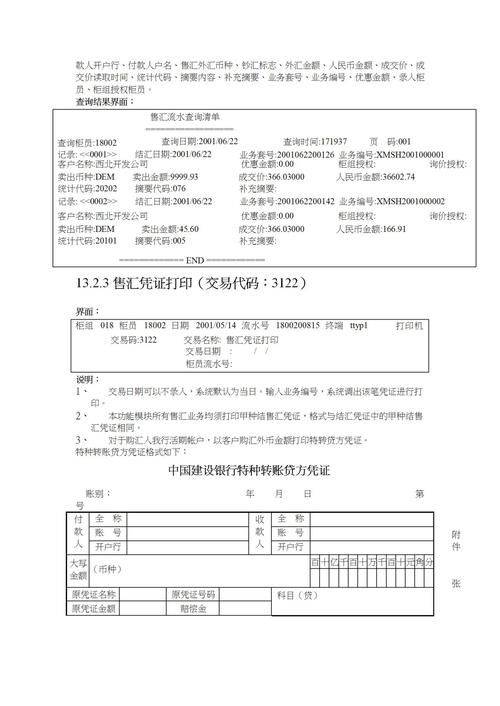
If a customer makes a face-to-face transaction, it is only necessary to hand over personal identity documents and foreign currency cash, bank balances or deposit sheets to a face-to-face service. If a telephone transaction is to be made or an autonomous transaction is to be carried out, it must be accompanied by a personal identity document, cash in foreign currency, a bank account or a statement of deposit, and only after the opening of a telephone transaction or an autonomous transaction at a central point。
What are the ways of dealing in real-time foreign exchange
Response: there are currently two types of market value and commissioning transactions. Market-price transactions, also known as current-price transactions, are concluded instantaneously on the basis of the current offer of the bank; commissioning transactions, also referred to as hanging transactions, whereby the investor may first leave the transaction instructions to the bank, and when the bank offer reaches the level of the exchange price desired by the investor, the banking computer system immediately makes the transaction on the basis of a commissioning order from the investor, which currently applies only to telephone transactions and self-help transactions。
What are the advantages of commissioning transactions
As soon as the commissioning instructions are set aside, they are automatically monitored by the bank's trading system, and the market level is reached and the transaction is concluded. Thus, it helps customers capture favourable price levels in fast-changing markets。
Can clients entrust banks with decision-making and trading
Response: no, the bank of china does not accept foreign exchange transactions entrusted to the bank by its client。
26. Can the sale of a person's real currency be cancelled once the transaction has been concluded
Answer: no. In accordance with international foreign exchange market practice, foreign exchange transactions are carried out in the form of requests for quotations, quotations, transactions, confirmations (exchange rate, currency name of purchase, amount of purchase). Once a deal has been concluded, details such as the level of the exchange price, the amount of the transaction, the currency of the transaction, etc., have been established and are binding on both parties to the transaction, cannot be reversed or cancelled. Because of the rapid changes in the foreign exchange market, chinese banks are ready to aggregate the positions created by their customer trading exchanges and to level the balance with international markets in a timely manner. Even if the market exchange rate does not change significantly after the completion of the customer's transaction, since chinese banks cannot cancel foreign exchange transactions with foreign banks, the client cannot be charged at the then-offer price. As a result, an individual's real exchange transaction cannot be cancelled once it has been concluded。
27. Is the method of liquidation of a personal real exchange transaction t+0 or t+1
Response: t+0. Clients conduct face-to-face transactions and complete currency exchange in a timely manner. Once a transaction has been completed, the bank computer system automatically completes the transaction. In other words, investors can seize multiple profit opportunities in one day if the situation is volatile。
What are the issues that clients should take into account when they are involved in personal exchange trading
Response:
1) due to the vagaries of foreign exchange rates and the possibility of profits and losses to clients, depending on the accuracy of the customer's judgement of market conditions, foreign exchange transactions are left to the client's own discretion and risk。
2) as a result of exchange rate fluctuations, when bank agents deal with customers, there is a discrepancy between the bank offer and the exchange rate entered in the client's application, and if the customer accepts the new price and requests the transaction, the application is re-filled to make the transaction at the new exchange rate。
3) once the foreign exchange rate has been negotiated, the client may not request that it be cancelled. The conclusion of a transaction is based on the entry of the contents of the client's application into the computer by the bank's operator and the printing of the individual foreign exchange transaction certificate。
(4) the client is obliged to check that the content of the transaction is consistent with that of the individual application upon receipt of a certificate confirming the foreign exchange transaction, in order to find an immediate solution to the problem。
5) bank operators are not responsible for the failure of their clients to complete the transaction, as a result of sudden changes in the market or the disruption of the transaction due to other unpreventable factors, during the time required for the transaction to take place。
Why is the foreign exchange trade price difference sometimes greater than usual
Response: when a major event occurs in the foreign exchange market, the volatility of foreign exchange rates on the international market increases sharply, and the risk of behaviour protection adjusts the foreign exchange trade differential appropriately。
What's going on
Response: when a customer carries out a personal exchange transaction, a change in the market exchange rate in the direction of an adverse customer exposes the investor to a greater risk of exchange rate fluctuations. In order to prevent further losses, investors should calm their positions in a timely manner。

What are the special provisions for personal exchange transactions during the euro transition period
In accordance with international practice and the relevant provisions of the mayotte convention, the bank of china may carry out euro transactions during the euro transition period. Transactions may also take place in national currencies that are part of the single monetary system and are currently more active in currencies such as deutsche mark and french franc, which exchange rates with the united states dollar are converted through the euro and its fixed exchange rate with the euro。
32. Are there any currency prices of the euro to other currencies during the euro transition period
Response: during the transition period of the euro from 1 january 1999 to 31 december 2001, the euro did not have any cash, and therefore the prices of the currency were not available at the prices of the personal real exchange card published by the bank of china. Therefore, the client is advised that, by 1 january 2002, if you have a cash in euros, it must be a counterfeit currency。
Which of the first countries to join the euro
Response: the first countries to successfully join the european economic and monetary union were germany, france, italy, the netherlands, belgium, luxembourg, ireland, spain, austria, portugal and finland. The list was decided at the european union meeting held in brussels on 2 may 1998, and the rejection of the first accession to the euro by the united kingdom, denmark and sweden among the eu-15 countries will remain on track. Greece, for its part, had missed a good opportunity because of its excessive debt and fiscal deficit, which had failed to meet the criteria for accession. Effective 1 january 1999, the euro will gradually replace the currencies of the eurozone countries。
How do euro-zone countries convert their currencies to the euro during the euro transition period
Response: the public has the right to choose whether to use the euro during the three-year transition period from 1999 to 2002, on the basis of the principle of “non-mandatory and non-prohibited”, during which the euro and the original currencies of each country will be used simultaneously, with a fixed exchange rate between them. This fixed exchange rate was established on 31 december 1998 on the basis of mers. The specific rates are as follows:
Eur 1 = dm 1. 95583
1 euro = 6. 559557 french francs
Eur 1 = itl 1936. 27
1 euro = 166,386 spanish tower
1 euro = 2. 20371 guilder
1 euro = 40. 3399 belgian franc
1 euro = 40. 3399 luxembourg franc
1 euro = ats 13. 7603
1 eur = 5. 94573 finnish mark
Euro1 = pound0. 787564
1 euro = 200. 482 portuguese escudo
35 - is the exchange of currencies within the euro zone made through personal foreign exchange transactions
A: no. Exchanges between currencies within the euro area are effected through fixed rates of conversion of currencies within the euro area and are not of a personal foreign exchange business, which banks have other counters to handle。