690. 8 kg. Sacar saline grows winter wheat high. Production
Tianshan-xinjiang daily news (journalist han zhuang), “690. 8 kg, ‘kingmeat 183’ wheat successfully seeded salin in the village of calapota”. On 5 july, liu changwen, a researcher and deputy director of the kash regional agricultural technology extension centre, said that “we can also grow high-yielding wheat in arable land with a high level of salinization”
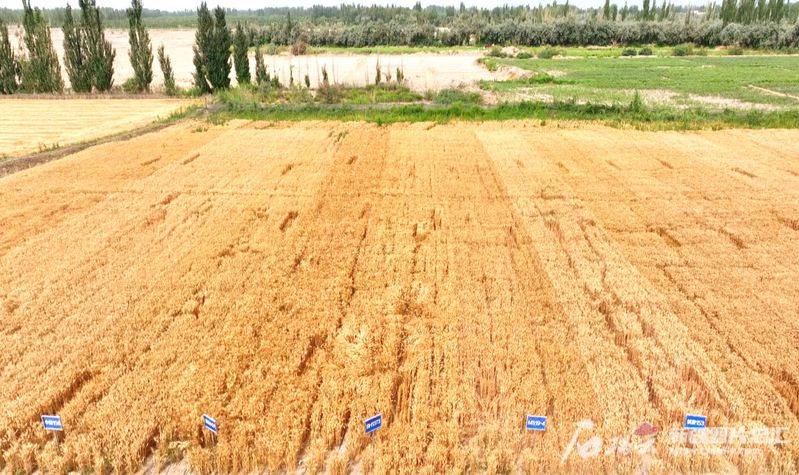
A 100-acre “kingmeat 183” wheat test field at the saline test site in the village of kalapota in bagaawati commune, sharq district. Xinjiang journalist han xinjiang
On 30 june, in a 100-acre “kingmeat 183” wheat test field tested for saline in the village of carapota, municipality of bagaawati, sáchar district, the group randomly collected 1. 15 acres of a series of fields for the purpose of carrying out live measurements and harvesting 809. 3 kg of wheat seed. According to the ministry of agriculture and rural development's national system for the production and inspection of high food productions, the theoretical acreage of “kingme 183” is 690. 8 kg after weighing, measuring the amount of water contained in seed grains and deducting impurities。
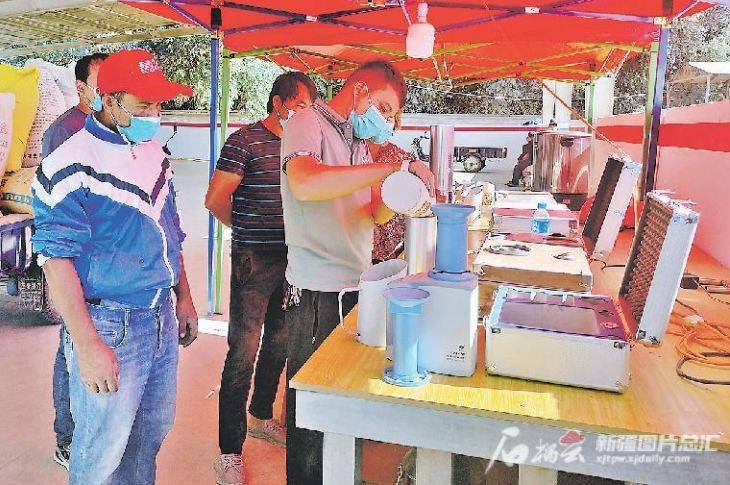
Agricultural extension workers are testing wheat moisture. Xinjiang journalist han xinjiang
“this year, when wheat is soaked, if not affected by the dry hot wind, the seed grain of wheat is more full and must be capable of more than 700 kilograms per unit.” zhang seung-soo, director of the institute of multimodal wheats of the beijing academy of agroforestry, said。
In the commune of bagawati, which is on the edge of the desert, the average land is 0. 4 per cent salty, and nearly half of the arable land is moderately salinized, making crop growth difficult。
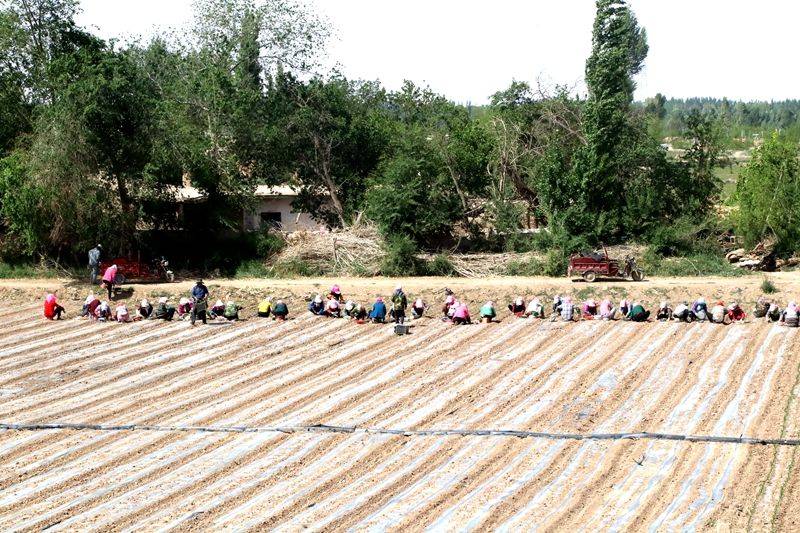
In september 2021, the beijing academy of agroforestry institute and the crop research institute of the sichuan provincial academy of agricultural sciences team selected the village of kalaputa, bagawati commune, sáchar district, as one of the first testing bases for the improvement of salin lands in south china, and planted over 100 acres of new varieties of mixed wheat, “kingmeat 183”。
Zhang seung-cheng said that high yields were achieved through a series of effective field management measures, which provided an important scientific and technical support for increasing food production and food security。
Since planting in the village of calapota last year, experts have studied the effects of different planting densities, irrigation patterns and fertilization on wheat growth. A fine set of field management has not only ensured the survival of wheat, reduced soil salinity, but also demonstrated land improvement。
“on the whole growth chain, the new varieties of mixed wheat `kyomei 183' show strong cold-resistant, drought-resistant, infertile and yield-rich characteristics that reduce soil salinity and are more suitable for planting on salinized soil in parts of the southern border. A member of the steering group of experts on wheat from the ministry of agriculture and rural development and a researcher at the crop research institute of the sichuan academy of agricultural sciences said that。