Studying abroad and studying abroad to provide you with an advanced examination in fine arts: the concept of visualization in drawings, and more information about advanced art studies, please focus on updating our website!
Fine arts advanced examination: the concept of visualization in paintings
What's drawing?
Many first-time painters often listen to the concept of a perception, you have a misperception, you have a good perceiving picture, and so on, but you don't know what the real concept is. What is a perusal about the basic concept in the painting。
East-west people have different concepts of painting spaces, no matter how good or bad they are, except that western people behave in ways that are closer to visual science, while easterners in space are closer to art science. Human beings can learn from each other and learn from each other for good。
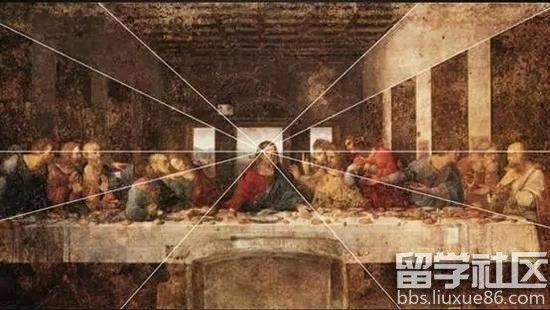
What we are talking about here is a painting term that is applied to the technical techniques of drawings based on physics, optical, mathematical principles, especially the geometry of projection。
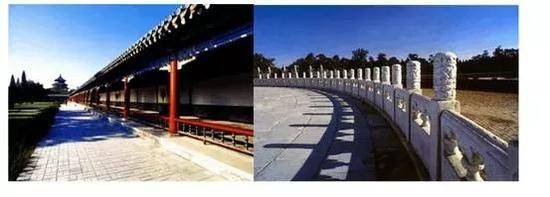
In everyday life, we see images of people and things that vary in size, height, size, length, etc., due to different degrees of distance, different places of view, which is a perceptible phenomenon。
A study of the basic patterns of change and the basic drawing methods, and how to apply them to the writing and creation of paintings, is called drawing-reading。
As can be seen below, houses of the same height have become further and lower, and the same wide roads have become narrower, forming in the right direction an ladder or a diamond formation, known as the perceiving phenomenon。
Why learn to read?
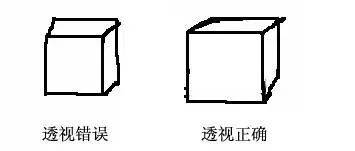
A person who does not learn to paint soon tends to get some insight from practice: it's very small, it's a square desktop, it's a square, it's an elliptical cup, etc. But it's not enough to have an initial sense of that, so many objects we're going to show, so complex, so large in space, so small. Such an excuse would not completely solve all the problems in perspective. How big is the nearest person? How small is the square? How is it right? It is not easy to think in depth, that is, painters who are more skilled in drawing skills, and there are often errors in perceptiveness if they are not carefully treated, especially since writing and creating images require more theoretical guidance, as they relate to issues such as human beings, human beings and objects, human beings and landscapes in the author's vision. Without knowledge of the technical and theoretical aspects of science, it is not easy to deal with the main, spatial, remote, false and so forth, thus losing the artistic and integrity of the picture. It is therefore necessary to look rationally at the changing patterns of vision in accordance with the laws of science, so that we can accurately present stereotic, spatial and moving works of art on paper on paper。
How do you understand the use of visuals in painting?
There are three types of vision: 1. Colours; 2. Decisive sight; 3. Line vision. This is the most common feature of da vinci's summary: linear vision, which accounts for a large proportion of drawings, is based on the assumption of a glass between the painter and the object being painted, the fixed position of the eye (with one eye), the key points connecting the object to the eye and the formation of a vision, which intersects with the imaginary glass. All the points on the glass are where you're going to draw three-dimensional objects on a two-dimensional plane, which is an application of western classical drawings。
Remember the points of view:
1. Near and small. Isn't one of the two objects of the same size 100 metres away in front of you?
2. Near and narrow. For example, the edge of the cubic lens view next to the figure below is wider than that of the remote. And you're standing in the middle of a railroad to see if it's going to get narrower。
Three, it's far away. The object close to you trusts you will see a clearer and more obscure from afar。
This is a fine advice:
Summary of the time taken for the general art examination in the governorates, 2017
Summary of the syllabuses of the general arts examinations in the provinces, 2017
Query time and systematic summary of the results of the general art examinations in the governorates, 2017
Compilation of information from the general arts examinations in 2017 provinces
Arts
Fine arts test
Music test
Examination score line
Examination results query