Summary: equipment maintenance spare parts management is the foundation and prerequisite for equipment maintenance management, and traditional maintenance spare parts management methods are no longer adapted to the development of information technology. In order to facilitate the development of information on equipment maintenance management, to increase the level of information, automation and intelligence of management, to introduce the technology of goods networking in the management of spare parts, preliminary design and exploration of the main features of the network applications for equipment maintenance spare parts management systems were carried out through a brief analysis of the shortcomings of the current maintenance spare parts management methodology and the need for the maintenance spare parts management to network。
Keywords: information networking; information awareness; equipment maintenance spare parts; equipment maintenance spare parts management
The introduction to networking is a corollary of the rapid development of networks and network technologies. However, there is some disagreement over the determination of the first proponents of the internet. It is argued in many literature that the concept of accessibility was first introduced in 1999 by auto-idcenter of the massachusetts institute of technology of the united states of america; in some literature, the concept of connectivity was mentioned as early as in the book the way forward by bill gates in 1995. It is no longer important who first proposed it, but it is important that the application and development of the internet make it easier for people to live, and that its prospects for development are high. In 2009, along with prime minister wen's phrase “sensor china”, research on conceptual models, key technologies and applications of goods networking emerged as a springing event, and the application and development of goods networking was receiving increasing attention from experts in various sectors。
1 traditional methods for analysing the deficiencies of traditional spare parts management are generally too heavily dependent on human factors, low automation and intelligence, and changes in personnel will not facilitate the continuation of spare parts management, affect the maintenance process and delay the normal use of equipment; and traditional methods of managing spare parts are too reliant on paper documents and do not conform to low-carbon environmental concepts。
Applications for traditional maintenance spare parts are usually made by people based on past experience, lack of scientific statistics and analysis, repeated requests for the same spare parts, resulting in a backlog of stocks, while some spare parts are only found to be inadequately stocked during maintenance and require immediate replenishment, which may result in delays in maintenance work。
The identification of and access to spare parts, which is the basis for the maintenance of spare parts management, requires manual identification, manual cross-checking and manual recording of inventory forms, as well as manual recording of product information, which is not only cumbersome but also prone to errors, resulting in incomplete information records. Although many units have developed automated access libraries based on one-dimensional bar code recognition for this purpose, the low level of automation and greater manual intervention remain due to the low level of storage of one-dimensional bar code information。
Traditional management systems have adopted their own approaches, resulting in more and more fragmented management systems, difficulties in sharing information, duplication of spare parts for maintenance of the same equipment in different units and waste of resources to achieve resource-sharing, rapid redeployment and integrated management。
The traditional spare parts management approach lacks tracking and positioning tools for the management of spare parts for maintenance, i. E. Spare parts cannot be tracked once they are stored, cannot be recorded and statistically analysed, and it is difficult to make equipment maintenance forecasts and analyses。
An in-depth analysis of commonly used maintenance-based methods of spare parts management is provided in the literature. Traditional maintenance usually takes the form of restorative maintenance (i. E. Ex post maintenance), which is passive, simplest and precisely the most commonly used type of maintenance. This pattern of maintenance lacks a forecast of failure, an analysis of maintenance spare parts requirements, organizational forms of maintenance and preparation of maintenance panels and spare parts are in a passive position。
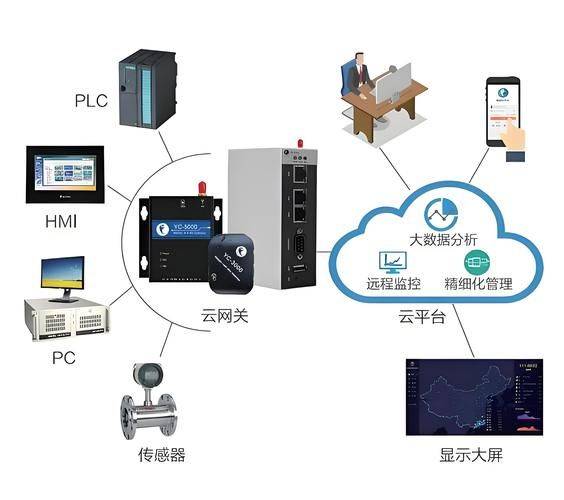
2 on the basis of the human-to-human connections achieved by the demand analysis internet, the internet network not only achieved the original object-to-person goals but also achieved the human-to-physical connection. In the literature, it was suggested that the network of things would encompass both the human and the material of modern society. The literature defines a network of things as a network through which, through various information and sensory devices, any item is connected to the internet, as agreed, for the exchange of information and communication for the purpose of intelligent identification, positioning, tracking, monitoring and management. This definition shows that the ultimate objective of the internet is to achieve intelligent identification, location, tracking, monitoring and management. This concept has laid the foundation for the application of technology for networking in equipment maintenance spare parts management, and the gradual maturity of the technology has made it possible to achieve “equipment awareness, smart management” in equipment maintenance spare parts management。
Equipment maintenance spare parts are defined in the literature as spare parts that are stored to ensure that the equipment is used properly during its life cycle. The management of spare parts for equipment maintenance is a series of management tasks for spare parts planning, production, procurement, storage and supply, based on the principles of assurance of variety, quality, quantity and economy, and in accordance with the original plan to perform equipment repairs or minimize downtime. This is an important part of the maintenance of equipment and is also the basis for maintenance management。

For spare parts managers, spare parts are the basic material condition for maintenance and, therefore, information on the quantity and quality of spare parts for each of the items, the use of the equipment to which they are assigned and the location of the site must be available, and advice can be given to managers to store them to minimize air wear and tear and reduce expenditure. Through information-gathering technologies linked to the internet, full-scale sensory spare parts information has become possible。
For maintenance personnel, the manner in which maintenance is carried out depends on the equipment information obtained, spare parts information and information on past failures and expert knowledge. The literature indicates that the second element of the material network is the conveyance network, which enables maintenance personnel to obtain the above information. At the same time, the intelligent processing of equipment information and spare parts for spare parts, the forecasting of equipment maintenance areas and even maintenance components, etc., provide timely early warning alerts, advance maintenance plans, prepare maintenance readiness, and adopt a precautionary approach to maintenance in order to truly achieve the purpose of intelligent management。
Keywords