In the years of entry, whether it is a research and development engineer who has just come into contact with the patent, a business administration, or a new knowledgeer who has just entered the industry, or even a worker who has done some of the related work for several years, i have been asked a question that seems to be based, but it is very easy to step on it. Isn't literature about technology?"
Every time i hear about this, i'll be patient in explaining: it's the most common and practical cognitive error in the industry. Patent instructions are only part of the patent literature and even the “one tip of the iceberg”. The two are equated, with the omission of key information and ineffective retrieval, the loss of rights borders, the stepping of violation minefields and the waste of this innovative gold mine。
Let's be clear: why do we mix them up
This misunderstanding is not for no reason, but rather for the intuitive feelings of ordinary people。
The longest and most informative part of the patent is the patent description, which contains a description of the technical field, the background technology, the way in which it is implemented, the accompanying chart, and a clear description of the technical principles of an invention and the steps taken to achieve it. This is part of the patent's “technical core”, the first and most visible content of most people's exposure to the patent, and over time, the consciousness equates it with the patent literature as a whole。
In patent practice, however, the literature has never been defined as “spanning”, but as “legal effect + information value”. Just as we look at a contract, not only at the text, but also at the signature, annex, change note, the patent literature is a complete “information package” with any page less likely to read in half and misinterpret everything。
I. A narrow patent literature: the core vehicle, which we often refer to as a “proprietary note + claim”
To begin with the most familiar narrow patent literature, which is an official, legally valid core document of the patent office and is the basis for patent protection, and which refers specifically to the core statutory texts of patent application documents and authorizations, which consist mainly of two core parts:
Claims (the “legal skeleton” of the patent)
This is the legal document at the core of the patent, and the part that many people simply ignore. The statement of claim defines the scope of patent protection and identifies the “technical boundaries that no one else can touch” as the sole legal basis for tort determinations and claims。
I've seen too many r&ds looking at only the technical solutions in the manual, and i feel that “i didn't do the exact same without violating the rights”, and the product falls within the protection of claims and falls into a conflict of rights. It can be said that failure to read a claim amounts to a lack of understanding of the legal value of a patent。
Patent notes (the “technical flesh” of the patent)
This is known as the “technical document”, which includes the name of the invention, the field of technology, the background technology, the content of the invention, the details of its implementation, the attached chart and a summary. Its role is to provide adequate access to technical programmes to enable technical staff in their fields to achieve this while supporting the scope of protection of claims。
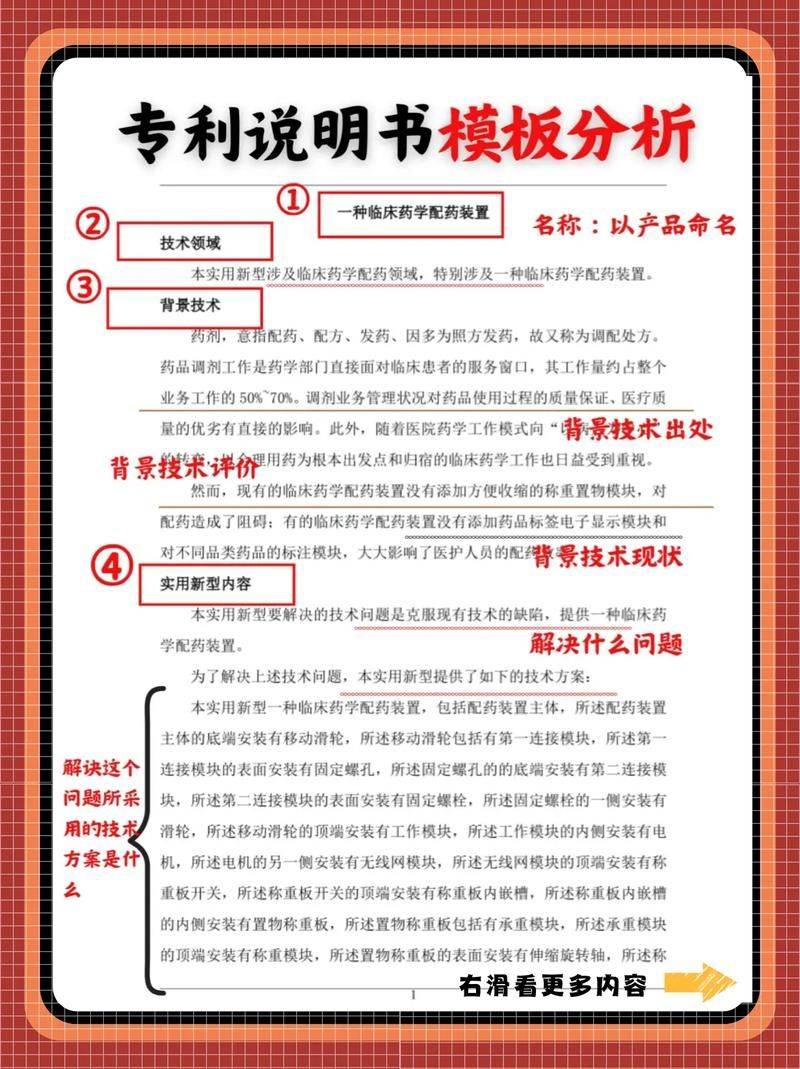
A brief summary: the narrow patent literature = the claim + the patent description (with a summary, with a chart) is the “statutory core” of the patent, the basic text of the review, determination and defence of rights, and falls within the most basic and needed patent literature。
What is a “broad” patent literature
Let's go back to the source and see what the world intellectual property organization (wipo) defines. In 1988, wipo gave a more authoritative definition in its intellectual property law curriculum:
“the patent literature is the sum of published or unpublished documents (or their summaries) containing the results of research, design, development and testing that have been applied for or recognized as the result of the discovery, invention, practical novelty and industrial design, as well as of the protection of the rights of inventors, patent owners and holders of practical new types of registered certificates.”
In this definition, several keywords are worth noting。
First, “published or unpublished documents”。
This means that patent literature is more than just a final, publicly published brochure. From the moment you submitted your patent application, to the various official documents generated in the course of the examination, even those that were ultimately not authorized, fall within the scope of the patent literature。
Second, “including information on the results of research, design, development and testing”。
This tells us that patent literature is worth more than the ultimate technology. It documents a complete process — changes in r & d thinking, accumulation of test data, and the path to solving technical problems。
Thirdly, “the total name of the relevant information”。
This is a very inclusive expression. In line with further clarity of the wipo standard st. 10, the patent literature includes, inter alia, patent instructions for various types of inventions, practical novels, visual design instructions, patent bulletins, digests, indexes and classified information。
In other words, the patent literature is a “general title of information” rather than a specific document。
Why does “a broad sense” matter
By clarifying the broad concept, when we look at the value of patent literature, we find that there are so many portals that were not noticed before。
From the perspective of “published or unpublished” look
The notification of review is a typical category. It is a record of communication between the reviewers and the applicant, and often contains the reviewers'search results of available technology, the basis for judgement of novelty and creativity, as well as the reasons and modifications in the applicant's response。
If you only read the final statement of authority, this information is not visible. But if you can access the files from the patent office's public sources (such as the pair system in the united states, the china review information referral system), you can see: what contrast documents are used by the reviewers? How did the applicant argue? How did that end
This information is valuable for understanding the scope of patent rights, assessing stability, and even informing their own writing strategies。
Perspective on “research, design, development, test results” look
There is also an easily neglected part of the patent literature: community patents. The same invention was patented in different countries, forming a patent family。
If you look at the same patent together, you find a lot of interesting information. For example, claims submitted by applicants in different countries may be different — either broadly or narrowly. This variation often reflects the applicant's importance to different markets and risk assessment。
In some cases, the content of the instructions in the patent is not identical. The applicant added new experimental data to the subsequent application or adjusted the presentation of the technical programme. These changes are important clues to the evolution of technology。
From the perspective of the overall name
The patent literature also includes various bulletins, digests, indexes and classified information. These “neighborship” information tends to be a shortcut to a quick overview of a technical field。
For example, the patent classification is itself a good “technical map”. A subdivision of a technical area can be quickly understood through the hierarchical structure of the classification numbers. The patent bulletin, on the other hand, provides an updated public list of patents and is the first source of tracking technological developments。
Iv. A simple metaphor
If patent literature is compared to a complete archive box, then:
Only patent instructions, like the thickest document in the box, were found, ignoring what was equally valuable。
V. What are the practical implications for us
Having said that, one might ask, "how does this concept help my day-to-day work?"
I will give two examples。
Example i: in technical research
If you only search authorized patent statements, those rejected applications still have technical reference value may be omitted. While some technology options are not mandated, their technical design, experimental data and solutions remain valuable references for you。
Example ii: in case of tort risk assessment
If you look only at the authorized text and not at the documents under review, some important limitations may be overlooked. The statements made by the applicant in response to the review are sometimes used to explain the scope of the protection claimed. This is an important consideration in tort proceedings。
Example iii: when conducting competitive intelligence analysis
If you look only at patents from one country and do not focus on the distribution of patents from the same people, you may miss the strategic intentions of competitors in overseas markets. The geographical distribution of patent families tends to reflect the real thinking of enterprises better than that of a single country。
And finally, don't waste the patent money. Mines
Many people find it incomprehensible that the patented literature is locked in the wrong zone of the patented = manual, staring at the technical content while ignoring the legal and commercial values behind it。
The patent literature is not a cold legal text, but a compass for innovators and a moat for enterprises. Whether it is a researcher, a business manager or a knowledgeer, it is only when the boundaries of a narrow and broad patent literature are identified and patent information is read in its entirety that it can truly be used for innovation and empowerment。
Next time you get another patent file, don't just turn over the instructions, look more at the claim, check more on the legal situation, double over the review file, and you'll find that the original patent contained so much "outside sound"。