“at 3:00 a. M., the first time i woke up crying,” “two hours to sleep, three minutes to wake up” — this is the night of many new parents. However, at the home of beijing's mother, livy, the two-month-old son has been able to sleep from 8 p. M. To 4 a. M. For six hours in a row, leaving the family to say goodbye to the “night war”. This one, which seems to be “happily for others”, hides a new trend in the field of child care in 2026: scientific guidance rather than forced intervention, and respect for the rhythm of the baby is more surprising。
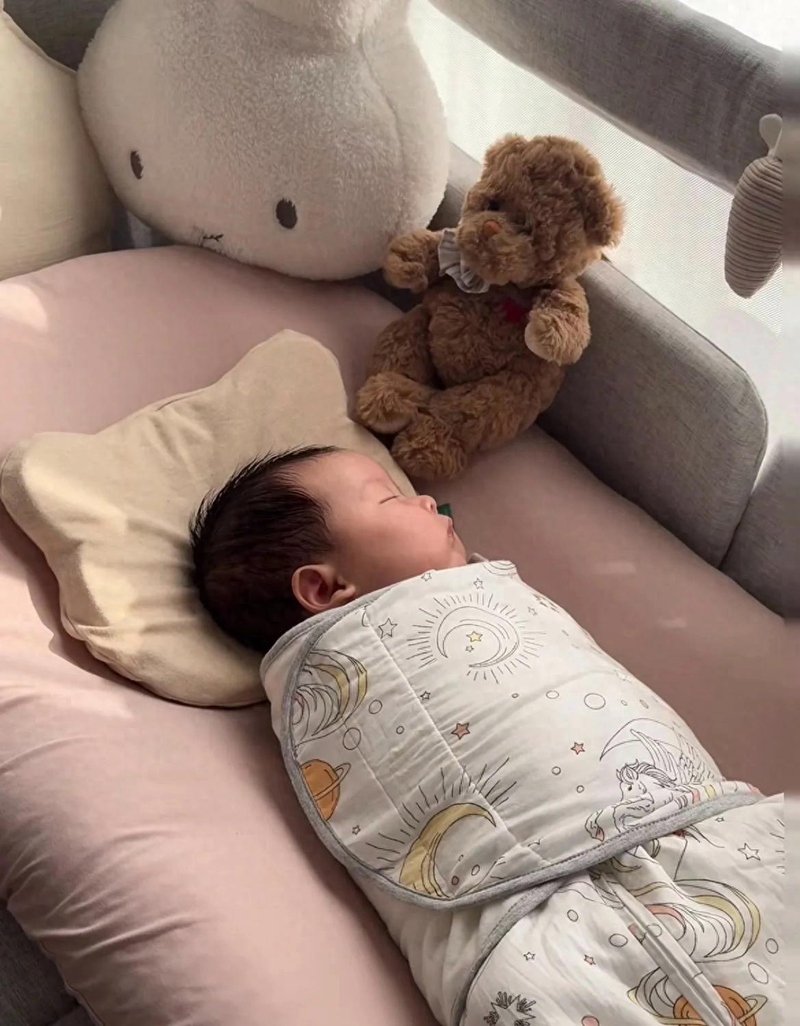
In january 2026, china's pre-school education institute published a guidebook on sleeping development for children of 0-3 months of age: 70 per cent of children of 2 months of age already have the potential to sleep autonomously, and the core is whether or not to capture the biological signals of the baby and give it the right direction, rather than “naturally saving” or “coercive training”. This conclusion breaks with the inherent awareness of the “february wake up” and allows more families to see the possibility of scientific parenting。
Li's child-rearing experience is very instructive. Before the full moon, the baby had been a regular “three or four-time awakening” baby, with the whole family sleeping in turns and getting tired. At one chance, she saw in the parenting community a “slow-tracking” shared by other parents, starting to adjust with an experimental mindset. Instead of replicating complex training programs, she started with the most basic “capturing signs”: when the baby shows signs of eye rubbing, drowsing, and wailing, it ceases to interact, and does not wait until crying. “the baby used to be tired of crying, but the small, quiet signals are the best time to sleep.” livy shared the road。
Fixed bedtime procedures are another key. At 7:30 p. M. Each night, livy carries out the three sets of “showing for sleeping bags and singing for children” with no cell phones, no tv and a quiet environment. In the beginning, the baby will be excited to slit his legs, and after three days, when it hears the familiar little star melody, it will automatically calm down. This ceremonial sense was created, as highlighted in the "core information and interpretation of sleeping health" issued by the national organization for the defence of love in 2025, by means of repeated behaviour, which allowed the child's brain to be re-reflected under conditions and understood that “these actions are followed by sleeping time”。
Environmental optimization is also essential. Livy adjusted the baby's sleep environment to: full curtains with only one brightness. A warm light light light of 10lux avoids strong light inhibiting disillusionment; room temperature is controlled at around 22°c and humidity is maintained at 50%, reducing disturbance of sleep by environmental factors. In the daytime, “trisension” is maintained, with sleep arrangements of approximately 1. 5 hours at 9 a. M., 1 p. M. And 4 p. M., not to cause the child to be overworked or to prevent too much during the day to affect night sleep. These details appear to be simple, but they correspond precisely to the biological needs of the child and the child。
It is a matter of concern that livy's success is not “silent” but rather the result of family collaboration. The husband took up the task of hiccups and night observation, and the elders abandoned the traditional notion of “cry and feed” and respected the rhythm of scientific guidance. This family consensus is at the core of modern parenting. In 2026, the trend towards child-rearing has long gone away from “playing alone” to “family participation, scientific collaboration”, and parents are no longer a group under pressure alone, but are working with their families to explore appropriate child-rearing methods for their families, based on respect for the child's growth patterns。
Many parents are caught up in “climbing anxiety” and are suspected of having problems with their child-rearing when they see their babies sleeping early. But livy's experience tells us that every baby's rhythm is different, and the key is to be patient and guided, not blind. Experts from the china pre-school education institute also remind that a child of the age of 2 months is not required to pursue “extra-suspensive” for the whole period of time, and that normal development is achieved through five to six hours of continuous sleep. Over-exploiting and forcing the baby to “sleep hard” can lead to sleep anxiety。
As the concept of parenting has escalated, more and more families have begun to move from “excessive intervention” to “continue”. In 2026, the new parents were no longer committed to a “perfect parenting template”, but focused more on observing the individual differences of the baby and adapting them to scientific guidance. As livy said, "i didn't train him deliberately, i read his needs, gave him the right circumstances and patterns, and i didn't expect him to surprise me." this “no anxiety, no coercion” child-rearing mentality not only makes the baby sleep better, but also gives parents more tolerance and happiness in the child-rearing process。
Sleep is an important cornerstone of the growth and development of infants and young children, and the guidebook of the national organization for the protection of children and the protection of the rights of the child makes it clear that adequate and regular sleep contributes to the development of the child's cognitive capacity and increased immunity. But for the new parents, the problem of the baby's sleep was never just a question of “sleep and sleep”, but a subject of “how to find a balance in childcare”. Behind the full-sleeping of children of second-month age is the spread of scientific knowledge, the advancement of the concept of the family and, above all, the profound interpretation of “childrearing is growing” — parents are improving themselves while reading the baby。
Topical discussion