Hello, i'm hairy. I've never run。
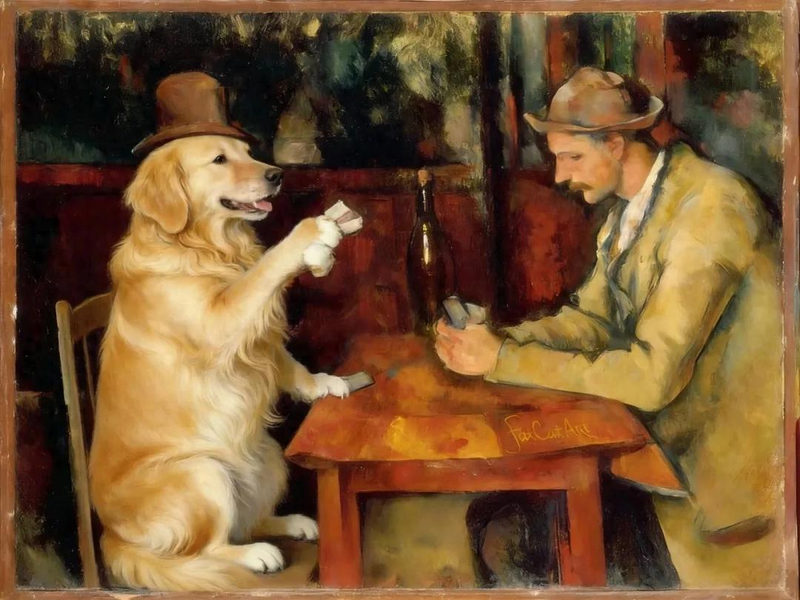
Pictures produced by ai for postage
It's not about trafficking anxiety, it's not about teaching, it's about seeing a lot of "wrecks" before and after spring。
The title does not refer to money, not to wealth, but to a state that does not create personal financial reality。
It's probably just moonlight, but by the end of the year this high-intensity consumption plus human stress test, the destructive power is directly exponential。
Today my friend sent me a message saying that the current generation of young people had three sets for the new year: red mobile phone bags, crazy shopping, back in town eating dirt。
Isn't this a typical new year without a conceptual syndrome on money
If life is a game, then new year is a copy of the annual team。
The boss you want to play includes, but is not limited to, the procurement of boss for new year's dinner, the distribution of boss in red bags, the gift office boss, and the socialization of family members boss。
Most horrificly, it was not until the fight that many found that they neither had enough gold nor equipment to keep up with the version。
Just like one of my best friends, at the end of the year, he felt like he was very rich。
As a result, after the spring break, it became apparent that parents were given a new phone of 4,000 and children were given a red bag of 3,000。
Annual gift 2,000, round-trip ticket 3,000, reunion, dinner 2000..
14,000 evaporates in an instant, and she earns more than 5,000 a month。
And even more to my head, she was watching the "final price of the year's day" on the air, and she was so passionate that she had the robot to clean up the ground and say she wanted to improve the quality of life for her parents。
When the credit card bill came out, she was in trouble, seven days in new year's, three months' pain。
This is typically the “money perception disorder” of the electronic payment age。
You're paying only one print, but you're not aware of half a month's pay, 100 hours' overtime, 300 pounds of rice sold at home by your parents。
That's not even the kind of invisible relative pressure that comes in when you meet relatives and friends。
For example, it's good to drive a $100,000 car, not to be ashamed to drive back, rent a good car, burn half a month's wages for days。
At this point, if you have no idea about money, it's like playing games without looking at a map, sticking a hard copy in the head and not counting blood and blue when you're on fire。
Data show that chinese consumption per person for the spring season has exceeded $6,000。
But you'll find that at least 30 per cent of them are regrets for consumption。
My friend's consumption list for last spring was very representative. She first bought a red coat, costing $1280, on the grounds that new clothes were to be bought in the new year。
Then he bought a box containing a red car set for $298 on the grounds that the circle of friends could not be left empty in the new years。
It then hoarded enough snacks for two months, costing $500 on the grounds of discounts。
In the end, the family was replaced with a full “spring-only” decoration, costing $800, on the grounds that the family should have a climate during the year。
This total cost of $2878, of which at least $2,000 is wanted, not needed。
This passivity in numbers is magnified indefinitely by many people over the years。
More magically, it's red bag inflation。
In the post-80s memory, $50 is a huge sum, but now, 100 for relatives and children, it's a little too much。
And the red bag in the family and the $10: thank you, boss. But turn around and give the anchor $50 in the air。
Sociology has a concept called “gift economy”, which is the construction and maintenance of social relations through gifts. But now spring presents are increasingly becoming a demonstration of financial resources。
In particular, young people who have returned home with gifts, red bags and cars are silently saying, "how am i out there?"。
So a lot of people use three months of survival for three minutes of vain satisfaction, which is typically a “money cognitive disorder”。
This terrible place is where they use the expected income as if it had already been made available, and leverage has increased。
There is also a psychological concept called “psychological accounts”, which means that people usually put money from different sources in different “psychological accounts”。
The end-of-year award is the worst-hit area of this trap。
A lot of people get the year-end prize, and the first reaction is not that i get paid for working overtime every year, but that's the money that falls from the sky。
And so there's a lot of magical scenes: they use year-end awards to empty out long-standing non-essentials。
Please eat and sing, or add 698 to the game。
It was only after spring break that they discovered that the year-end awards were running out and that the financial chain had returned to a state of tightness。
What's worse is the soft trap of instalment payments, which can now be divided into annual instalments, 12 without interest, 66 a month
It doesn't sound like much, but the merchants won't tell you, and you're also on a break for mobile phones, computers, hairdressers。
I've seen a very typical case, a man who heard a whisper in november, and the end of the year award is 50,000。
Dude, before spring break, he used a credit card to fill his new cell phone, and then bought his wife an early promised bag。
This is not over, he reported the year of overseas study to the children, and by the end of the year, the end of the year award was just over 10,000, and the boy was a fool。
Because of the many expenses of the year, they were waiting in line back, and the result was that during the year, the whole family had to go to hell。
His actions were called “expected discounts”, which meant pre-arranged the money that had not been left in the bag, and once it had been lost, it was full of holes。
It's a terrorist attribute called self-advancing。
They don't know what money is, they don't know what it is, red bags, gifts, hospitality, entertainment... This upgrade is fully flowering for them。
Worse still, this level of consumption, once it has developed an “arranged effect”, is very difficult to fall next year。
And also, they misdirect consumption as an investment to pay for false class experience。
What's a year's hard work for a businessman who's going to shoot everyone with all his words
Or bringing a child to the world (high-priced resort or overseas travel), which is to some extent true。
But the problem is that those who do not have a concept of money do not know the boundaries between modest incentives and excessive overdrafts。
They are more confused about consumption and investment。
Just as you loaned a good car to boost business, it turns out that business partners value the paid capital and cash flow of your company。
It's better than spending six months buying a bag that you think you'll fit into a circle, and it turns out that the people in the circle are talking about equity and options, and nobody's paying attention to what you're carrying。
Or you're the one who took the kids to the maldives to “see the world”, but you don't know it's more valuable to take them to museums, climb mountains and talk。
The horror of such behaviour is a lack of awareness of “hidden debt”。
A lot of people come up in the middle of the year with their hands full of red bags and guests。
Since then, there's been an emergency. I'd like to ask you for a change
It's better than when you're at the head of a party, and every time you go home, your friends think about it
After all this talk, do we have to search for new year's。
Of course not. We don't advocate extremes。
The central idea is to manage your spring festival like a micro project。
A few years ago, you sat down to figure things out, and your income was the most conservative (when you don't have the year-end prize), and you spent a line。
Suppose you're gonna take $10,000 for the new year, remember, the $10,000 must be free。
It doesn't affect your daily meals, your mortgage, your rent, your credit card。
Following the principles of 50-30-20, 50 per cent of the budget is allocated to the necessary expenditures (red bags, base annual goods, transportation)。
Thirty per cent was spent on flexible consumption (upgrading gifts, aggregating meals) and 20 per cent on contingency reserve。
A comprehensive inventory is conducted before the section to determine how much of its savings, liabilities and fixed expenditure it has。
How much red bags are to be given in the year, how much gifts are to be bought, how much money to party, how much transportation is to be paid。
And then, to make full use of the electronic bookkeeping tool, i usually use “handwritten notes”。
Set yourself a consumption cooler period, and any non-essential consumption exceeding $500 is forced to think for 24 hours。
Finally, a portion of the cash is prepared for red bags and small purchases to feel the process of paper currency getting thinner。
Remember to set a price cap on my face and make it clear how much i can pay this year。
If you exceed that, no matter what others say, smile, don't take it。
Let's see, real face comes from your long life and strength, not from the days of spring。
Finally, there is a crucial step forward, namely, the re-entry after the year。
At the end of the year, compare the actual spending with the budget to see where the money went, what was worth the happy consumption and what was purely a hot face tax。
This process is the fastest way to build a “financial reality”。
In the end, the test of money in the past year has exposed one's control over one's own resources。
Those who have suffered a financial collapse in a year have lost their sense of clarity about money coming and going。
They forget that every penny corresponds to a period of life, a energy, a choice。
Here i share the view that real financial freedom is not what you want to buy, but what you don't want to buy。
When everyone is buying and buying, you can say, "i don't need this."。
And when all those around you are competing, say thou: i am well。
That's the real sense of control。
Like a game, it's never as hard as a boss, but it's about whether you know your blood strips and your blue amount。
Looking at your financial situation and managing your consumption desire, you can enter the next level in a copy of this year's year without overconsumption or missed experience with a sense of enrichment and surplus。
After all, it's not about how much you spent those days, it's about the next 300 days。
Spring is only a festival in a game, and you are the one who wants to play a whole year。
You and i are willing。
With regard to articles:
There are 400,000 fans on the internet, and the article focuses on two things: money, evolution, and the continuous export of business perceptions, real-world strategies, and progress。
Growing up together, watching me, giving you different readings and insights。