From a technical point of view, “artificial intelligence” is a synonym for a variety of technologies, such as machine learning, data mining, robotic technology, and expert systems, while a general reference to “artificial intelligence” lacks practical meaning. Today's artificial intelligence technology corporation works at the “sensitization” level, mainly through model recognition techniques such as image recognition and voice recognition. Now, at the level of “cognizance”, knowledge mapping is widely appreciated, and there is hope that it will become “brain”. Typically, ibm watson explores the direction of cognitive calculations
Smart age
From “calculating intelligence” based on clear rules and specific areas, to “sensitization intelligence” of voice, images, video recognition pre-processing, to “cognitive intelligence” with understanding, reasoning and interpretation, it is becoming increasingly difficult. As the data dividend is depleted and the sensory intelligence represented by deep learning meets the ceiling, cognitive intelligence will be the focus of ai development in the coming period and the key to further unleashing ai's capacity. Cognitive intelligence applications require a wide range of needs: precision analysis, intelligence search, smart recommendation, intelligent interpretation, interaction of natural persons, deep relationship reasoning, etc., and require comprehensive and thorough innovation in traditional means of informatization to free human brains and significantly increase machine productivity. Knowledge mapping is a key technology for cognitive intelligence, an enabler for machine cognitive intelligence
Knowledge mapping
Knowledge mapping, as a semantic network, is one of the important ways in which knowledge is expressed in the big data age; as a technology system, it is representative progress in knowledge engineering in the big data age
The machine understands the nature of the data as a mapping of the entities, concepts, relationships from the data to the knowledge base; the essence of the machine's interpretation is the process of using the entities, concepts, relationships from the knowledge base to explain the phenomena
Knowledge is the collection of objective facts, ideas, theorems and justice that humankind draws from the process of understanding and transforming an objective world
Origin and development
Knowledge mapping, which began in the 1950s, has been broadly divided into three stages of development
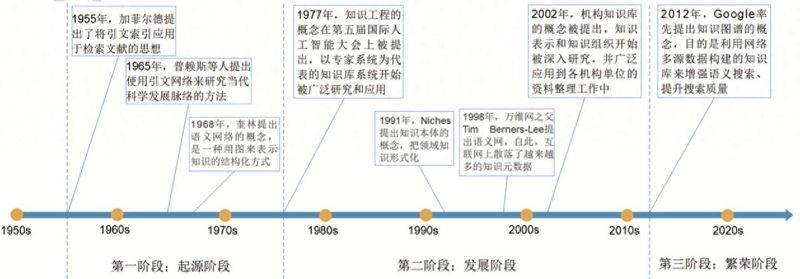
History of knowledge mapping
Knowledge mapping major technologies
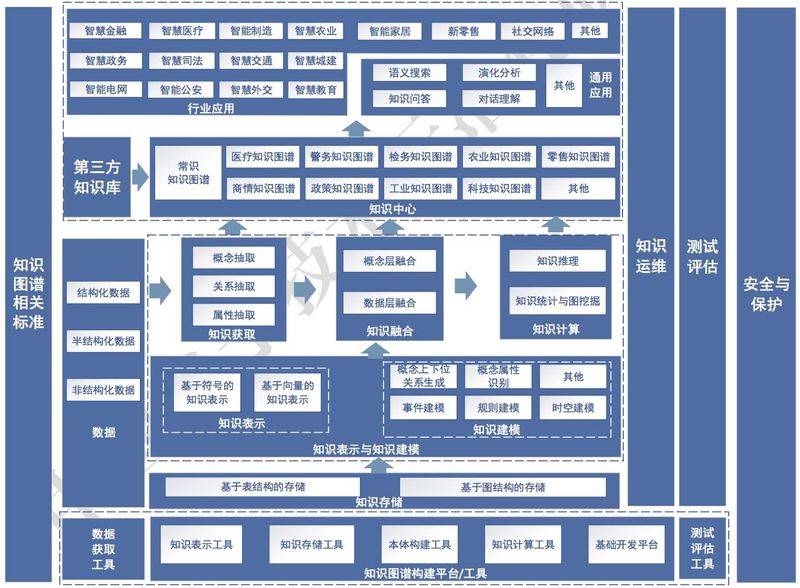
Technical architecture of knowledge mapping
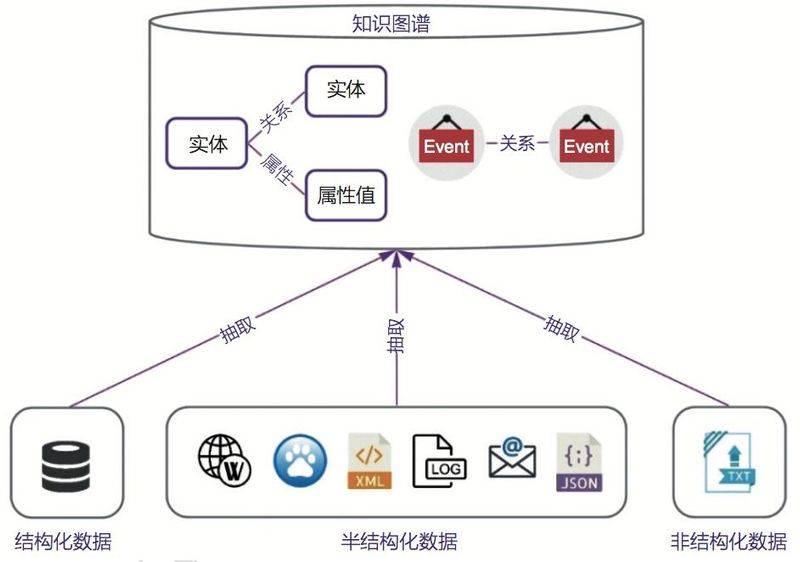
Mapping of knowledge acquisition
The data from different sources, different structures (structured, semi-structured and non-structured) are extracted from knowledge extraction techniques to generate computer-enabled structured data to be stored in knowledge maps. Currently, the acquisition of knowledge is mainly related to text data, which can be divided into entity extraction, relationship extraction, attribute extraction and event extraction by object of extraction. There are usually four ways: crowdsourcing, reptiles, machine learning, expert methods
Entity extraction (named entity identification, ner) refers to the automatic identification of proprietary terms (agency name, place name, person name, time, etc.) or meaningful terminologies from the text library as the basis and key to knowledge mapping and knowledge acquisition, the accuracy of which is extracted by the entity directly affecting the quality and efficiency of knowledge acquisition the automatic discovery of semantic relationships between named entities in the text using a variety of technologies, the projection of relationships in the text to the properties of the entity in the three-tier group of relationships for the entity to achieve a complete description of the entity, since the attribute of the entity can be considered as a terminological relationship between the entity and the attribute value, the attribute extraction task can be translated into a relationship extraction mission event the change in the matter or state that occurs at a given time or time, within a given geographical area and is composed of one or more actors involved in the action or state
Knowledge is the collection of objective facts, concepts, theorems and justice that humankind draws from the process of understanding and transforming an objective world. Knowledge expression is the transformation of knowledge that exists in the real world into computer-identifiable and processed content, a data structure that describes knowledge, a description or agreement of knowledge, and a basis for knowledge acquisition, integration, modelling, computing and application in knowledge mapping research. Knowledge expression methods are divided mainly into
A symbol-based knowledge indicates method. A first-order logical expression of words, creation rule expression, framework expression, semantic network expression based on knowledge expression of learning
Design a bottom-up storage approach for knowledge mapping forms and complete the storage of various types of knowledge to support effective management and calculation of large-scale mapping data. The knowledge storage party targets knowledge of fundamental attributes, associated knowledge, event knowledge, time series knowledge and resource knowledge. The quality of knowledge storage directly affects the efficiency of knowledge queries, knowledge computing and updating in knowledge mapping
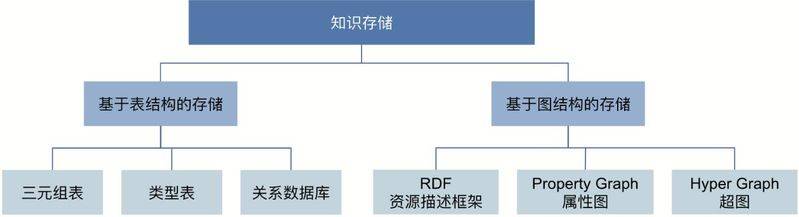
Knowledge storage
Knowledge storage methods and tools
Storage based on table structure (relationship database) storage based on chart structure (chart database) properties chart, resource description frame (rdf), hypergraph (hyper graham)
Knowledge modelling refers to a data model that creates a knowledge map, that is, the way in which knowledge is expressed and a home model is constructed to describe knowledge. There is a need in this body model to construct the concept, the attributes and the relationship between the concepts. There's usually a way down and up
Modelling methods
Manual modelling step: identify the field body and tasks, reuse the model, list the elements of the area covered, define the classification system, define the attributes and relationships, define the constraints
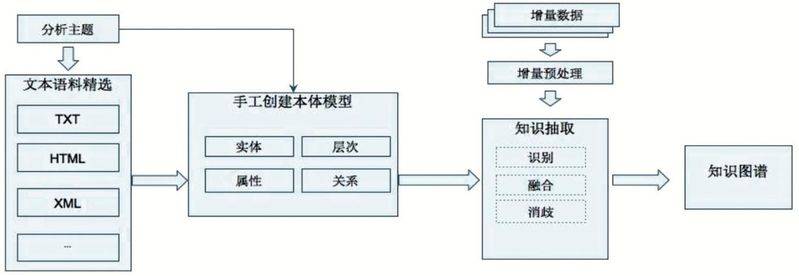
Manual modelling
2. Semi-automatic modelling. Semi-automatic modelling is based on the automatic acquisition of knowledge maps, followed by extensive manual intervention processes. Methodologies for using natural language processing techniques can be grouped into three broad categories: knowledge modelling based on structured data, knowledge modelling based on semi-structured data and knowledge modelling based on non-structured data
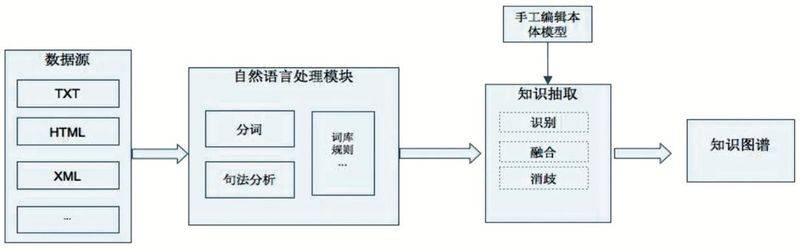
Semi-automatic modelling
Knowledge convergence is a cross-cutting discipline in the integration of knowledge organization and information that is demand-driven and innovative in order to capture new knowledge, implicit or valuable, through the treatment of knowledge acquisition, matching, integration, excavation, etc., on a wide range of dispersed, isomeral resources, while optimizing the structure and content of knowledge and providing knowledge services
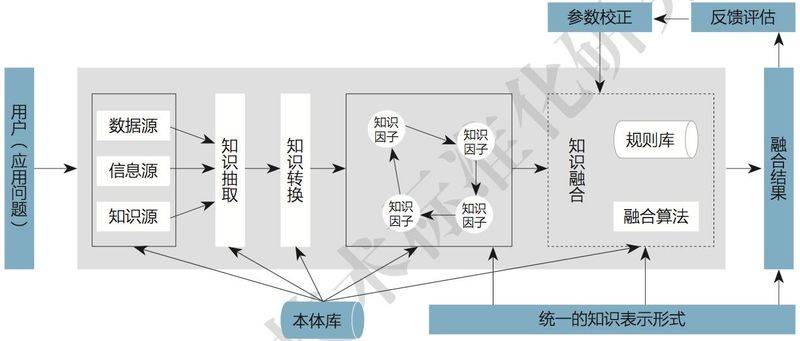
Fragmentation of the concept of knowledge integration
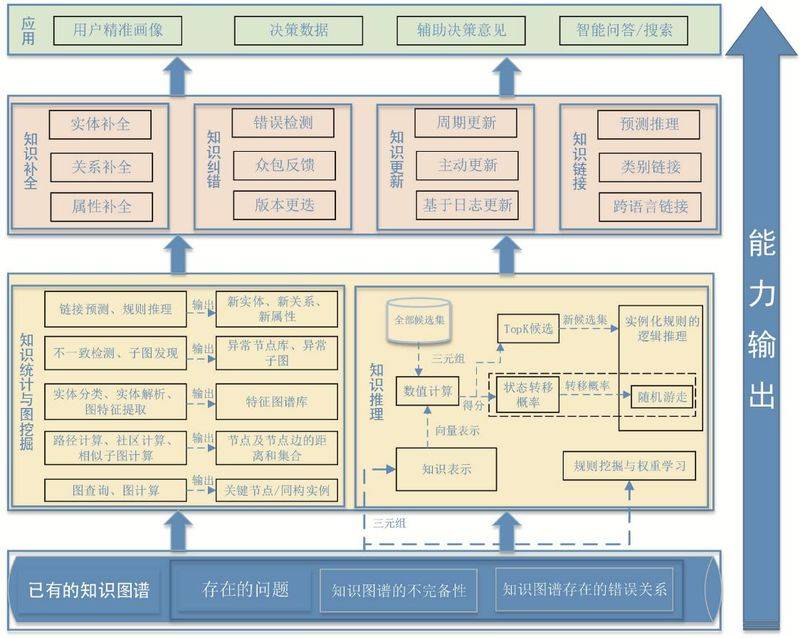
Knowledge computing concepts
Knowledge transport refers to the process of evolution and refinement of a full industry knowledge map based on user feedback on its use, the emergence of the same type of knowledge and new and increased sources of knowledge, following the initial construction of the knowledge map, which needs to be managed in such a way as to ensure the quality and gradual enrichment of the knowledge map. The flow of knowledge mapping is an engineering system covering the entire life cycle of knowledge mapping from knowledge acquisition to knowledge computing. The dimensions of knowledge mapping include two areas of concern: the monitoring of the construction process of knowledge mapping based on incremental data from data sources, and the discovery of knowledge errors and new business needs through application layers of knowledge mapping
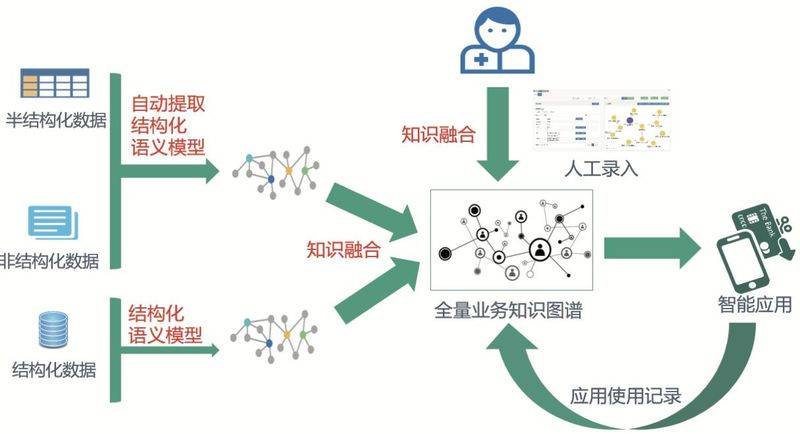
Knowledge development
Challenges in knowledge mapping