For ordinary car owners, it is never the appearance or configuration that is the most difficult to buy a car, but the kind of power that should be chosen. Fuel trucks, mixers, plugs, increments, pure electricity, which sound similar, are actually open to feelings, daily expenses and applicable scenes。
Many people went to the 4s for the first time and were sold to say that they were turning their heads and ordered cars. It is only when we really get on the road that we find that this power is not at all right for ourselves, either it's too expensive or it's too troublesome and it's getting worse。
Automobile technology continued to upgrade in 2026, with new adjustments to the related vehicle purchase and access policies. The article does not need to be difficult to understand terms, does not pile cold parameters, and uses the most tangible words to explain at once the principles, costs, strengths and weaknesses of the five mainstream dynamics, and is better suited to the population, and then chooses the car, which is more in the heart and not easy to step on。
Fuel truck: classic oil burn, low-cost, low-cost
Fuel trucks are the most mature type of power in the market, growing for hundreds of years, driven by gasoline and without electricity. In short, gasoline is burned in the engine, which drives the mechanical parts to work, and then the power is passed on to the wheel, so the car can run normally。
By 2026, fuel vehicle technology was still being optimized, with thermal efficiency of mainstream domestic motors generally at 35-40 per cent, with some high-end models exceeding 42 per cent, saving much more fuel than earlier ones. More than 100 km of road congestion in urban areas is 7-10 litres, and high-speed power is reduced to 5-6 litres at a cost of approximately $0. 5-0. 75 per km, calculated at $7. 5 per litre for petrol no. 92。
Fuel trucks have a strong advantage, refuelling quickly, leaving in three to five minutes full of fuel, and all the country's gas stations are visible, leaving long distances and remote areas without fear of renewal, and running 600 to 800 kilometres in full oil. Mechanical structures are mature and stable, there are fewer minor problems, there are many repair sites and maintenance prices are transparent. Moreover, it is not sensitive to temperature, and winters and summers are stable and do not experience a significant power contraction。
Of course, short plates are also realistic, and the city has a high cost of fuel for cars, which is almost $1-15 million a year. Moreover, with blue cards, no green road rights and no acquisition tax exemptions, some of the restrictions on urban travel would be affected. A comparison of engine noise and vibrations is evident, with a slight setback at the breakout, which is less smooth than a tram。
Fuel trucks continue to be a safe choice, often travelling long distances, to remote areas, without any chargeable conditions at home, or simply to buy a stable, durable, serviceable car。
Oil and electricity mixer (hev): fuel is more fuel-efficient, not a new energy model
Many mistakenly assumed that oil- and electricity-mixing was a new energy vehicle, and in fact in 2026 such vehicles were still in blue, without any new energy concessions, essentially a more fuel-efficient fuel truck。
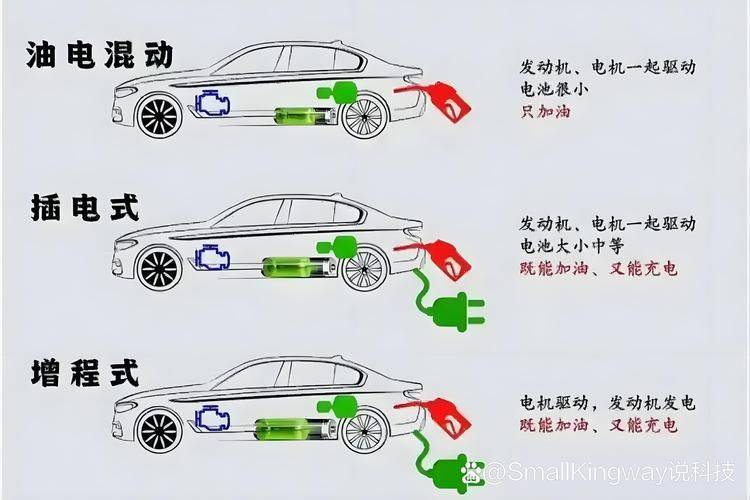
It adds small batteries and batteries to the fuel truck, does not have external chargers, and the power is recovered from excess engine power and brake power without artificial charge. In urban areas, when speed and traffic are blocked, electric power is driven to avoid the most expensive conditions of the engine; medium-speed is driven directly by the engine and the electric power is supported in a timely manner; and energy is recovered at a slower rate and the overall fuel is saved。
Simply put, it is the exclusive use of oil tankers, which can run by refuelling, saving 30 to 50 per cent of fuel compared to the equivalent. In 2026, 100 km of oil in mainstream hybrid vehicles was consumed at 4-5 litres at a cost of approximately $0. 3-0. 4 per km, saving considerable long-term revenue。
Its benefits are also intuitive, with no charge, no continuous anxiety, low battery failure rates, low maintenance, and smoother driving than oil trucks. But it is not a new energy source, there is no policy benefit, there is no pure electricity to drive, and high-speed oil savings have average effect, and prices are more than $12,000 more than those of tankers。
Without the conditions for charging, trying to save fuel and maintaining fuel habits, oil and electricity mixing is appropriate。
Phev: oilable, more fully capable, 2026 home-based hot choice
Interpolation is a formal new source of energy, with green cards and acquisition tax relief of up to $15,000 in 2026, and the most suitable dynamic type of activity at present。
It carries large batteries, engines and double generators that can be recharged and refuelled, freely switching the driver mode. Pure power runs when electricity is sufficient, with zero fuel consumption and quieter; power is less than 20-30 per cent, the engine is automatically activated and can be powered directly, with both power and fuel consumption。
In accordance with the policy of 2026, complete new energy concessions are granted on a 100-km or more pure re-carrying basis, mostly in the 150-200-km pattern, with daily commuters charged with one to two power runs a week. Pure electricity costs only $0. 05-0. 1 per km, mixer mode fuel consumption of 4-6 litres, combined continuation of more than 800 km, short-distance electricity, long-distance oil and basic farewell anxiety。
Oil availability, policy incentives, low-cost vehicles and a smooth sense of driving are the brightest points of penetration. However, the structure is relatively complex and the cost of repair and maintenance is higher than that of the fuel truck; without a permanent run-off of electricity from a domestic charger, fuel consumption will increase significantly and the advantage of oil will be reduced significantly。
It is a practical option for household users who have recharged stakes, daily city walk, occasional long journeys and want to enjoy green card facilities。
Added (erev): full-way electric power drive, engine only as "charging"
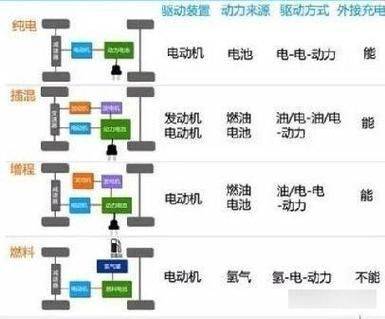
Additions are often classified as interpolation, but the power logic is completely different, and in 2026 they are also new sources of energy and enjoy the full range of policies such as green cards, acquisition tax relief, etc。
Its greatest feature is that the engine is not directly connected to the wheel and is responsible only for generating electricity, which, regardless of speed and speed, is driven by an electric vehicle, equivalent to a pure electric vehicle with fuel supplies. Purely and calmly when electricity is available; motors start to generate electricity when electricity is not available, and the experience of electric vehicle driving continues。
In 2026, the main extended vehicle was fully electric for 150-300 km, and after refuelling, the combined flight was generally over 1,000 km, with no pressure to travel long distances. Full-way motor experience, quiet and smooth, with well-run engines working only in high-efficiency areas and more stable。
High-speed oil consumption is slightly higher than interpolation, and its heavy body and slightly less controlled than pure electricity is a relatively obvious short panel。
It would be comforting to choose an additional course for a user who likes the driving quality of a pure tram and often travels long distances and does not want to be charged。
Pure electric (bev): low cost of zero-emission vehicles, future mainstream trends
Pure trams are the backbone of the new energy market in 2026, with the simplest structure, no engine, and only batteries, electrics and electrical control systems. Power is stored by charging stakes that drive the wheel directly, with no tail gas, more environmentally friendly energy conversion efficiency exceeding 90 per cent and far higher than that of the tanker。
The increase in pure electricity technology over the past two years has been marked by the continuation of 500 to 700 km of mainstream vehicles, 1,000 km of high-end vehicles, up to 80 per cent of their 30-minute capacity, and significant improvements in low-temperature continuous flight decay. The domestic charge is only 0. 05-0. 1 yuan per kilometre and the annual cost of driving 20,000 kilometres is $1,000-2000, with only one third of the cost of repairing electrical circuits and batteries。
The driving experience is also the best of the five motors, starting quickly, with good silence, with no interruptions, and with ease and comfort. The policy advantages of the green card, which is open-ended, free of purchase taxes, and parking and charging subsidies in some cities are fully realized。
However, pure trams are highly dependent on charging conditions and the absence of domestic stakes is more problematic; long distances are required to plan charging routes, and high holiday speeds may be queued; low temperatures still have small continuous water contractions and the cost of battery replacement is relatively high。
Pure trams are the best option for users with fixed chargers, city-based commuters, perimeter chargers and low-cost and comfortable driving experience。
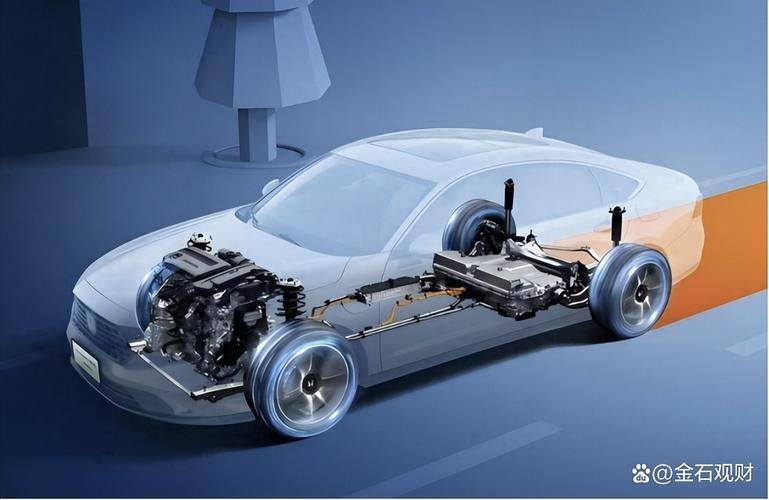
How do you make sense for five engines in 2026
By 2026, all kinds of power technology are mature, not absolutely optimal, but better suited to themselves。
Long-distance, uncharged conditions, stability, oil selection. Car
I don't want to charge. I want to save money. I want to pick up electricity. Mix
There are charging stakes, short-distance runs, green cards, pick-up plugs, or scale-up
It's the city's main move, it's easy to charge, it's low cost
The chosen car does not have to follow the wind, fit its own scene, charge and budget in order to buy a truly useful and economical model。
Topical discussion
The daily use of cars is more focused on the continuation of the voyage, the cost of the vehicle or the sense of driving quality, and, in the light of their own situation, the type of power they prefer, would be welcome to be shared in the comment area。
This will be followed by a continuous updating of the 2026 vehicle selection, vehicle maintenance, policy interpretation, vehicle-type measurements, etc., in order to speak in white language about the dry goods of the vehicle and to help more consumers choose the right car and use it, and to welcome continued attention to this account number。