These questions are often asked during the construction of rural halls, as well as during the institution of the council of clans and the advancement of rural construction projects: what is the approximate budget for the construction of stone sculptures? What kind of stone? How can the quality and style of the stone sculpture be ensured? Then, as a teacher who has done a lot of curatorial projects, we will share our experiences with the curatoric sculptures。
I. Common stone sculptures in galleries 1. Stone lions
Stone lions are the most common stone sculptures in front of the halls. They have the meaning of a town house. For example, in front of many ancient halls, a powerful pair of stone lions guarded the gates, adding to its prestige. Practical advice: the size of the stone lion is determined by the width and overall size of the gate, which is generally appropriate at 1. 5 - 2. 5 metres。
2. Comfort stoves
The fragrance is an important instrument of sacrifice and essential in the temple. It is not only functional but also reflects a dignified atmosphere. It's like a fragrance of some big halls, and it's sculpted, and it's a bright spot in the halls. Practical advice: the materials and size of the oven are to match the style of the cascading hall, generally using granite or granite。
Columns
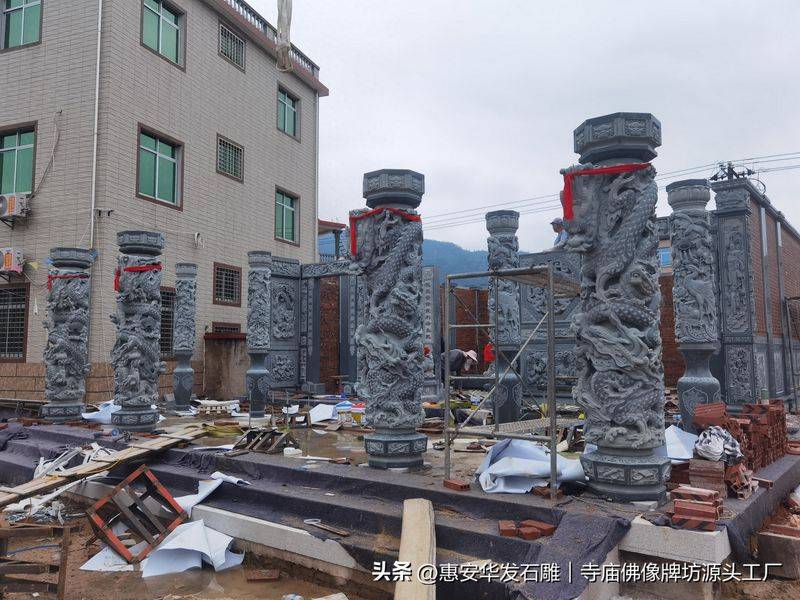
The bars serve to protect and decorate and make the halls more beautiful. At the back porch or step of some halls, fine railings add a lot of rhyme to the hall. Practical advice: the railing is generally at a height of 1 - 1. 2 metres and the pattern of the railings allows for the selection of traditional florists, geometry, etc。
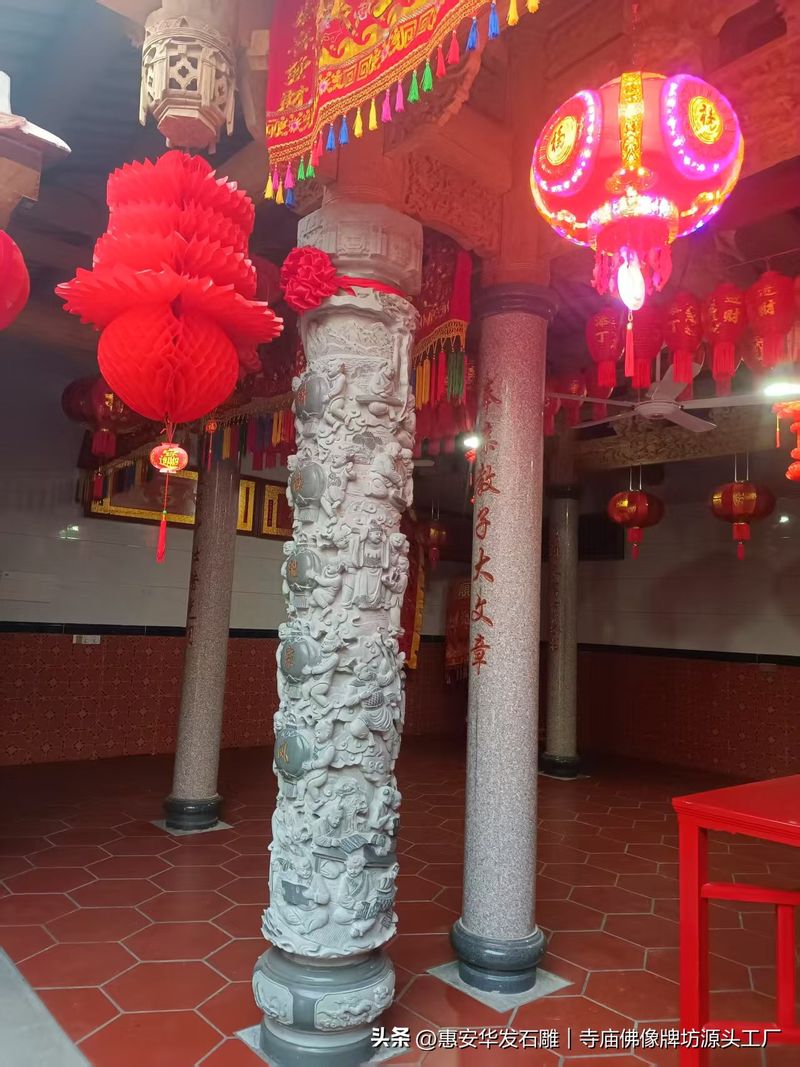
Emboss
Emboss are an important vehicle for patriarchy culture by showing stories and scenes vividly. Some walls in the halls, for example, are engraved with historical stories, myths, and other sculptures. Practical advice: the contents of the sculptures are to be combined with the themes of the cathedrals and local cultures, and the engraving process is to be refined to show the artistic value of the sculptures。
Tablets
The tablet is an important symbol of the cathedral, whose name and cultural connotation are reflected in the text. A fine tablet can enhance the overall image of the temple. Practical advice: the tablet font is to select the heavy, atmospheric font, and the material is to choose the stone or wood。
Ii. How different budgets fit together with 1
When the budget is relatively low, you can choose some simple stone sculpture configurations. For example, a small pair of stone lions, an ordinary fragrance stove and some simple bars. For example, the basic configuration is about $5-100,000. Practical advice: in the selection of stone, the relatively low-priced sesame limestone can be used, and the engraving process simplifies appropriately, but ensures basic quality。
2. Standard model
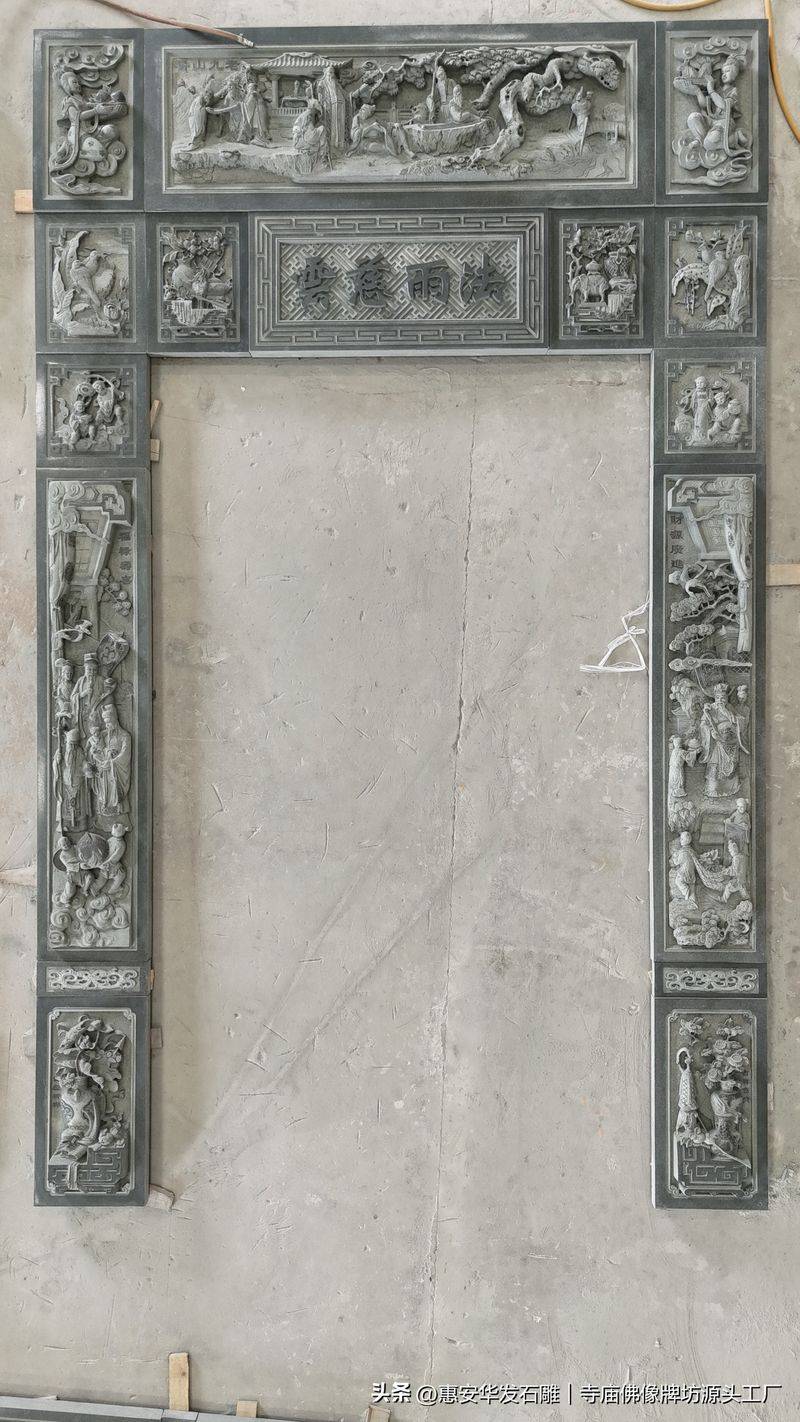
When the budget is modest, a number of sculptor and better tablets can be added. For example, a simple sculptor is carved on the walls of the hall, making a fine wooden tablet. The standard configuration budget is about $10-200,000. Practical advice: choose the better quality of the rock as a stone and make the carving more precise to ensure the quality of the sculptures and tablets。
3. High-quality
When the budget is sufficient, a more luxurious stone sculpture can be built. For example, large stone lions, complex sculptures, fine spices and bars. A high-supplied configuration budget could be over $200,000. (b) practical advice: the selection of stone materials of high quality, such as han baiyu or granite, and the production of works of artistic value, using a sophisticated manual carving process。
Iii. Stone selection 1. Bluestone
It's fine, it's dark, it's sculpting. It is suitable for engraving complex patterns and configurations, and is one of the stones commonly used in the sculpture. For example, the buddhist cultural story of the hunan monk temple was sculpted by a wall-sculptor project, where the culture of buddhism was vividly presented with a pyrotechnic skill. Practical advice: the pebbles are prone to weather in a damp environment and are therefore protected after installation。
2. Sesame ashes
The sesame limestone is of the same colour, has a strong physical strength and is resistant to weather. Its relatively modest price is a relatively high-priced stone option. Practical advice: the surface of sesame limestone may have a few small spots, with a view to selecting evenly coloured, non-observed rock。
3. Han baiyu
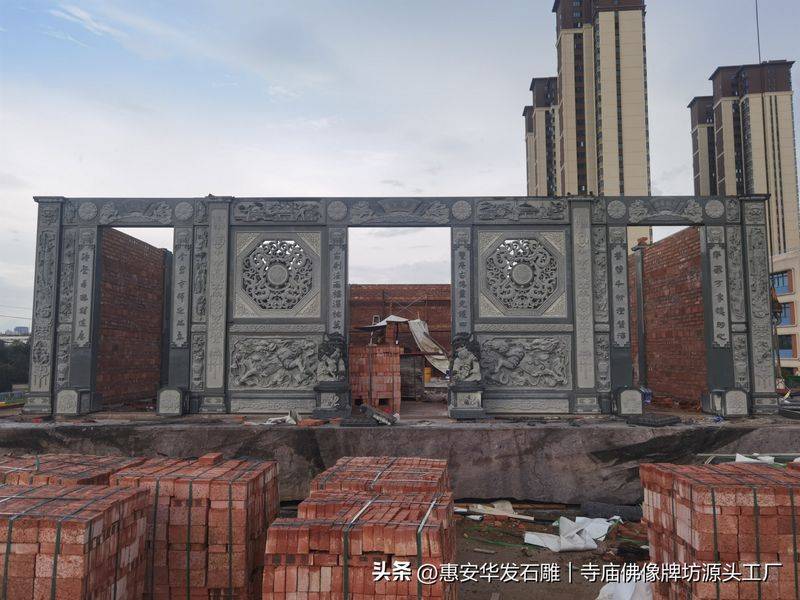
Han baiyu is white and bright and gives a sense of honour and grace. It is often used in some high-end tablet sculptor projects. However, han baiyu's prices are relatively high and are relatively small, and protection is required in the carving and transport process. Practical advice: if han baik stone is chosen, an experienced sculptor is chosen to carve it to ensure the quality of the work。
Production process 1. Selection
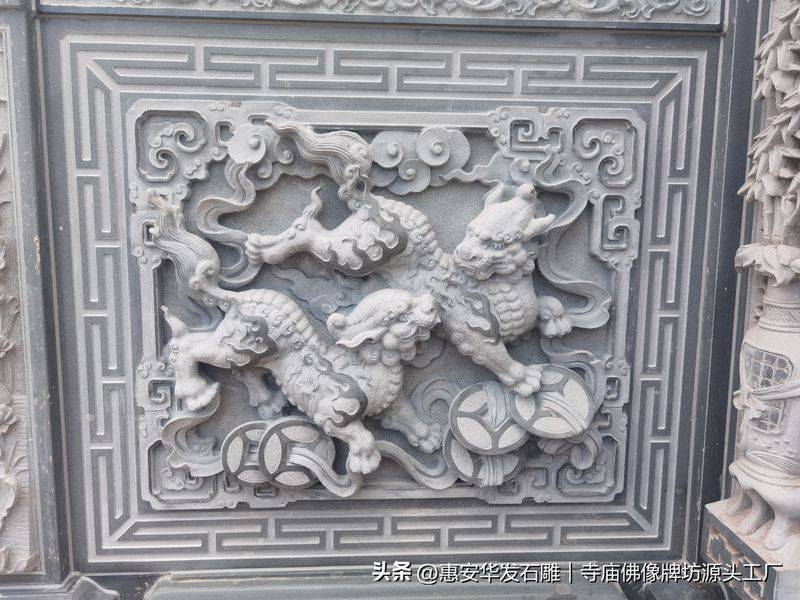
The selection is a key part of the sculpture. Choose stones that are hard in the ground, that are smooth in colour, that are non-fragile and defective. The sculptor is in the raw material chain and selects high-quality granite, pennite, han baiyu, etc., to ensure that the sculpture is solid, balanced and durable from the source. Practical advice: go to the mines and select the stone to ensure that the quality of the stone meets the requirements。
2. Carving
Sculpture is at the heart of stone sculpture. The walrus has passed on the essence of the traditional hand-carved engraving, combined with modern precision-processing equipment, incorporating various engraving techniques, such as cylindrical, euphoria, sculptural and linear sculptures, taking into account the traditional rhymes and modern aesthetics, detailing the hysteria, shaping the atmosphere, and perfecting its design. Practical advice: close communication with the sculptor should be maintained during the engraving process, providing timely feedback to ensure that the engraving is in line with expectations。
3. Installation
The installation is the last part of the stone sculpture. To ensure that the placement of the stone sculpture is accurate, secure and compatible with the surrounding environment. The stone sculptures have experience in the construction of large projects, are well structured, well-equipped, balanced with beauty, safety and practicality, and can be delivered in an integrated manner. Practical recommendations: clean-up and measurement of installation sites prior to installation, using specialized tools and equipment to ensure quality of installation。
V. Common pedestal site 1. Uncoordinated dimensions
The size of the stone sculpture shall be consistent with the overall size and layout of the hall. If it's too big or too small, it can affect the overall beauty of the hall. Practical advice: during the design phase, the size of the stone sculpture will be determined in the light of the actual situation in the hall and professional designers will be asked to provide guidance。
2. Inconsistent style
The sculptor style of the hall is to be consistent with the overall style of the hall. If the sculptor's style is different from that of the hall, it'll be abrupt. Practical advice: when selecting stone sculptures, consider the architectural and cultural content of the halls and choose the styles that match them。
3. Quality insecurity
In order to reduce costs, a number of small workshops use poor stone materials, reduce work, and simplify carving processes, resulting in a lack of quality assurance of stone sculptures. Practical advice: selecting powerful and reputable source plants for customization, such as walrus, which have a strict quality control system that ensures the quality of stone sculptures。
A 30-year-old source power plant in the zanan stone industry, in the field of deep-cultivated stone sculpture and engineering, from raw material selection, fine carving to engineering installation, and the creation of a one-stop stone sculpture service throughout the chain. The choice is for quality security at the source plant, 30 years of process deposition and a process-wide care service, so that you can be relieved and reassured during the tailoring process。