1 sample rna extraction
1 freezing of fractured cells with room temperature placed for 5 minutes to completely dissolve。
Two dichotomys of 1 ml of trizol reagent cracks with 0. 2 ml of chloroform and a tight cap. After 15 seconds of severe manual vibration, 15 to 30°c hatched for two to three minutes. 12,000 rpm centrifugal for 15 minutes at 4°c. The mixture of liquids after centrifugal is divided into lower ccp analogies, intermediate layers and non-coloured upper layers. Rna is all distributed in the water phase. The volume of the upper water phase is approximately 60 per cent of the trizol reagent added to the slurry。
The 3rna sediments the upper water phase into a clean, non-rna enzyme centrifuge. The compound isopropanol is mixed to settle the rna in which it is deposited, then 15-30°c hatched for 10 minutes and 12,000rpm centrifugal for 10 minutes at 4°c. At this point, an invisible rna deposition will form a gelatinous sediment on the base and side wall of the tube。
4rna washing removes the liquid from the serum, adding at least 75% of ethanol (75% of ethanol is formulated with depch2o) to at least 1 ml for each sample of 1 mltrizol reagent cracking. After mixing, 7,000 rpm under 4°c for five minutes。
5rna dry, careful to suck out most of the ethanol solution, and keep rna in room temperature for 5-10 minutes。
6 dissolved rna sediment 6 dissolved rna 40 ml of water without rna enzyme has been blown over and over several times, completely dissolved, and the acquired rna solution has been stored at -80°c to be used。
2 rna quality testing
1) ultraviolet absorption
The spectrometer is zero with diluted te solution. A small amount of rna solution is then diluted with te (1:100) and its absorption values at the spectrophotometers 260nm and 280nm are read to determine the concentration and purity of the rna solution。
1 concentration determination
A260 reading is 1 for 40? G rna/ml. Sample rna concentration (? G/ml) calculated the formula: a260 x dilution multiple x 40 ? G/ml. The calculation is as follows:
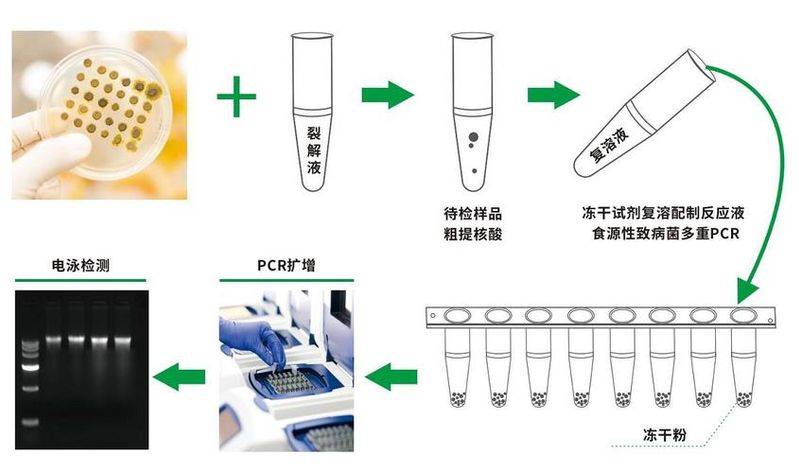
Rna dissolved in 40 ? L depc water, 5ul, 1:100 diluted to 495 ? L te, measured a260 = 0. 21
Rna concentration = 0. 21 x 100 x 40? G/ml = 840 ? G/ml or 0. 84 ? G/? L
After taking the 5ul for measurement, the remaining samples are 35? L, and the remaining totals are:
35 ? L x 0. 84 ? G/? L=29. 4 ? G
2 purity tests
The margin for rna solution a260/a280 is rna purity, ranging from 1. 8 to 2. 1。
2) transgenic glucose electron bathing
Rubber 1
1g glucose soluble in 72 ml water, cooled to 60°c, 10° mops electro-swam buffer and 37% formaldehyde solution (12. 3 m) in 18 ml。
10xmops electric bathing buffer
Concentration
0. 4m mops, ph 7. 0
0. 1m sodium acetic acid
0. 01m edta
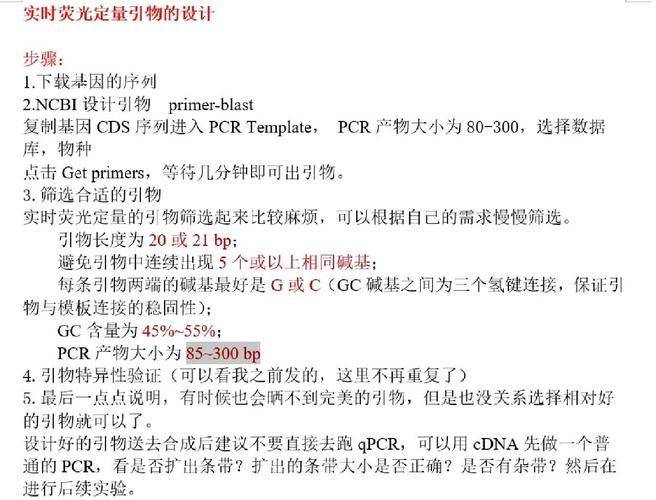
Filling of gel plates, with a pre-positioned pores to add at least 25 ? L solution. The gel is then removed from the comb, and the gel plate is placed in the electric sink, with a sufficient amount of 1 x mops electro-simulation buffer to a few millimetres of laminate。
Prepare rna samples for 2
3 ? Grna, plus 3 times the size of the formaldehyde sampled liquid, plus eb at 10 ? G/ml. Heating to 70°c incubation for 15 minutes makes the sample degenerative。
3 electric swimming
The pre-exposure gel shall be pre-electrically bathed by 5m and then the sample shall be added to the upper perforation. A 5-6v/cm voltage 2h with a minimum of 2-3 cm adhesive to bcp indicator。
4 uv-ray observation and photographing
The bands of 28s and 18s nucleotose rna are very bright and thick (and their size is determined by the species type used to extract rna), and the density of the one above is approximately twice as high as that of the next one. It is also possible to observe a smaller, slightly diffuse band consisting of low-molecular rnas (trnas and 5s nucleus rnas). Between 18s and 28s nucleus, a scattered eb dye can be seen, possibly consisting of mrna and other hexerotype rnas. If dna contamination occurs during rna preparation, it will appear above the 28s nucleo-sugar rna belt, i. E. A dispersed substance or belt of higher molecular mass, and the degradation of the rna will occur as a dissipation of the rna belt of the nucleo-sugar. Digital cameras were used to film the results。
3 sample c dna synthesis
1 response system
Serial number, reaction, dose
1 reversing buffer 2ml
2 upstream quote 0. 2 ml
3 downstream quote 0. 2 ml
4 dntp 0. 1 ml
5 reversible mmlv 0. 5 ml
6 depc water 5ml
7 rna template 2 ml
8 gross 10 ml
The thin tubing mixes the solution with a short centrifugal centrifugal of 6,000 rpm。
2 the mixture takes a three-minute dry bath at 70°c before the reversible mmlv is added, and immediately after removal the water is iced to the internal and external temperature of the tube, followed by a reversible enzyme of 0. 5 ml, 37°c bathing for 60 minutes。
95 °c dry bath for 3 minutes immediately after removal, the reverse final solution is c dna solution and is kept at -80 °c wait