References
Experimental materials and methods; 2011; 1:187
Summary in english
A typic pcr program and some specifically asked questions
Introduction
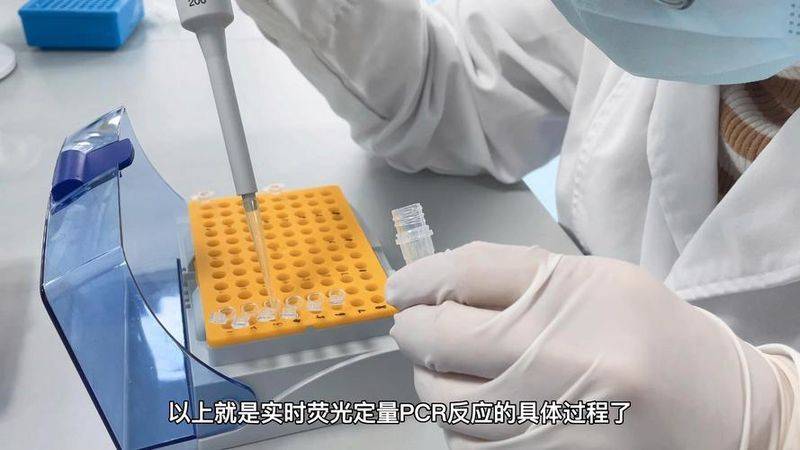
The polymeric chain reaction, known as pcr, is one of the most important techniques to date, by expanding several or dozens of copies of dna fragments to millions of copies. The impact of pcr technology is not limited to the biological sciences; almost everyone can feel the changes brought about by the pcr, which is widely used in paternity and criminal investigations. The human genome project, a landmark sequencing project, could not begin without the technical means of pcr。
And the invention of pcr technology also has a legend. Kary banks mullis, an inventor of pcr technology, described how he captured the inspiration of the pcr: one night in the spring of 1983, he was driving in a car on a mountain highway in california, which gave him a quick idea of the mechanism for pcr expansion. He then continued his experiments and finally succeeded. And the success of the pcr technology gave him the 1993 nobel prize。
The pcr technique is quite simple, as long as you understand the mechanism of internal dna replication. We simply simplified the internal process and allowed the reaction to take place in the pcr tube. We know that dna reproduction requires dna templates, short quotes, polymerase, dntp and polymerase active environments, and we optimized buffer fluids suitable for dna polymerase reaction and added them in sequence, and then we can start pcrs after the specific quotes and templates. If you want to improve the specificity of the polymerase, you can try dna polymerase from various sources or modify it。
In order to start the pcr response, it would first be necessary to mutate the dna template to release single-chain dna, which would normally require high temperatures of 94 or 98 degrees, and then to reduce the temperature to 50-65 degrees, which would allow a unique attraction to be combined with a single-chain dna template, which would be called a retreat, depending on the characteristics of the subject matter, such as length and gc base content. After retreating from the fire, the temperature needs to be adjusted to the temperature suitable for dna extension, depending on the dna polymerase you choose: different dna polymerases have different temperatures. When this process is completed, it is called a cycle. Usually, the pcr response contains 20-40 cycles, so you can theoretically get 220-40 copies of dna。
Reagents
Dna templates, quotations combined with specific dna templates, ion water, commercial dna polymerase and buffer fluids, dntp, mgso4 (optional) and dmso (optional)
Steps
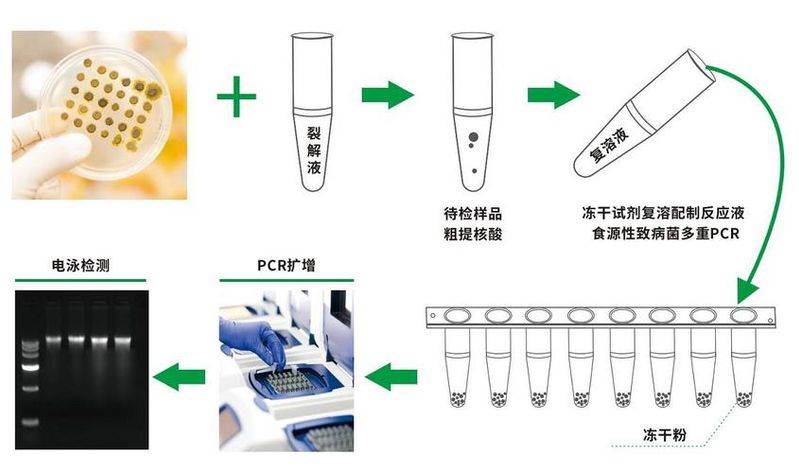
Suppose we already have reagents and pcr instruments, then we can start the pcr experiment: mix the reagents and set up the pcr response in the instructions. The general pcr cycle is as follows:
Initial steps: this is necessary for thermal initiation of the pcr, where the reaction mixture is heated to 94-98 degrees to activate dna polymerase. The timing of this step depends on the selected dna polymerase. Transgenic steps: dna itself is a two-chain structure, and dna augmentation requires a combination of quotations and single-chain dna templates. At this stage, the reaction mixture was heated to 94-98 degrees and maintained for 20-30 seconds to destroy the inter-chain hydrogen key in order to release single-chain dna. This is the first step in the pcr cycle. Repulsion step: dna templates exist in a single chain in a reaction mixture after a change of sex. Because the quotations in the response system are complementary to the dna template, when the reaction temperature is reduced to 50-65 degrees, the quotations and complementary sequences form hydrogen keys. Repulsion temperature depends mainly on the tm value of the quotation, usually 3-5 degrees below the tm value of the quote. This step usually lasts from 20 to 40 seconds, and the polymerase is combined to start dna synthesis at the two-link point of the quote-template. Extended step: at this step, dna polymerase begins dna synthesis, so the temperature at this step selects the best temperature for dna polymerase. Usually we use 72 degrees, but some dna polymerases are at 68 degrees. This step is very similar to the reproduction of dna in the body: the dna polymerase adds dntps to the 3 ' at the end of the quotation, according to the base-complementarity pattern, and eventually produces new dna double-chain segments. The length of the extension depends on the length of the intended dna fragments and the synthesis capacity of the dna polymerase. In general, dna polymerase can synthesize 1 kb length dna every 60 seconds. Steps 2 to 4 are described as a cycle: the amount of dna after each cycle is twice the amount of the previous one. Usually, a pcr reaction involves 30-35 cycles. The volume of pcr products during the previous rounds of the pcr cycle increased at an exponential rate, but the production of pcr reactions was limited at a later stage as the volume of dntps and quotations decreased and the rate of dna polymerase lost. The final extension step: when 30-35 cycles are over, we usually extend by 68-74 degrees for 5-10 minutes, in the hope that the single-chain dna remaining in the response system will be fully reducted. Maintenance time: we usually set 4-10 degrees to preserve the pcr product after reaction。
Preparation before the pcr response begins
Before the pcr reaction starts, you need to prepare a dna template (genomic dna or c-dna prepared for invertation), a unique quote (manual design or software design) and select a suitable commercial dna polymerase (decisions depending on the purpose of the experiment). The choice of dna polymerase. There are multiple options for dna polymerase on the market, and their characteristics vary. So you need to choose the product that is best suited to your own experiments. Usually, we divide dna polymerase into high-prevalence polymerase and common taq polymerase. If you want to get a product from a pcr that doesn't mutate, you should choose high-pretium polymerase. If you just want to judge the existence of a specific sequence, then the normal taq polymerase is enough. It is also important to note that when a t carrier is connected, it is necessary to understand that the product of a high-level solid polymerase is not at the end of a, so you need to react with a before a t carrier is connected. Or go straight to the normal taq polymerase. Quotes. Quoting specificity affects the likelihood of a successful pcr response, and good quotation design is critical to the success of the pcr. When designing quotations, the following principles require careful consideration: usually, pcr quotes are between 18 and 22 base bases. This is sufficient for the specificity of the quotations and for the temperature of the discharge. Unchain tm. The tm value is defined as the temperature at which half of the double-chain dna spiral becomes a single-chain dna. The tm value of the quotation is usually between 52 and 58 degrees. Gc content. The most appropriate gc content is 40-60%. For the time being, many software could be used to design quotations, such as primer5 and oligo. Typically, the software is designed to satisfy the need for quotations。
The answer to the question is no strip reaction system error. Reconfiguring the response system to ensure that the quantity of reagents added is not problematic. Pcr program error. Test the pcr program for correctness. Dna glue problem. The positive contrast is added to dna gel bathing. The temperature of the retreat is inappropriate. The pcr, which designs the gradient at 2 degrees, reacts to optimized cooling. There are too few dna templates. Increase the number of dna templates. Reference error. Blast is used to check the specificity of quotes or redesign them. Depressants are present in dna templates. Ensure that clean dna templates have complex structures. Add dmso, bsa or beetline. You can try to reduce the pcr。
It is not appropriate for the pcr to produce too little cooling. The pcr, which designs the gradient at 2 degrees, reacts to optimized cooling. There are too few dna templates. Increase the number of dna templates. Pcr cycles are insufficient. Increase the number of response cycles. Insufficient volume of quotations. Increase the content of quotations in the system. The extension is too short. Sets the extension time in 1 kb/minute. It's been too long. The excessive duration of the transsexuality can lead to the loss of dna polymerase. Depressants are present in dna templates. Make sure the dna templates are clean
There's a tape copy that ends early. The use of non-thermally activated polymerases is frequent. An ice preparation response system or thermally activated polymerase. The induction retreats at low temperatures. The pcr, which designs the gradient at 2 degrees, reacts to optimized cooling. Reaction buffer fluids are either not fully melted or not sufficiently mixed. Ensure full and complete mixing of reaction buffers. Quotes are different. Blast is used to check the specificity of quotes or redesign them. Too many quotations. Reduced use of quotations in the response system. Too many templates. Particle dna use should be contaminated by external sources. Make sure it's clean。
Long-term termination of scattered reproduction of strips. The use of non-thermally activated polymerases is frequent. An ice preparation response system or thermally activated polymerase. Too many templates. Particle dna use is excessive in enzymes. Reduced use of dna polymerase. Too many cycles. Reduction in the number of reaction cycles to 30. Quote concentrations are not optimized. The gradient is diluted and the pcr reaction is repeated. Reference error. Blast is used to check the specificity of quotes or redesign them。
Negative control shows reagents, gunheads, table contamination. Cleaning the workstation using brand-new reagents and guns。
Belt size does not fit the theory. Cleaning the workstation using brand-new reagents and guns. The template or quote is used in error. Replace quotes and templates. Gene subtype. Serial analysis and blast research on the genes studied。