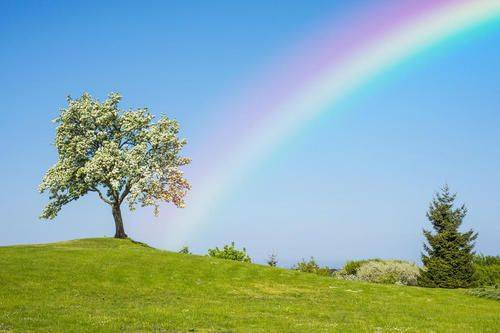
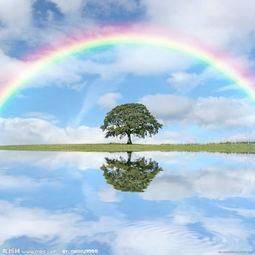
Rainbow
The rainbow (rainbow), also known as the bow, the rainbow, etc., is an optical phenomenon in weather, and when the sun shines into half-air waterdrops, the light is reciprocated and reflected, forming an arched seven-colored spectrum in the sky, red, orange, yellow, green, blue, nectar, purple seven colours from the outer circle to the inner circle. In fact, rainbows have numerous colours, for example, there are many nuanced colors between red and orange, but for the sake of simplicity, only seven colours are used to distinguish。
I. Causes
The white sunlight actually contains light of different colours, i. E. Red, orange, yellow, green, blue, beryllium, purple. Under normal conditions, we only see the sun as white, but when it clears after the rain, there are still little beads in the sky, and the white sun is reflected and reflected by these little beads, because they reflect in different directions in different light. When we look at the sky from a particular angle, it's clear that different water boils out light of different colours, and it forms rainbows。
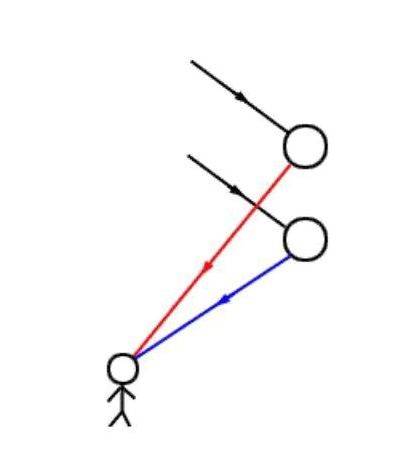
Following refraction and reflection of water points, there is a slight variation in the angles of red light and blue light, resulting in rainbow phenomena。
Both neptunium and rainbow are rainbow phenomena that are retrociprocated and reflected by small water beads. Light is called rainbow twice and once by a small water bead; twice by a small bead and twice by neptunium. Because neon reflects more than once, the intensity of the light gets weaker, so it's not common. On the other hand, because neon is not the mirror path of the rainbow, we see that the seven colours of neon are the opposite of the seven colours of the rainbow。
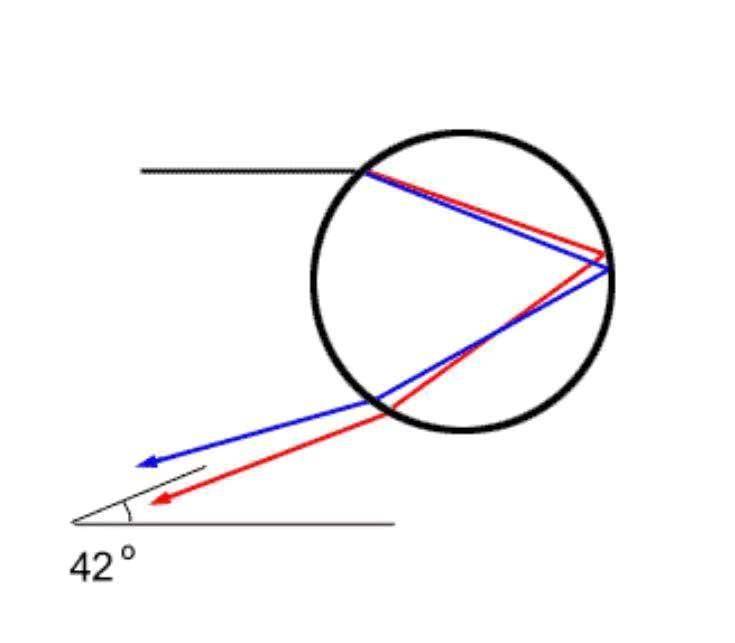
The cause of the rainbow
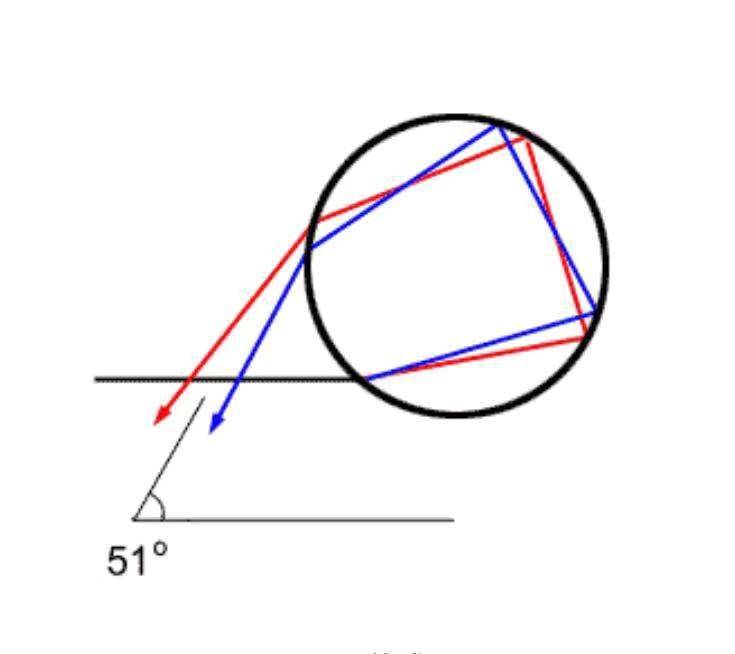
The cause of neptunium
Rainbows are not only visible after the rain, but also in the sun around fountains or waterfalls; in the summer, there is also a rainbow in the back of water tankers running in the streets; and rainbows can also be formed by aerial sprayers。
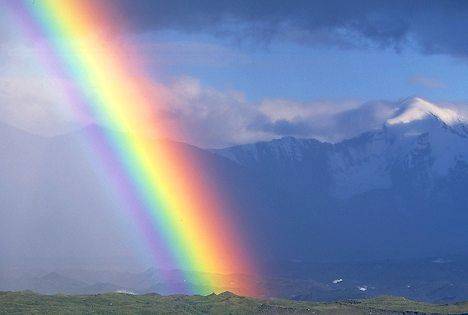
Common rainbow source: https://piyao. Kepuchina. Cn/rumor/rumordetail? Id=qxwb
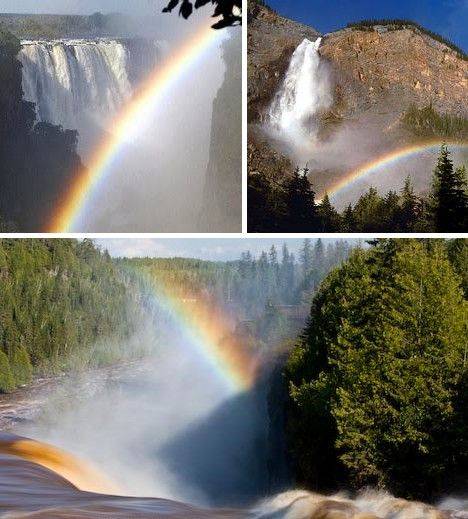
Regardless of the weather, waterfalls reverse the mist produced by the stream of continuous flow into the air and the saturation of the atmosphere continues to shift. This leads to the emergence of waterfall rainbows. Source: https://piyao. Kepuchina. Cn/rumor/rumordetail? Id=qxwb
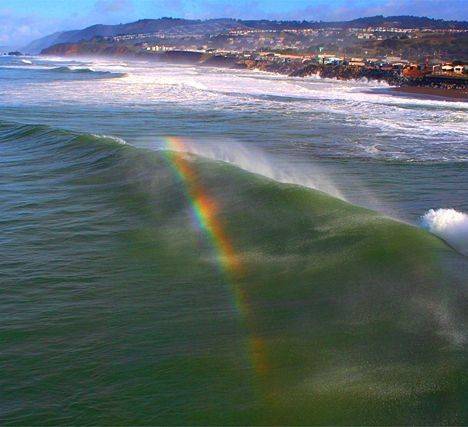
When the fog and humidity in the air are saturated, a variant of the waterfall rainbow is formed
Usually, most of what we see is a rainbow with a perspective (from the ground to the top of the rainbow) of about 42 degrees. The sky is darker and brighter in and out of the rainbow. Neptunium's perspective is about 51 degrees。
On the ground, we see the main rainbow and neptunium in a half circle, because the lower part is covered by the ground. If you stand on top of the mountain, you can see most of the rainbow and neptunium. It is only in the clear weather that the main rainbow and neptunium, the full circle, can be seen down in the cabin。
Ii. Interpretation of the rainbow phenomenon
Because of the extraordinary beauty of rainbows, combined with the scarcity of ancient scientific knowledge, who often explain their causes in a more superstitious way, such as mythical stories, rainbows appear in many mythological stories, and then they reveal their mysterious veils after galileo has studied the characteristics of light。
In chinese mythology:
The female plasters the sky, and the rainbow is the colour of the five。
Rainbow (lon) (english: hong (rainbow-dragon)), type of dragon。
In greek mythology, iris is a messenger who communicates with one another。
In irish folklore, leprechaun collects the treasure at the end of the rainbow。
In the indian mythology, rainbows are the bow of the lightning god, indradhanush
In the nordic mythology, the rainbow bridge connects the realm of the gods "asgård" and "midgård" . This is the transportation for god and man through the rainbow bridge。
The end of the rainbow is the home of the ancient spirit among the taiko, sadek and taya peoples of taiwan。
In the founding book of the classic bible of judaism and christianity, the lord allowed noah to build the ark to avoid the floods, after which the lord made a covenant with noah and his children with rainbows, and no more flood to destroy the world. I make a deal with you that whoever has flesh and blood will not be killed by the flood, nor will it be destroyed. 9:13 i put the rainbow in the clouds, which is the sign of my covenant with the earth. I'm not sure
Relevant classifications
1. Multiple rainbows
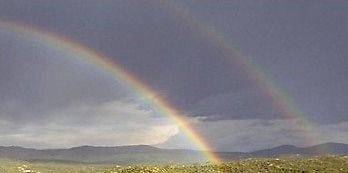
The iris and neptunium are characterized by the colouring of the outer arcs, contrary to the inner arcs, and between the two arcs are the dark alexander belt。
In everyday life, it is difficult to notice the presence of neon if we do not take a careful look at rainbows, which are dark, like neon, and in which the sky is lit up, as alexander was the first to describe it, so it is also named "alexander belt"。
In addition to the first and second layers, there is the third and even the fourth rainbow, which is due to the multiple reflections of the sun inside the small droplets, which appear on the same side of the sky as the sun, the third is about 40 degrees apart from the sun and the fourth is about 45 degrees apart, but it is almost difficult to find them if seen with the naked eye alone。
2. Reflecting and being reflected
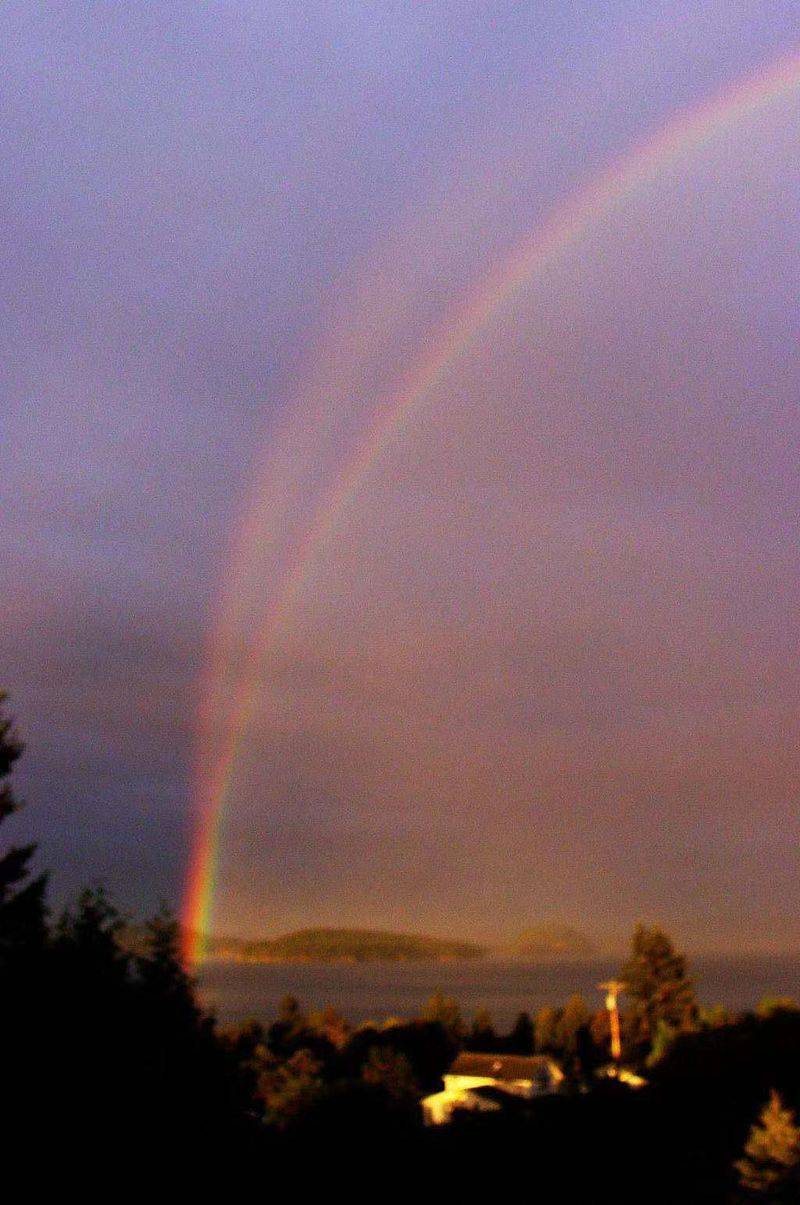
Normal and reflective rainbows at sunset
When rainbows appear on objects on the surface, two mirror arcs from different light paths may appear on and below the surface, respectively. Their names are slightly different, and if the water is a calm reflection rainbow, they will present mirrors below the horizon of the water. Sunshine is pre-empted by raindrops before reaching observers and then by reflection on the water surface. The reflected rainbow, at least in part, is often visible, even in small puddles。
When the sun is reflected on the surface before reaching the raindrops, it may produce reflective rainbows, and if the surface is large enough, the entire surface is calm and close to the curtain, the reflective rainbow may appear above the horizon. It meets the normal rainbow at the horizon and its arc at the height of the sky because its centre is above the horizon and the centre of the normal rainbow is below the horizon. Reflecting rainbows are rare because of the need to cooperate with these conditions。
If the reflecting arc is re-reflected and both the neptunium reflect an arc and his reflect an arc appear simultaneously, the appearance of six (or eight) ribbons is also possible。
3. Full circle rainbow
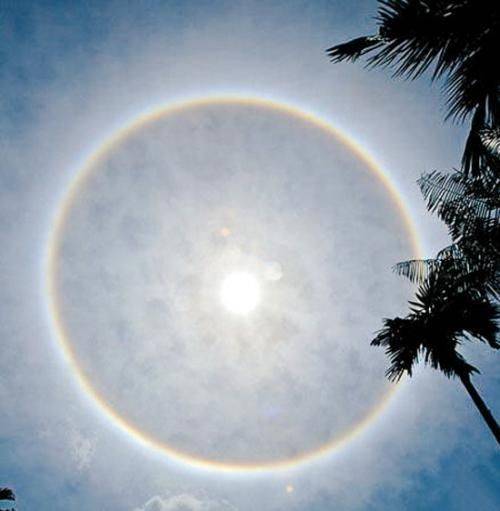
Full circle rainbow source: image. Baidu. Com
Full circle rainbow conductors are caused by internal reflection of the sunlight by raindrops, which are caused by different refractive rates of raindrops and air。