The industrial boiler is the "heat hub" of the plant — the supply of steam, hot water, hot oil, which makes it possible for the production line to shift. Coal, gas, biomass, whatever is burned, boilers are the largest fuel-consuming equipment in the plant。
Domestic industrial boilers have an average heat efficiency of about 85 per cent. Burn 100 bucks of fuel, 15 bucks of heat is wasted. A medium boiler costs tens of millions per year, and 15 per cent is millions。
In the ministry's recommended catalogue of energy conservation and carbon deduction technologies (2025 edition), there are a number of boiler-related technologies. Of the 15 points that were lost, the heat went mainly to three places。
Inadequate combustion - missing 3-5 points
It's the most direct waste of fuel. This is usually due to the incorrect (or wind-to-wind) ratio - too much wind, too little heat from the cold air, too little wind, incomplete fuel combustion and residual flammable elements in the flue gas。
Traditional practices are artificial. The master looks at the smoke, the oxygen content, the steam pressure, and the wind. The problem is that the load is changing, the coal/gas is changing, and the weather is changing, and manual adjustments are always lagging behind。
Recommended ai combustion optimization techniques in the catalogue: real-time collection of parameters such as chamber temperature, oxygen content, co concentration, steam load, model of best wind combustion ratio online, adjusted every few seconds. The efficiency of combustion increased by 2-5 points and fuel by 3-5 per cent. A boiler with an annual fuel cost of 30 million is 0. 9 million for 3 per cent. Deployment costs hundreds of thousands, six months to one year。
The flue gas took the heat
Fuel was fully burned, but high-temperature gases at 200-250°c were drained directly from the chimney and the heat was taken in vain. This is the second largest source of heat loss for industrial boilers. An intuitive empirical formula: thermal efficiency of boilers increases by about 1 percentage point for each 15-20°c reduction in smoke discharge。
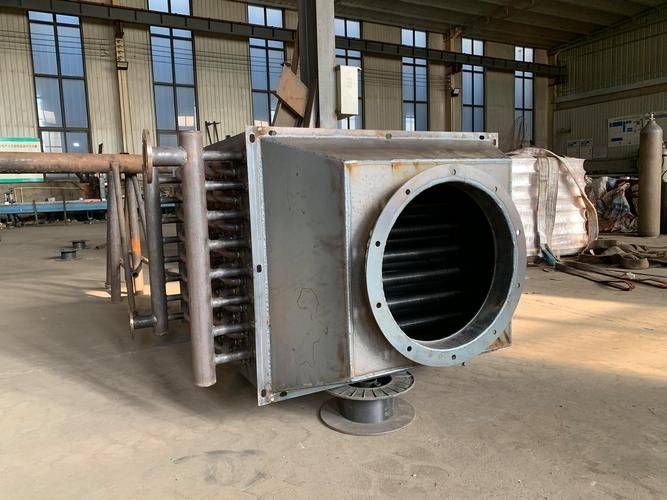
The solution in the catalogue is a flue gas residual thermal recovery unit, which installs heaters (coal savers, air preheaters) in the pipe, reduces the temperature of the smoke from more than 200 degrees to less than 100 degrees, and the recovered heat is used to preheat water or fuel the air。
There is also an advanced option for gas boilers: condensation recovery. Gas combustion produces a large amount of water vapour, and if the flue gas temperature is reduced below the oscillation point, water vapour condensation releases the vapour potential and recovers an additional 5-8 percentage points of thermal efficiency. The combined heat efficiency of the gas boiler can be 103-107 per cent (in low-level heat) after recycled with condensation。
System dissipation and drainage - last 2-3 points
The boiler itself is thermal, the hot water removed from the sewage, the steam pipe network is leaking... Together, these losses are 2-3 percentage points. Single, but significant。
Among the options recommended in the directory are: high-efficiency heat-preserving materials for the reduction of ingenuity bulk heat; and ai smart discharge - auto-control of discharges based on the results of the online monitoring of water quality, with few and many platoons; the smart movement of the steam pipe network — multiple boilers and associated operations — ai distributes loads in real time, according to each workshop's demand for steam, so that each boiler runs in an efficient zone and avoids “one full of one empty turn”。
The heat efficiency of boilers is not a number
It is the sum of more than a dozen loss elements. For each block, efficiency goes up。
Three layers: 3-5 points for combustion optimization, 3-4 points for flue gas recovery, 2-3 points for system management - this is the complete path of heat efficiency approaching 95 per cent from 85 per cent. Among them, ai optimized the recovery of the original, with some projects recoverable in a few months; residual heat recovery is a one-time, continuous return on input, usually 1-2 years。
The boilers are not as large as the electrics, but the fuel consumption on single stations is extremely high. Grab 10 points in a boiler and catch 100 electrics。
It's from the popular "the evolution of ideas."
The product matrix and solutions on industrial heat pumps are shared below。
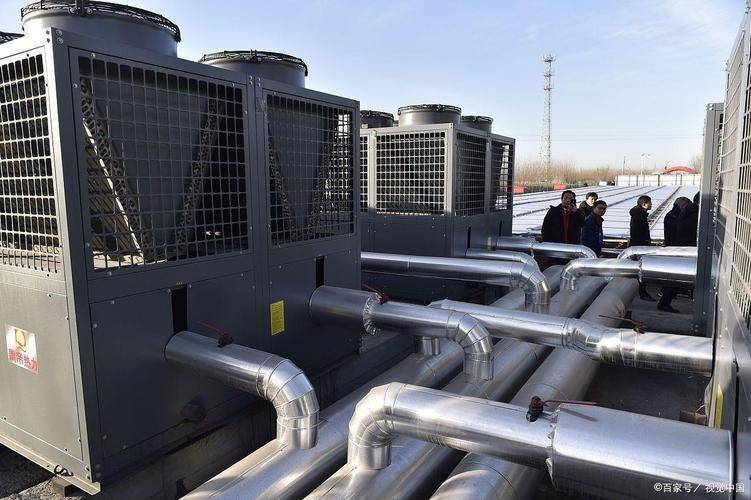
In conjunction with the above analysis of energy efficiency in industrial boilers, the glytechnologies heat pump is the core option for replacing traditional coal/gas boilers. It is not “combustion heat”, but “carrying waste heat + upgrading temperature”, which is theoretically more efficient and lower-carbon than boilers。
I. Three main alternatives for industrial boilers (reciprocal losses)
Al combustion optimization
Boiler: 3 per cent to 5 per cent of provinces with burning losses
Heat pumps: no combustion, zero light fire, zero co/nox, eliminating burn waste from source
Flue gas residual heat recovery → heat pump belt "excuse heat recovery + upgrade"
Boiler: 200°c smoked, 3-4 points lost after recovery
Heat pumps: direct recycling plant waste heat (30-50°c), upgraded to 80-150°c reuse, 100% resourceization of waste heat
System dissipation/discharge → heat pump closed ring + ai group control
Boiler: 2-3 points of piped heat, sewage disposal
Heat pumps: closed cycle, no sewage, no high-temperature smoke; ai dynamic temperature control, integrated system re-evaluation 15% – 25%
Ii. Gyro industrial thermal pump product matrix (2026, latest, direct replacement boiler)
Gravity has formed 60-2000°c all-temperature zone, cold-hot combined supply, steam class, three main forces covering the industrial landscape:
1. High-temperature centrifuge heat pumps (large capacity main, replacement of large gas/coal boilers)
Temperature: 120 - 140°c hot water / 135°c vapour
Capacity: single 4. 8-10 mw, which can be linked to 50 mw+
Cop: 3. 8-4. 36 (1 degree of electrical production 3. 8-4. 36 heat)
Technology: high-speed direct driving, magnetic suspension/air suspension, r1233zd low gwp mass
Alternative: 10 to 100 tonnes/h large boiler
2. Pyrolytic condensers (small and medium capacity + cold heat cogeneration)
Temperature: 7-130°c cold-hot combination supply (hot water on one hand and cold water on the other)
Advantages: integrated energy efficiency + 40 per cent, replacing two systems: boiler + cooler
Application: 2-20 tonnes/h small and medium boilers, cold and hot dual-supply plants
Air-spill-free vapour compressors (clean steam, pure steam boilers)
Temperature: 150 - 200°c clean steam
Characteristics: 100% oilless, sterile, impurity free
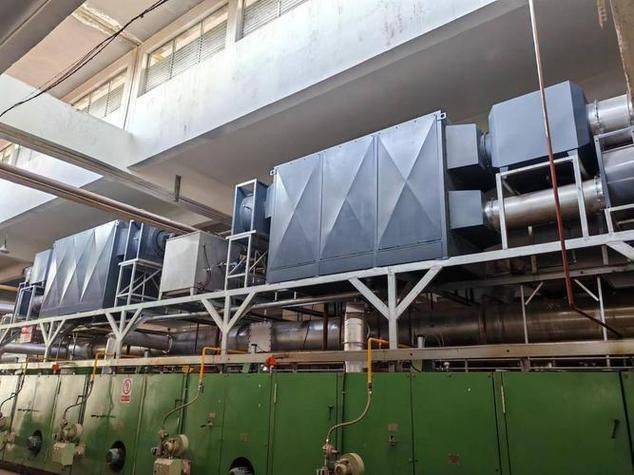
Alternative: pure steam boilers for food/medicine, distillation/concentration
Grid versus industrial boilers: core advantages (dataization)
Energy efficiency crushing: from 85% cop 3. 8-4. 36 (equivalent heat efficiency 380% - 436%)
Boiler: thermal efficiency 85% (15% spent on fuel)
Gyrothermal pumps: cop=3. 8–4. 36
1kwh electricity 3. 8 – 4. 36kwh heat
50% to 70% of running costs compared to gas boilers
Annual fuel cost: 30 million boilers
2. Low-carbon zero emissions: complete substitution for fossil fuels
Boiler: annual co2 emissions of thousands of tons
Gyrothermal pumps: direct zero burning emissions
10 mw crew, 15,000 tonnes carbon reduction per year
Zero carbon heating
3. System-wide energy efficiency (all three routes covered)
Heat-replacement: heat pumps substitute boiler body
Add ai: workload dynamics regulation, residual thermal intelligence recovery
Pipe systems: multi-assembly control, cold-hot combined supply, plant-wide thermal power ladder utilization
Combined: 30% - 50% energy efficiency compared to traditional boiler systems
Investment return: 2-3 years (better than boiler improvement)
Gas boilers modified ai+ residual heat: 1-2 years save only 10% - 15%
Gyrothermal pump replacement: 2-3 years, 50 per cent per cent per year
Total cost of full life cycle (15 years) is 40% lower than boiler +
Industry (precision matching)
Food processing (bicide, boil, dry)
Temperature: 85 - 130°c
Case: 5 screw heat pumps in food plants, 4 million + per year, replacing 2 6 tons of gas boilers
Medicine/biological (clean steam, purification, sterilization)
Demand: oilless and sterile 150 - 180°c vapour
Gl: air suspended without oil vapour, consistent with gmp
Textile printing (chrome, dry, boiled)
Temperature: 90 – 135 °c
Advantages: wide load stabilization, temperature control ± 1°c, improvement of fabric quality
Chemical/new materials (reaction, distill, enrichment)
Temperature: 120 - 160°c
Gwi: 10 mw class centrifuge to meet large chemical complexes
Steel/metallurgy/fields (heating, temperature protection, waste heat recovery)
Case: 2 10 mw heat pumps for saddle steel, saving 1. 8 million m3 of gas
Brewery/beverage (fermentation, distillation, papsis)
Temperature: 70 – 95 °c
Cold fever cogeneration: heat for brewing, cold for fermentation
V. Summary of statements
Gyro industrial thermal pumps are complete replacements for industrial boilers:
From 60°c hot water to 200°c steam, from small to 10°mw, from ordinary to clean steam cover
Energy efficiency is four times as high as a boiler, 50 per cent-70 per cent of running fuel, zero carbon-zero light, and 2-3 years back。