So, what about radar ranging, angle and speed? I'll make sure you understand
Radar ranging
According to radar principles, the target is expected to reverse the incoming electromagnetic waves back to the radar, although the electromagnetic waves that have returned have become somewhat different from those that were launched. It's like when we get out of the house when we're little, but when we get home covered in mud, parents judge that we're rolling on the ground, and if it's too late, it's probably going to the next village. Similarly, the distance between the target and the radar station can be estimated by comparing the delay between the original radar launch pulse and the echo pulse (the time the child leaves the house)。
With chestnuts, electromagnetic waves spread in the air at approximately the speed of light c, i. E., 3*10^8m/s, similar applications already exist when primary school learns the multiplication, distance = speed* time. It is simply that the path taken by the radar pulse is a back and forth between the radar station and the target, so the equation of distance becomes a picture. What do you say, even the elementary school kids understand
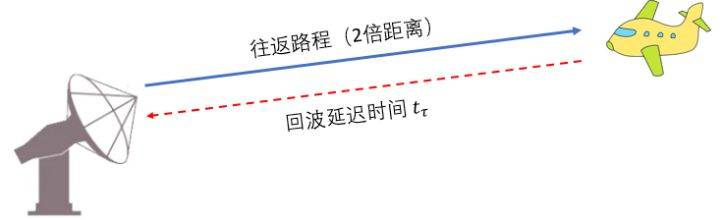
Figure 1 radar ranging principles
Radar angles
Even if the tree is a thousand years old, the crown is large, but the trunk is always the source of the original foundation and growth. Whether the distance is measured by radar, the distance between the target and the radar station can be obtained, but if the precise position is not determined by the angle, the target is as if it were the east ninja, who has been able to refine the magic of the ghost, and can use that distance in a radius of 360 degrees, which has led to the transformation of the entire spectrum into thousands of mirrors. To deal with this vexing enemy is to think of him at all times! Analyse him! Study him! And finally find a breakthrough and overcome him。
In fact, whether radar echoes or some weird electromagnetic wave, it's a three-way analysis of it, in range, frequency and phase. The radar angle function can be obtained by the phase, or by the amount of information in the range. How the radar develops in the future and knows how it works holds its lifeline。
Amplitude angle
It's simple and rude. Radar stations will strike hard within a given sector or within a direct 360° range. Only when the radar beam hits the real target will it return to the radar station, which, if it finds the maximum value of the repulsive band, will determine the direction of the moment beam, which is the target!
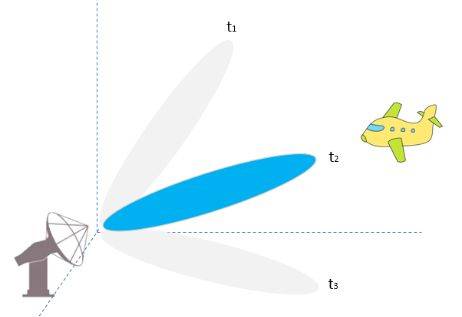
Figure 2
Phase method angle
The phase method uses the phase difference between the echo signals received by multiple antennas to measure the angle。
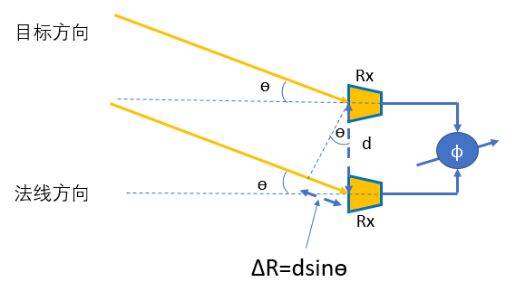
Figure 3
With a chestnut, the distance between the two antennas is known to be d, so the echoes they receive are bound to be a phase difference because of the wave range difference r. High school physics, phase = frequency* time, therefore
In other words, if you can measure the difference between the two receiving antennas, the angle of the target's direction, it's called out!
By contrast, the principle of amplitude seems to be much simpler than the symmetry, but the amplitude method itself has a number of limitations, such as the fact that when radar sends two adjacent pulses, there must have been a certain turning angle, so there will be a certain “quantifiable angle error” and, worse still, if the angle is too large, the target deviates too far from the beam axis, which could have missed the target directly。
Radar speed
The little radars that get their target distance and position are happy, "the target is locked and ready for full force!" by the time the military arrives, the battleground may have been locked in “the old man has gone on the yellow crane, which is empty”. It is therefore the crown of victory to keep track of the enemy's movements (pacing) and to show where the next target appears。
Doppler effect
Although continuous wave radar is not commonly used in practice, it can be introduced from the simplest series radar. If the horn frequency of the continuous wave radar signal is w0, when there is a relative movement between the target and the radar, the distance between the two is r (t) = r0-vt over time. Of which r0 is the distance of t= 0 moment, v is the directional speed of the target relative radar. Therefore, the time lag of radar echoes
So the rebroadcast is the difference in the phase compared to the launch signal
, and if the phase difference is followed by the time, you get a frequency. Bad
This means that there is a positive correlation between the relative speed of movement between the target and the radar and the frequency of the transmission wave and the echo. If the radar station and the target are moving in the opposite direction, the recipient receives more oscillations in unit time than when they are not moving, the equivalent is an increase in frequency; when the two move backwards, the frequency decreases. It's actually the doppler effect that we usually know。
Typical radar speed scene
In practical applications, pulse radar is the main mode of radar work, while pulses correspond to a spectrum function that is wirelessly wide。
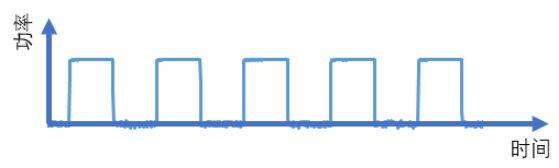
Figure 4 timescale for pulse signals
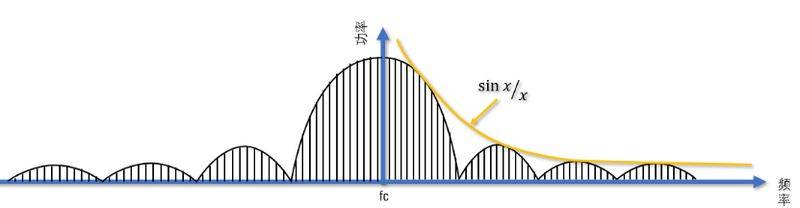
Figure 5 pulse signal frequency map
It does not seem easy to directly measure the frequency bias of the sinc function, as is the case with a single frequency series. But every road leads to rome, and the obstacles that lie ahead are the best way to go, often by choosing to go around!
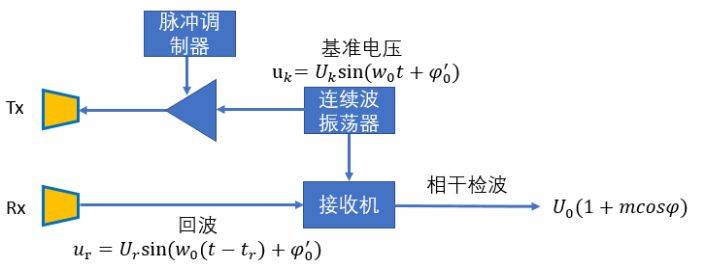
Figure 6
Receiving is a simple add-on operation for the continuous wave signal uk and the echo signal ur, and then we're going to find this package that connects with the signal
Corrupt calibration wave
There is a need to add an additional relevant calibration that will detect and receive signals based on the phase information of the carrier. For example, two chords of the same size, which add up to double the original amount; but if it's a converse swirling wave, plus it, the band will not increase, but will decrease to zero。
So the amount of signal eventually synthesized in figure 6 also depends on the phase difference between the echo and the launch wave
I don't know. Of which, u0 is the output of the constant oscillation baseline voltage after detection, it's always there
This means that when backwaves and base voltage are applied to a dry resonance wave, the signal weight is folded and stored only during the return signal's arrival。
If it's a static target, the echoes received and the phase of the launch wave. Bad
It must be a constant. As a result, a series of equivalent pulse outputs can be obtained by cutting the direct flow fraction after detection. However, for the goal of the movement, the phase difference between the echo and the launch wave changes over time。
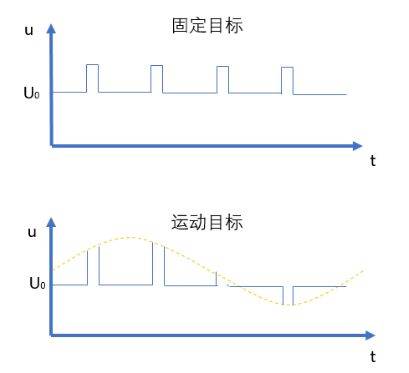
Figure 7
So, the pulse signal package after the direct flow is..
Of which, doppler moves frequently
I. E
Well, that's just like the doppler frequency formula sought by the serial radar. Just that the doppler frequency of pulse radars is precisely the condensed frequency of echo pulses, which is equivalent to a sampling state for continuous wave radar work。
Seeing you here, you have to throw flowers! Although there's a lost brain in this chapter, i believe that the principles of radar range, angle and speed are already in your chest
Next article, we'll introduce you to our best teammates in radar engineers. - how do you speed up radar applications