Management is a high-frequency reference point for public fundamentals, especially for people + title + core theory, and more often for examinations
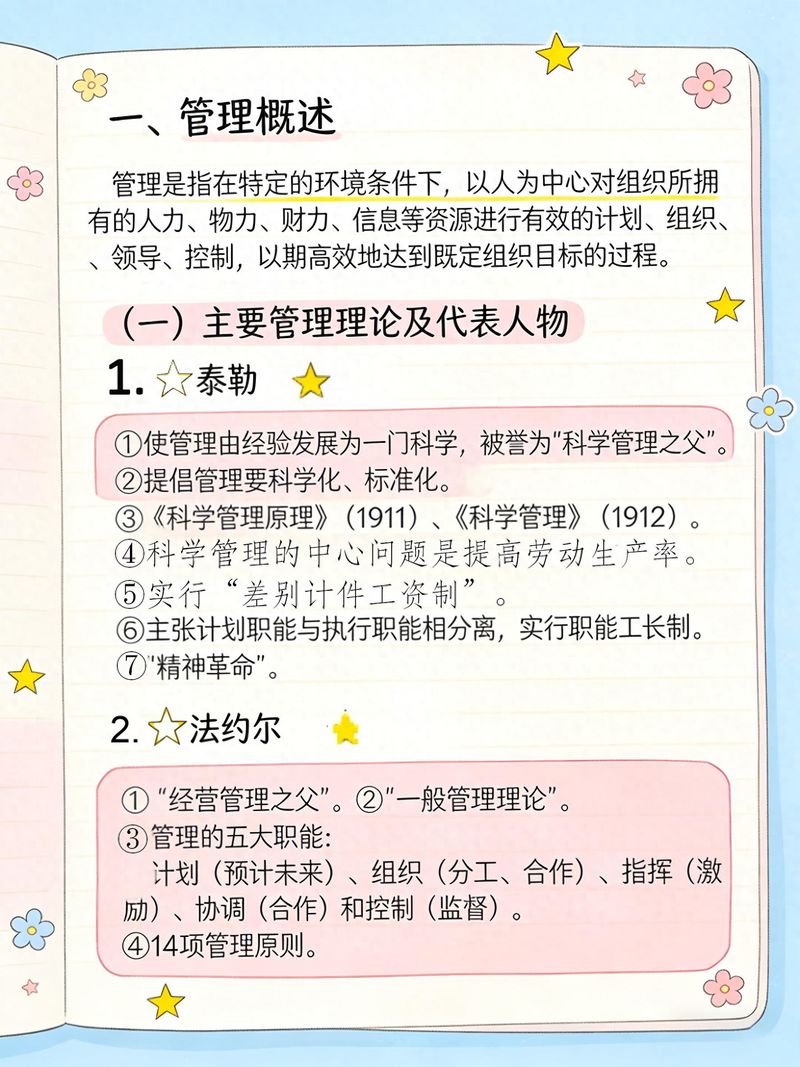
Management core definitions
Management is the process of planning, organizing, leading and controlling effectively, under specific environmental conditions, the human, material, financial and information resources available to the organization, with a view to achieving efficiently the objectives of the organization。
Main management theory and representational hf test points
Focus on the one-to-one of the key points of the core theory, avoid confusion, and mark the core in each of the points
Taylor
Title: father of science management
Core contribution: making management a science from experience and promoting management science and standardization
Representation: science management principles (1911), science management (1912)
Key points:
Central issues in science management to increase labour productivity
• introduction of a “differential piece-work system”
Separation of planned functions from executive functions and introduction of functional chiefs production
The idea of "the spiritual revolution"
2. Fayol
Title: father of operations
Core theory: general management theory
Core views:
Management of five main functions: planning (foreseeing the future), organization (division of labour cooperation), command (incentive), coordination (collaboration), control (oversight)
The 14 management principles are classic
3. Weber
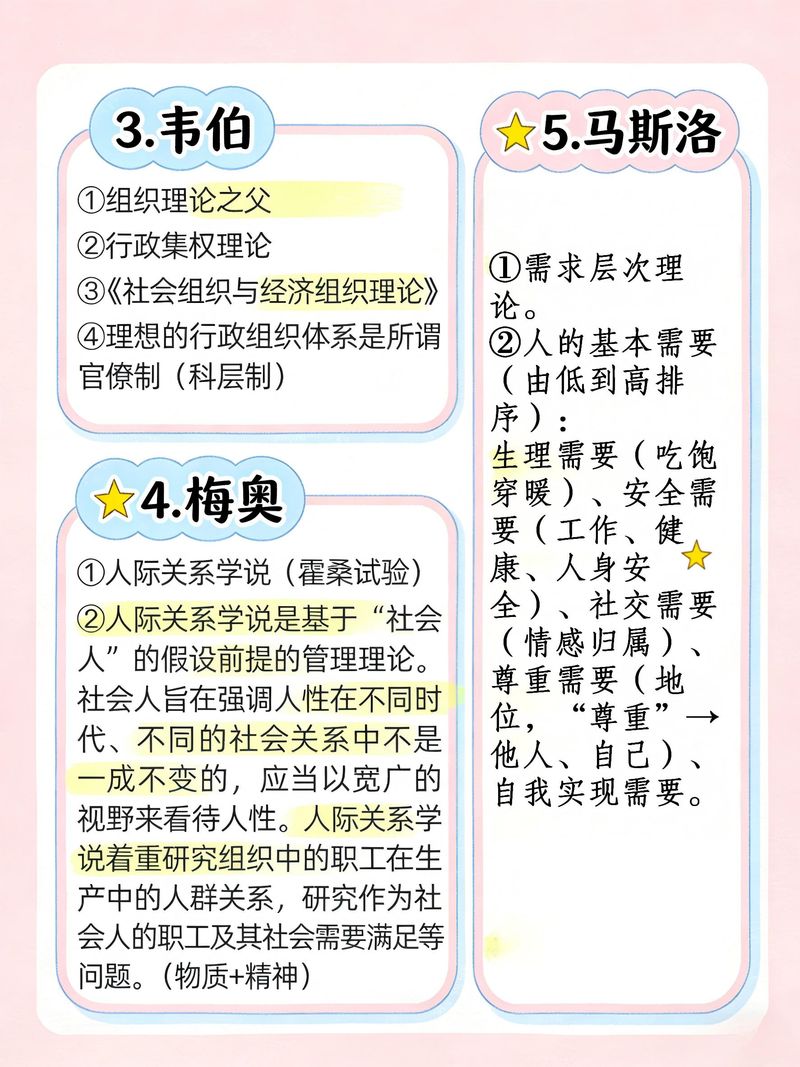
Designation: father of the organization's theory
Core theory: the doctrine of administrative centralization
Representative: theory of social and economic organization
Key view: the ideal administrative organizational system is bureaucracy (scientific system)
4. Mayo, hf test
Core theory: the human relationship doctrine (based on the famous hossan experiment)
Theoretical premise: "social person"
Key points of view: focus on people in production, meet the material needs of workers + mental needs, break the traditional “economies” assumption
5. Maslow, hf test
Core theory: demand-level theory
Basic human needs (from low to high ranking):
Physical needs (saturation) for safety (work, health, physical security) for social needs (emotional belonging) for respect (respect of others + self respect) for self-realization
6. Herzberg
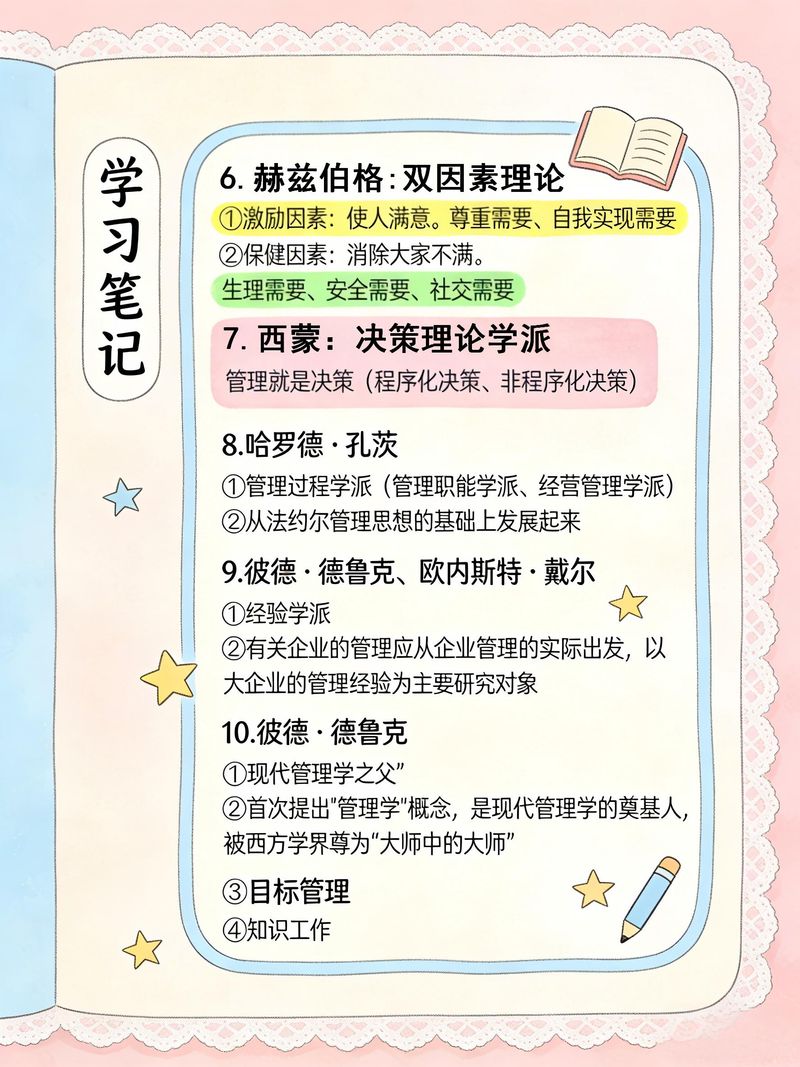
Core theory: double-factor theory
The two factors are precise:
Incentives: satisfied with maslow's need for respect, self-fulfilment
Health factors: addressing human grievances, responding to maslo 'physical, safety, social needs'
7. Simon
Core theory: theory of decision-making
Classic: management is decision-making
Decision-making classification: procedural, non-procedural
8. Harold kontz
Core theory: management process schools (also known as management functions schools, business management schools)
Theoretical basis: from the development of the fajor management philosophy, continuity of the core of the management function
Peter drucker, ernest dale
Core theory: lessons learned
Key point of view: business governance needs to be pragmatic and targeted primarily by the management experience of large enterprises
10. Peter drucker
Title: father of modern management, the western world is the "master of masters."
Core contributions:
For the first time, the concept of “management science” was introduced
It's a classic target management theory
Lead research on knowledge-related management concepts
Core test speedphone. Answer
Teccofa escuela, meo society people
Maslow needs five floors. Herzberg doubles
Simon's decision-making kontzli. Druk's target is modern
It's a character-to-person theory
I'm going to take a little tip
The foundation management module, which focuses on recognition, has three easy points:
1. The identity of the person in question corresponds to the exclusive designation, which is the point of the examination
2. The key points of the distinction between core theories, in particular maslow, herzberg
3. Repeated endorsement ** hf test** (meo, maslow) is the top priority
If you know the core, the basics of public administration, the basics, the basics, the basics, the basics