Commercial streets can be classified according to location into the following three types:
Integrated business streets: multifunctional, multi-practice, multi-business, multi-business business combinations of shopping, catering, leisure, recreation, culture, etc., with emphasis on the provision of integrated services for consumers. For example, shinai walk street, fifth avenue, new york。
2. Thematic business street: focusing on a theme and setting up derivative stores based on the theme, each business is part of the theme to meet the requirements of individualization, diversification and differentiation of consumers. In hong kong, for example, san ritang bar street and mongkok street。
3. Specialized streets: commercial neighbourhoods with a deep historical culture or geographical style, providing goods and services to consumers with traditional characteristics. It's like chengdu jinri, xi'an back on min street。
Key factors for commercial street success
Business street planning elements
Planning - spatial patterns
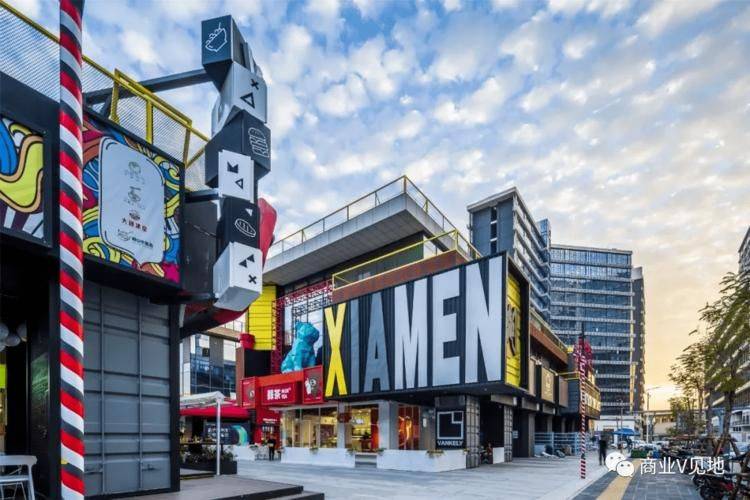
Most successful business street planning at home and abroad makes good use of narrow alleys, short streets, circuits, corridors and small-scale shared spaces to create a good business climate。
It's easy to create a lively scene. The short street of trajectories does not easily create tension and fatigue among consumers。
The galleries can better address and add value to the level of transport for businesses on the second and above. The small-scale shared space is, on the one hand, a gathering point and, on the other hand, a dynamic space for commercial streets。
Planning — functional structure
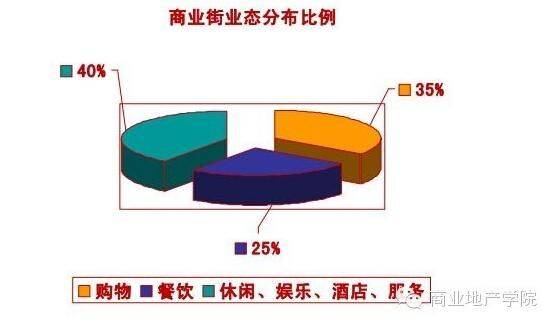
The structure and business practices currently prevailing internationally are 30-35 per cent shopping, 20-25 per cent catering and 30-40 per cent recreation, recreation, hotels, services, etc。
The results of the survey of business structures on foot in the country show that shopping generally accounts for more than 50 per cent of the total。
In recent years, there has been a downward trend in the share of shopping in the distribution of business walking。
Planning - scale (long)
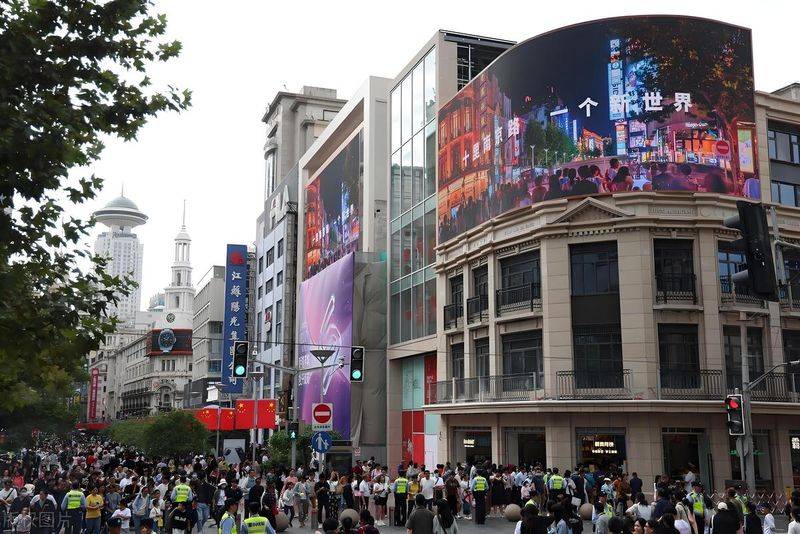
The length of commercial street is typically 500 to 700 metres, or 1,000 to 1,500 metres。
Business street patterns show that non-walk streets can be longer, and walk streets must be shorter, depending on functional location。
Expert tests normally result in acidic legs at a distance of about 2,500 metres; while tired at 4,000 metres and exhausted at 6,000 metres。
People walk around the "no" font line, four times the distance。
Planning - scale (wide)
The width of the commercial street is an important factor in creating a “car-and-car” scenario of prosperity。
The width of the commercial street is closely related to the way the whole street is organized。
After testing, the traffic density on commercial streets is 4 m2 per person, which neither appears crowded nor reflects the prosperity of commercial streets。
According to experts, the appropriate width of commercial streets is about 20 to 30 metres, while small walking streets are around 20 metres and special streets about 10 metres。
Planning - scale (high)
The height of commercial street points to the height of the buildings on both sides of the street extending underground and upward。
The ratio of the width of commercial street to the height of the adjacent buildings is known as the width ratio of commercial street。
Experts think that the broad ratio of business streets is one to one, not more than one to two。
Trades on both sides of the street are suitable for 2-3 floors, not more than 4 floors; underground extension is appropriate for 1 floor, not more than 2 floors。
A summary of successful patterns in the business world and abroad