There are many differences between normal cells and cancer cells, and it is very important to find out about these differences. It is precisely on the basis of this distinction that the scientific community is targeting cancer cells without harming normal cells。
What difference does it make? Let's talk today。
First of all, how do cancer cells come from
We know that cancer cells are normal, uncontrolled cells with unlimited breeding power。
How does this superpower come about
We know that dna carries the code of growth, expresses the protein and regulates everything that happens in our bodies。
Some of the proteins are growth factors, telling the cells that it's time to grow, that it's time to grow, that is, grow and split; some are inhibitors, that is, inhibitors。
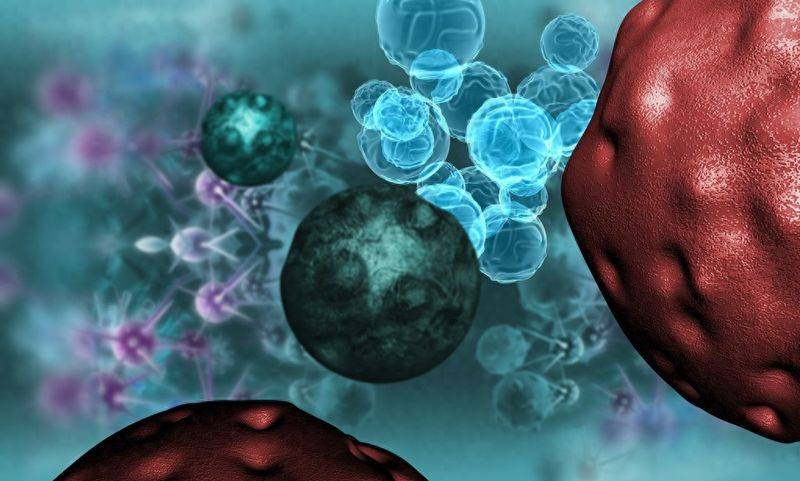
Some specific genes cause mutations, i. E., changes in dna, under the influence of carcinogenic factors such as smoking, radiation, nitrite, etc., to express abnormal proteins, which may be an overexpression or underexpression of some proteins, or an abnormal function of some proteins, resulting in cell transformation from normal cells to cancer cells。
In summary, cancer is a complex disease, usually the result of multiple combinations of anomalies, not individual mutations or protein anomalies (example)。
Thus, it is generally assumed that cancer usually takes decades to constantly contact carcinogens from its occurrence to its ultimate clinical appearance。
So what's the difference between normal and cancer cells
Normal cells: stopping growth & cancer cells: infinite reproduction
When the number of cells is sufficient, normal cells cease to grow (reproduction), we all experience skin injuries, and normally normal cells cease to grow when the skin cortex is repaired。
But cancer cells are different, and they have unlimited reproductive capacity. This continuous growth often results in the formation of tumours (cancer clusters)。

2. Normal cells: listening/cancer cells: absent
Normal cells communicate with other cells and are subject to organizational arrangements。
Specifically, normal cells respond to signals coming from elsewhere in the vicinity, which tell them "you can't grow any longer" and they stop growing。
Cancer cells don't respond to those signals, they don't listen。

3 normal cells: death & cancer cells: longevity
Normal cells have life spans, normal cells are injured or old, either restored to normal cells or die。
But some cancer cells are either not repaired or not dead。
There is a protein in the body called p53, and the p53 gene is also a cancer-resistant gene whose coding inhibits cell growth. The effect is to check if the cells are not injured and, if so, to regulate the initiation of cell suicide。
If p53 is abnormal or dead, it is cell cancer. So the damaged cells continue to breed。
4. Normal cells: capacitors & cancer cells
It's normal to have some sticky matter on the cell. Together
Carcinocellular cells do not dune these viscous substances, so cancer cell tissues are not strong, disciplined, can float in nearby locations, and can reach far beyond the body through a blood or lymphocytological system。
5. Normal cells in their own place
Normal cells stay where they are. For example, lung cells are kept in the lungs。
Some cancer cells lack adhesive molecules sufficient to spread through blood and lymphocytes to other regions of the body, that is to say。
Once they reach a new area (e. G. Lymphoma knots, lungs, liver or bones), they begin to grow, often creating tumours that are far from the original tumor。
Six, normal cell size
Under the microscope, normal cells and cancer cells may look completely different。
Relatively consistent normal cell size
But cancer cells are so full of each other that some are bigger and others smaller。
Besides, the cell's "brain" -- the cell core is very different
The cell nuclei of cancer cells are often abnormal; they are large and black compared to normal cells。
It is now believed that the cancer cell nuclei are black because they contain too many dna; there are also abnormal quantities of chromosomes in the cancer cells, which are organized in a confusing manner。
Normal cells: mature & cancer cells: premature
Normal cells will mature and bear special credit。
Because cancer cells grow rapidly and are divided before they mature, they are premature, so some scientists believe that cancer cells are cells that do not " grow up" and do not mature。
8. Normal cells: monitored by immunosystems & cancer cells: escaping the immune system
When normal cells are injured, they are immune and removed。
Cancer cells are able to escape (deception) immune systems for a long time and grow into tumors。
Normal cells: working & cancer cells: jobless travellers
Normal cells have their own functioning; cancer cells do not。
For example, normal white cells play a role in human exposure to infection, but the number of white cells may be very high in persons with leukaemia, but cancerous white cells do not perform physiological functions, so people are more likely to be infected even if the number of white cells increases。
For example, normal thyroid cells produce thyroid hormones; carcinogenic thyroid cells may not produce thyroid hormones. Thus, despite the increase in thyroid tissue, the body may still lack sufficient thyroid hormones (low thyroid function)。
10. Normal cells: blood supply fixed & cancer cells: new blood vessels
Under normal conditions, our blood vessels within our tissues are fixed, i. E. Our normal cells have a fixed blood supply; angiogenesis is created in the respective parts of our body only if the damage to one part of our body requires repair
But even if cancer cells do not need to grow, they can be vascularly created and the blood supply is irregular。
One way to treat cancer is to create an vascular inhibitor, to organise the vascular formation within the body, and thus to organize the growth of the tumor。