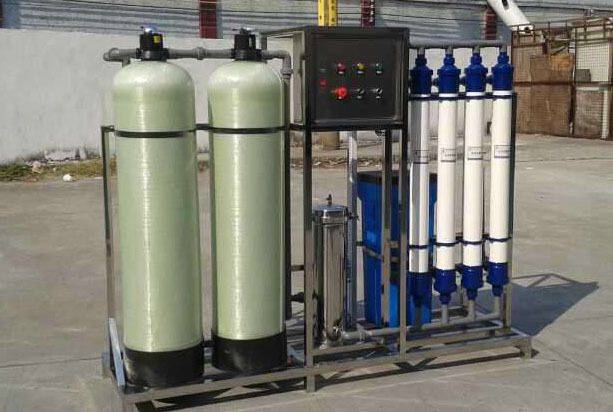
As societies develop, the quality of life improves, so does the market demand for water purification, and many consumers struggle to buy ultra-filter filters or reverse-infiltration water purifications before buying them. What is the difference between overfilt and back-infiltration water purifications
I. Comparison of water purification
In fact, superfilterers and reverse osmosis cleaners are relatively similar in structure, with the first half consisting of pp cotton, activated carbon and other rough filtering elements, the difference being the difference between the functions of the ultrafiltration film and the anti-permeability membrane, with a filter accuracy of approximately 0. 01-0. 1 Μm and a filtration of up to 0. 0001 Μm of the anti-permeability membrane, leaving some mineral elements behind after the ultrafiltration, which is completely pure water, so that the choice of installation may be based on whether or not heavy metal elements in local water quality are exceeded。
Ii. Electronics
A reverse osmosis water purification unit is a membrane separation operation that separates solvents from solutions driven by pressure differentials. Pressure is exerted on the fluid on the side of the film, and when the pressure exceeds its osmosis pressure, the solvent will be inverted in the direction of natural penetration, but it will work with high water pressure to “push” and therefore need to be connected to the main power source to accompany the pressure booster pump. The superfilter is a physical type of filter, and the superfilter can normally filter water purification without pressure in areas where the water pressure meets standard. In addition, some overfilterers use single core filters, which are low in space occupancy and installation conditions。
This is the difference between overfiltration and reverse osmosis water purification. In practice, if the water contamination in your home is severe, you can choose the reverse osmosis water purification unit because its filtering is more accurate and only allowed through water molecules, which can effectively remove rust, sediments, bacteria, etc. From the water, although the cost is higher because the water purification unit requires electricity and uses more water。