Technical brief:
This patent proposes multi-worker exposure solutions for the inefficient and unopposed treatment of multi-shaped glass panels by traditional panels. Automation of feed/output platforms, top-down mechanics, removable exposure mask and ccd pairing systems, simultaneous exposure of multiple sites and precision alignment of panels to improve the quality of production rhythms and processes。
Keywords: multi-position exposure machine, automating position
This practical novelty relates to the field of 3d sheeting technology for electronics, in particular for the production of 2d, 2. 5d and 3d glass sheeting through exposure, visual and etching。
Background technology:
The design concept and processing model of laminate glass is based on the experience of the deep processing industry of clockglass lenses. The traditional 2d glass is flat, and whatever it chooses, it should be on the same plane as the other points on the glass. 2. 5d screen refers to the radians of screen protection glass. 2. 5d glass is a flat area at the centre of the glass and is then radically treated on the basis of the flat glass. And 3d glass is a screen with radians on the entire surface. From the design and application of clockglass lenses, it can be seen that 3d curved glass has a better appearance than 2d flat glass and better protective effect. The 3d curved glass with a hyperbolic rate is particularly good and is clearly better than the 2d glass in the drop-resistant, scratch-resistant, static pressure test. In particular, it works best when applied to protection against flexible displays of mobile terminal products such as smart phones, smart watches, etc。
Based on the presentation techniques for existing products of mass production, there are only two display screens with 3d curved panel glass, one for soft electronic paper and the other for soft old. 3d curved panel glass + soft electronic paper products, with the exception of a very small number of cell phone backpacks, which are used as sidescreens, are generally used on smart watches or smart bracelet type wearable devices. In addition to being used on smart watches or smart bracelets for wearable devices, the main applications are smartphones, tablets and high-end televisions. The most representative product on the market is a three-star set of edge smartphones equipped with 3d curveboard glass plus soft amold screens, perfect for full display of borderless effects, which can also be applied to head-on vr devices。
The curvature of 3d glass meets the design requirements for 3c products. The design of 3c products, such as smart phones, tablets, smart watches and so forth, has clearly guided the direction of 3d curved glass. The advantages are lightness, transparency and cleanness, anti-fingerprint, dizziness, hardness, shaving resistance, tolerance, etc., and the 3d-shaped shape of plastic with product-specific designs of novelty and good quality, while increasing the arc edge touch function with excellent tactile hands and improving the experience of touching. With the release of the soft tft lcd monitor by jdi japan at the sid 2016 seminar in may, apples are likely to introduce soft on-cell amoled monitors in their new iphone in 2017, which will drive more 3d glass protection applications and needs. For this reason, the applicant submitted an application for a multi-working 3d panel exposure machine, which contributed to the exposure of the 3d glass panel。
Technical realization elements:
The purpose of this new practical approach is to provide a multi-position 2d, 2. 5d, 3d-platform exposure machine that will allow for multi-position exposure operations that will be easy, fast, and will guarantee the quality and quality of exposure。
To this end, the following technical programmes have been introduced:
Multiple 3d panels with:
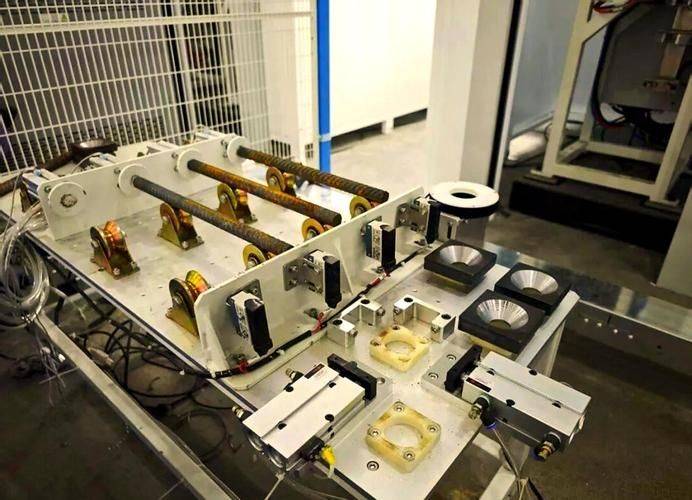
(a) the aircraft seat, which contains feed platforms, feed points, feed points, feed points, production platforms and exposure sites
(a) the workstation, which is assembled on the seat of the machine, with multiple degrees of freedom adjustment, with the workstation's adjusted control mode covering u-v-w and x-y-zen, etc., and the workstation being driven by gas cylinders or electric power, moving back and forth between the initial and the exposed positions
The feeder platform sets up a vacuum adsorption device, the panel is adsorbed on the feeder platform, which is driven by gas cylinders or electric power, and the feeder platform transports preprocessed panels to the upper feeder position
(a) a mechanical hand for the material, which moves between the post for the material and the starting point for the work on the platform, and a mechanical hand for the material from the post for the material to the starting point for the work on the platform
(a) the layman, who moves between the starting position of the workstation and the working position of the workstation, and from the working position of the workstation to the working position
(a) a vacuum absorber is set up for the production platform, which is adsorbed to the production platform, which is driven by gas cylinders or electric power, and which removes the processed panels from the substrate
(a) exposure of mask, which is to be assembled on the platform, and exposure of mask to the same exposed position on the seat
(a) the symmetrical system, which assembles on the platform and moves back and forth between the different exposed positions of the symmetrical system; the symmetrical system corrects the panels on the table by exposing the mask target
Exposure sources, which are assembled on the platform, are moving back and forth between the different exposure sites on the platform; the exposure sources are exposed through the mask panel on the platform。
One, two or more of the said workstations have vacuum vents attached to the panels, and two or more workstations are placed between the upper and lower levels。
The above- and the lower-suppliers are hand-to-hand; the upper- and lower-suppliers are hand-to-hand; the lower-to-hands are hand-to-hand; the upper-to-hand and lower-suppliers reach up and down; the above-to-hand and lower-suppliers move horizontally between the upper and lower-supplier positions on the board, while the workstations move vertically and straightly in relation to the movement of the upper and lower-suppliers; the workstations are equipped with the upper-to-supper and lower-to-supplier-to-supper-to-show avoidance slots; and both the upper and lower-to-supper platforms are equipped with the escape gap between the upper and lower-to-show and the lower-to-staskets。
The above- and the bottom-up mechanics described may also be a snuff drive, with the top- and bottom-up mechanics moving horizontally between the top and the bottom-up positions on the seat of the aircraft, while the workstation moves vertically。
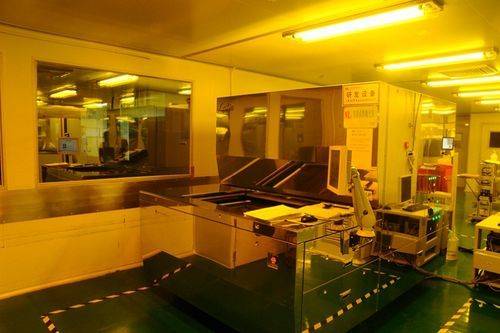
The above option is further: the logarithmic system described is based on the ccd image logarithmic design, which corresponds to changes in the number of workstations and is designed to be one or two pairs。
The above programme is further described as a single, double or multi-light source。
The benefits of this practical new type of work are the following: multiple job exposures through effective structural design, convenience and speed, assistance in position-to-positioning through a position-to-place system, speed and accuracy in position and positioning, and reduction of unnecessary errors, close working links between jobs, easy operation, drive, adaptation to 2d, 2. 5d, 3d panel diversity, facilitating 2d, 2. 5d, 3d glass panels for exposure processing, matching the development of 2d, 2. 5d, 3d glass panels, achieving rapid setting of location parameters to meet production needs, avoiding or reducing uneven graphic exposure, improving work efficiency and quality, and saving operating costs, with significant improvements in the productivity of enterprises。
The following figures are attached:
Figure 1 of the attached figure shows the structure of one of these practical examples
Figure 2 below shows the visual structure of the implementation of figure 1
Figure 3 below shows the overlooking structure of the implementation of figure 1。
Implementation modalities:
The following is a further illustration of the conceptual, specific structure and technical effects of this new practical development in conjunction with the accompanying chart, in order to gain a full understanding of the purpose, characteristics and effects of the new practical development。
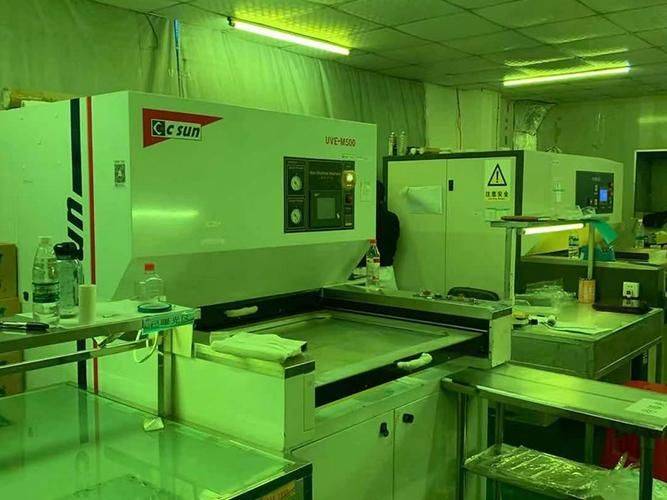
See figure 1, 2 and 3 for a better implementation map, which is a practical new type of multi-position 3d panel-exposure machine with seat 1, table 2, feed machine 3, feed machine 8, exposure mask4, position 5 and exposure light source 6. There are feed platforms 15, above 12, below 11, off 14 and exposed 13. Workstation 2 is assembled on platform 1, multiple freedom adjustments are made to workspace 2, and the adjustment control model for workstation 2 covers, inter alia, u-v-w and x-y-zen, suitable for different work control requirements. Workstation 2 is driven by gas cylinders or electric power, moving back and forth between the initial position and the exposed position 13, allowing for the release of material during the exposure process. The feeder platform 15 sets up a vacuum sorbent, plaster 7 adsorbs on top of the feeder platform 15, which is driven by gas cylinders or electric power, and feeder platform 15 transfers preprocessed panel 7 to the top 12. The material mechanic 3 moved between the initial working position of the upper 12 and working table 2 and the initial working position of the upper 3 moving panel 7 from the upper 12 to working space 2. Substrate mechanic 8 moves between workstation 2 and workspace 11, while substrate mechanic 8 moves from workstation 2 to workspace 11. Fuel platform 14 sets up a vacuum adsorption device, panel 7 adsorpts on the material platform 14, platform 14 is driven by gas cylinders or electric power, and platform 14 removes the processed panel 7 from substrate 11. The exposed mask4 group was installed on platform 1, and the exposed mask4 was moved back and forth at the same exposed position on platform 1. The 5-bit system is installed on platform 1, moving back and forth between the 13th of the different exposed positions of the 5-bit system on platform 1; the 5-bit system is designed on the basis of the ccd image-to-view principle to achieve optical-television recognition and to correct panel 7 on platform 2 by capturing the target for exposure to mask4. The logarithmic system 5 is an existing technology that corresponds to changes in the number of workstations and is designed to be one or two pairs of systems, without recapitulating its working principles here. Exposure source 6 is installed on platform 1, and the exposure source 6 moves back and forth between the different exposure levels of 13 on platform 1; the exposure source 6 is exposed through exposure of mask4 to panel 7 on platform 2, resulting in graphs of panel 7, which can be in the form of single, double or multi-light source, with changes in the number of workstations 2, 3, 4, 6, 8 and 9。
As shown in figures 1, 2 and 3 of this implementation example, the above-supplied robots 3 and the lower-suppliers 8 are towed, the upper-supplier 3 has an upper-supplier forklift 31 below the lower-span 7 and the lower-supplier 8 has a lower-supplier forklift 81; the upper-supplier 31 and the lower-supplier 81 achieve upward-down/down. The above-material mechanics 3 and the lower-material mechanics 8 are moving horizontally between the upper-material position 12 and the lower-material position 11 on flight 1, and workstation 2 is moving vertically straightly relative to the upper-material position 3 and the lower-material machine. There is an empty space on table 2 forklift 31, suitable forklift 81, and on line 14 forklift 15, suitable forklift 31, and bottom forklift 81. The structure is simple, the work space is compact, the operation is easy, the drive is easy, the investment costs are low, the feed is easy and fast。
Of course, this practical new type of upper and lowerware mechanics 3 and 8 can also be a suction system, with the upper and lowerware mechanics 3 and 8 moving horizontally on platform 1 between the upper and lower gear 12 and 11, and workstation 2 moving vertically in relation to the upper and lowerware mechanics 8. The same can be achieved by connecting jobs closely, making them easy to operate, easy to drive, easy to feed and fast。
As shown in figures 1, 2 and 3, one, two or more of the workstations in this implementation example 2 may have a vacuum inhaled lid 7 on table 2, which is convenient and fast and secure. The two or more workstations are designed in parallel with the upper 12 and lower 11 levels, which are small enough to facilitate the movement of the dichotomy system 5 and the exposed light source 6. This practical new way of entering and leaving material can be designed to be left and left, or right and left, as required。
The following are the steps of the pilot project:
1. Pre-processed plaque 7 is placed on the top 15 platform, which is tightened and pushed from the cylinder to the top 12。
2. Controls the upper material mechanics from the bottom to the lower of the upper grade 12, controls the upper forklift's gas tank up to the upper forklift 31 and the upper forklift's forklift 31 to the plaque 7 and is delivered to the top of the workstation above workstation 2。
3. The gas tank to control the upper forklift 31 fell, the panel 7 on the upper forklift 31 fell on table 2 and the upper forklift 3 withdrew to the upper position 12。
Workstation 2 opens the vacuum insulation panel 7 and controls workstation 2 from the initial position to the exposed position 13, while controlling exposure of mask 4 to the top of the sheet 7 and down to the default gap。
Control logarithmic system 5 is moved to above the exposed position 13, and the panel 7 above control desk 2 is merged with the diagonal marker on the exposed mask4 and is then moved to the opposite slot system 5。
Control the exposure light source 6 moves above the exposure level 13, opens the light source, closes it after the time set, removes the exposure source 6 and controls the exposure of mask4 back to its place of origin。
7. Control table 2 is moved to the initial table and releases a vacuum。
8. Controlling material mechanics 8 reaches the initial stage of work on table 2, controlling gas cylinders of itemized forklift 81 rises, while itemized forklift 81 raises the exposed sheet 7 and is sent to the top of point 11, while control platform 14 reaches point 11。
9. The gas tank of the controlled forklift 81 fell, and the plaque on the bottom forklift 81 fell on the material platform 14 and was tightened, and the controlled material platform 14 reached its original position, releasing a vacuum that would allow it to walk。
Multiple workstations2 could be used on a rotating basis with the aim of increasing production rhythms。
This practical development is described in detail in the above-mentioned form of implementation, only to illustrate the conceptualization and characteristics of the new technological approach, which is intended to inform and implement the new content of the practical approach. It does not limit the scope of protection for the new practical approach. In addition to the 3d panel exposure process described above, the 2d, 2. 5d panel exposure process may also be applied。