Technical brief:
The patent proposes an integrated positioning and alignment device for the poor performance and efficiency of the traditional 3d glass lid mask coating process. The precision of 3d glass through the directional slots and positioning poles, combined with a vacuum exhaust system and a soft silica film film, has enabled the philin tablets to bind up with the glass surface in a non-foam-free manner, increasing the accuracy and process efficiency。
Keywords: 3d glass positioning, philim matching, vacuum adsorption
This practical novelty relates to the field of positioning and pilfering technology, in particular a locator for 3d pane exposure and a plywood patch。
Background technology:
As industrial technology advances and demand for e-consumption products increases, mobile phones or other electronic products using 3d glass are widely used. However, the processing of 3d glass sheeting has been a major challenge, in particular the light coating of 3d glass. Traditional processes are generally dedicated to filament or membrane methods, but they are phased out because of their low probabilities and subsequent ldi (direct laser imaging) exposure processes, although the probabilities have been significantly enhanced, but the processes are more complex and inefficient, and some inefficient work needs to be replaced with more advanced processes as labour costs increase and capacity constraints limit。
Therefore, there is a need to provide a location for the exposure of 3d glass lids and a phylin patch to do this, to ensure a good rate while maximizing efficiency and saving more valuable time for processing production。
Technical realization elements:
The purpose of this practical novel is to address the shortcomings in existing technology, and a proposed positioning and philaming device for the exposure of 3d glass panels. In order to achieve the above, the following technical programmes have been introduced:
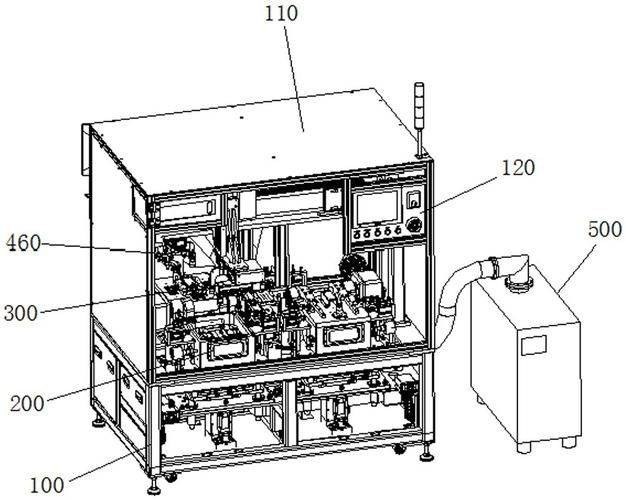
A positioning and flinting device for the exposure of the 3d glass lids, including a positioning column for the positioning and fixing of the 3d glass lids; the outer side of the said flints, with a laminate seal on the outer side, with a vacuum vent on the inner side of the flint, with multiple vents connecting them, with a directional sink on the upper side of the said vent, with the first, the second and the crushing tablets on the upper side of the flin, with the first link, the second link pole, which is an extension of the first line from the said rotor to the centre of the flin lids, and the first link and the pressure sheet, which is described, are placed on the outer side of the flints, with a roller, which is used between the first, second link pole, and the plywood sheet, which is set up on the upper side of the said flin lids。
Under this practical new preferred implementation option, a vacuum vent will be installed on the inside side of the bottom seal and around the corner of the bottom seal。
Under this practical new preferred implementation option, there are connected vents between adjacent vents and connected vents between relative vents。
Under this practical new preferred implementation option, the area on the said base shelf located between the said vents corresponds to a single directional slot along the four sides of the bottom seal。
According to this practical new preferred implementation option, at least two directional slots will be set up at a distance on one side of the bottom seal to achieve a more stable positioning of the 3d glass sheet。
Under this practical new preferred implementation option, the said locator column is guided by the corresponding directional slots, and the said 3d glass sheet is identified at the middle of the above-mentioned substrate to ensure that the said 3d glass sheet corresponds accurately to the said phillin tablet。
According to this practical new preferred implementation option, the first of the above-mentioned connecting poles is rotated around the horizontal axis of the said transformer and cannot rotate in the horizontal direction of the said transformer. Such a setup through the first docking pole allows for a high degree of re-alignment precision during the alignment process in fixed pelican positions。
Under this practical new preferred implementation option, there are springs for the first and the second connecting poles described in the relapse, set between the first connector pole and the said philynthesis sheet, which are set into the first connector pole, the second connector pole and the said crushing tablet, so that the philynthesis tablet described prior to the vacuum is well aligned with the said 3d glass sheet。
Under this practical new preferred implementation option, the stated springs interacted with the said rotor support frame, the said first connector pole, the said second connector pole and the said crushing tablets, so that the said philynthetic tablets would, as a matter of priority, fit the surface of the said 3d glass sheet with the said 3d part of the tablet in the course of pumping the vacuum through the said vent。

The advantages of this practical new type of positioning for the exposure of the 3d glass lids and of the pfips are that the central positioning of the 3d glass lids was achieved through the set-up of a steering slot, positioning pole, turner, first connector pole, second connector pole and pressurized tablets, preventing the shifting of the position of the 3d glass lids and the 3d lids from affecting the position of the required graphics; and that the 3d side of the 3d lids of the 3d lids could achieve a normal exposure process by putting together, inter alia, the 3d lids of the 3d lids and 3ds of the 3d lids in a seamlessly simple operation, efficient production, and saving human resources, which would significantly increase the efficiency of the subsequent exposure process。
Annex figure description
The advantages and features of this practical new type will be described in detail by reference to the attached figure, in which components are not necessarily drawn proportionately, where:
Figure 1 presents a positive view of the ground floor for the 3d glass lid exposure and for the philin patch
Figure 2 presents a positive view of the philin sheet for the 3d glass lid exposure and for the philin patch
Figure 3 presents a lower/left view of the 3d glass lid exposure and the phillin patch for this practical novel。
Figure 1: base shelf, 2 exhaust vents, 3 exhaust vents, 4-director slots, 5 locator poles, 63d glass lids, 7-bed seals, 8-turned racks, 9-linker poles, 10-connection poles, 11 presses, 12 flints, 13 silicate sheet film, 14 flint slabs, 15 panel seals, 16 springs。
Implementation modalities
The following is a clear and complete description of the technical options for the implementation of this practical new preferred model, in conjunction with a map of this practical new preferred model. It is clear that the preferred examples described are only part of the implementation of this practical new model and not all of them。
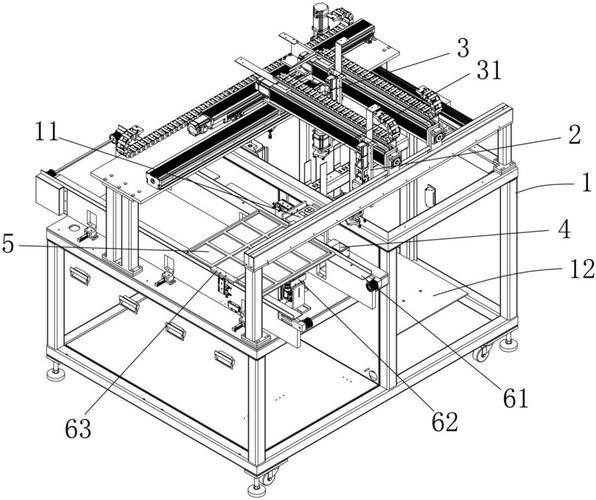
For reference diagrams 1-3, a positioning and flint-coding device for the exposure of 3d glass lids, consisting of 1 undersea and 14 undersea, 7 with a bottom seal on the outer side of 1 undersea, 2 with a vacuum vent on the inner side of 7 underseat, and 3 with multiple vents connecting them between 2 in the vent。
Optimally, there are four vacuum vents 2 on the inside side of the bottom seal, which are located in the corner of the corner of the bottom seal。
As shown in figure 1, there is also a link between the adjacent vents and the relative vents, except for the adjacent vents. The regional distribution on the base shelf 1 is located between vent 3 in a position-oriented slot 4, the internal configuration of which has a position-oriented column 5, which is used to locate and fix 3d glass panels 6。
Optimally, the area on the base shelf 1 that lies between vents 3 corresponds to a directional slot 4 along the four sides of the bottom seal 7。
Optimally, set at least two directional slots 4 at a distance corresponding to one side of the bottom seal 7 and position column 5 in the directional slots to achieve a more stable position of 3d glass lid 6。
As shown in figure 2 and figure 3, the outer side of the philynthetic platoon 14 is fitted with a lid seal 15, the outer side of the plaque seal 15 is set to have a turner 8 and the upper side of the rotor 8 is set to have the first pole 9 and the second pole 10 and a pressure plate 11, of which the first pole 9 extends from the centre of the rotor 8 to the centre of the philin platoon platoon 14 and rotates around the horizontal axis around the rotor 8 but cannot be rotated in the horizontal direction of the twisting frame 8 in order to maintain a high repetition of position during the alignment of the fixed pirin tablets. The second conjunction pole 10 connects to the first condensation pole 9 and the pressurized plate 11, with a spring 16 for relapsing the first conjunction pole 9 and the second condensed plate 14 and a philynthetic plate 12 under the condensed plate 11, and a silicon film 13 between the condensed plate 11 and the philynthetic plate 14。
Positioning column 5 can be guided by the corresponding directional slot 4, allowing 3d glass lid 6 to be identified in the middle of the base, and the accurate alignment of 3d glass lid 6 with the philim tablet 12 is secured. Through the above-mentioned positioning pillar 5, pillar 5 can fix 3d glass panels of different models. The spring 16 is used mainly to replay the first pole, 9 the second pole and 10 the pressure plate, so that, before the vacuum is pumped, the philistine 12 and 3d glass lids 6 fit well, and to rotate the frame 8, the first pole 9 and the second pole 10 are used primarily to fix the position of the philistine tablet, so that the philistine is able to maintain a high degree of re-profiling accuracy during the alignment process. The spring 16, in conjunction with the turner, 8 and the first pole, 9 and the second pole, 10, and the pressure plate, 11, will enable the philynthetic 12, in the course of the patching process, to fit first to the flat side of the 3d glass lid 6 and then to fit with its 3d part. Silicon film 13 has a high degree of flexability and perceivability, which not only ensures a perfect fit between the 3d parts of the 13th and 3d glass lids during vacuum adsorption, but also meets the requirements of normal exposure processes。
In this practical novel, pb5 is positioned at the centre of the base shelf of 3d glass lids, guided by the direction tank 4, and with the support of the turner 8 and the first pole 9, the second pole 10 and the pressurized plate 11, the phillin tablet 12 is fixed in the middle of the philin zone 14 and, in a gradual vacuum, the 3d side of the pb12 and the 3d of the 3d glass lid 6 is slowly integrated, at which point the position of the 3d glass sheet and the action of the pfc are fully completed, so that the next process, namely exposure, can be performed. This practical new type allows for the positioning of different models of 3d glass panels and the phillin patching, which are simple and productive, save human and material resources and significantly increase the efficiency of subsequent exposure processes。
The above-mentioned approach is one of practical implementation that is only the best of practical applications, but which is not limited to the scope of protection, and any technical staff who are familiar with the field of technology should be covered by the new practical techniques, which are replaced or modified on the basis of the new practical techniques and their conceptualizations。