What's a light multiplication
Optical multiplication tubes are vacuum electronic devices that convert a weak light signal into a telecommunications code. Optical multiplication tubes are used in optical measurement and spectroscopy analysis instruments. It can measure extremely weak radio power of 200 ~ 1200 nm wavelength in low-energy optical and spectroscopy. The emergence of a scintillator has expanded the application of pv multiplication tubes. The development of laser detection instruments is closely linked to the introduction of pv multipliers as effective receivers. The launch of television films and the transmission of images are also dependent on the light-multiplier tube. Optical multiplication tubes are widely used in the fields of metallurgical, electronic, mechanical, chemical, geological, medical, nuclear industry, astronomical and space research。
Rationale
The pv multiplication is based on exterior photoelectric effects, secondary electronic launches and electrooptic theory, combined with such features as high gain, low noise, high frequency response and large signal reception areas, and is a highly sensitive electrical vacuum that can work in uv, visible and near infrared areas. The solar-blind uv pv multiplication tube is not sensitive to visible light outside the solar-blind uv zone, near uv, and has low noise (dark current < 1na), rapid response and large area of reception。
Process
When the light is exposed to the optical cathode, the optical cathode stimulates the electrons in the vacuum. The optical electrons enter the multiplication system on a focused polar field and are multiplied by further secondary launches. The magnified electron is then collected as a signal output using anode. As a result of the implementation of the double-launch multiplier system, the pv multiplication tube has very high sensitivity and very low noise in the pv detectors that detect radiation energy in uv, visible and near infrared areas. In addition, photomultiplier tubes have the advantage of rapid response, low cost and large cathode area。
Electronic vacuum devices based on exterior photovoltaic and secondary electronic launch effects. It multiplies the ejected light electrons by means of secondary electronic launches, acquires a much higher sensitivity than the pv tubes and is capable of measuring weak light signals. Photomultiplier tubes include both the cathode chamber and a double-launch multiplication system consisting of several tactile poles (see figure). The structure of the cathode is related to the size and shape of the photocathode k, and its function is to hold the electron concentration of the cathode in the light from external photoelectric effects (see pv sensors) on the surface of the polar d1 in its first strike, which is smaller in size than the pv. The secondary launch multiplication system is the most complex component。
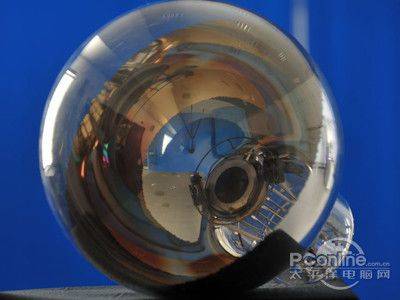
The range is largely made up of materials that have a high sensitivity and a secondary launch factor with a smaller input electron energy. The most common pick-up materials are caesium permide, silver magnesium alloys for oxidation and copper beryllium alloys for oxidation. The grab polar shape should facilitate the collection of electronics from the first stage to the next. A gradual increase in the positive voltage is added to each of the poles d1, d2, d3... And the anode a, and the difference in voltage between the adjacent poles should result in a secondary launch factor greater than 1。
As a result, the optical cathode-launched electrons, which are active in the d1 field at high speed and produce additional secondary-launching electrons, are flying towards d2 under the d2 field. This will continue so that each optical electron will trigger a multiplication of secondary launch electronics, which will eventually be collected by the anode. E-multiplication systems are focused and non-focused. The focus type is extremely important for focusing on the electronics from the front stage, multiplying them to the lower level, where there may be a cross-section of the electronic beam tracks between the two poles. The non-focus type is also divided into circular cycling (i. E. Rat cage), straight-line tile, box-breathing and blinds。
Photo-multiplier tubes are devices with special electrodes in transparent vacuum shells based on the principles of photo-electronic launch, secondary electronic launch and electro-optics. Optical cathodes emit electrons in photons, which are accelerated by external electric fields (or magnetic fields) and focus on the first polar level. These subcritical electrons can release more electrons at the subpolar level and are again focused on the second pole。
As a result, it is generally possible to multiply by more than 10 times, with a magnification factor of 108-1010. Finally, magnified photovoltaic currents were collected in the arctic at high levels. The number of output currents and incoming photons is proportional. The duration of the process is about 10-8 seconds. There is also a small multiplication tube using a secondary electronic launch inside the bent lead glass tube itself. Photo-multiplier tubes are also capable of producing tiny currents, known as dark currents, when added to the working voltage under all dark conditions. It originates mainly from a cathode thermal electronic launch。
The photomultiplication tube has two disadvantages: a reduced sensitivity due to strong light exposure or long exposure periods, which is partially recovered after the cessation of exposure, known as “tired”; and an uneven sensitivity on the surface of the 2-ray cathode。
Multiplication method
Photo-multiplier tubes are divided into poles and mcps。
Take the polar
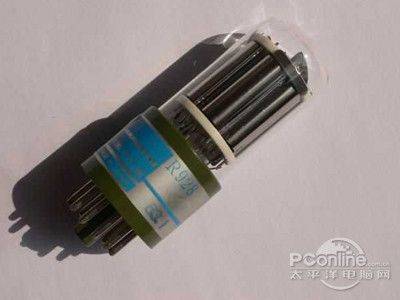
The acquisition of polar pv multiplication tubes consists of photocathodes, multiplications and anodes, which are covered by glass, have a high internal vacuum and are multiplied by a series of multipliers, each working at higher levels of the front level. Take the polar pv multiplication tube and receive the light by split windows and side windows。
The operation of the apv multiplication tube: photons impact on the optical cathode material, overcome the photocathode function, produce photoelectronics, accelerate the focus of the field, impact with higher energy, and launch more low-energy electrons, which in turn are accelerated to the lower level, multiplying extreme impacts, resulting in a series of geometric multiplications, final electrons reach the anode, and the sharp current pulses accumulated by the charge can be measured into the photons。
Mcp type
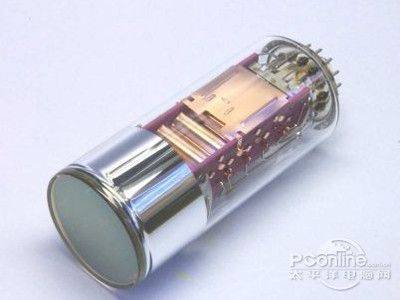
Mcp-type photomultiplier tubes are end-window photomultiplier tubes and are suitable for large-area applications. Typical mcp photomultiplication tubes consist of light windows, optical cathodes, electro-multiple poles and electro-collective poles (anodes)。
Run feature
1. Stability
The stability of the pv multiplication tube is determined by a variety of factors, including the characteristics of the device itself, its working state and environmental conditions. Instability in the export of pipes during the course of their work is high
A. Welding of tube electrodes, loose structure, poor contact with cathode shrapnel, cutting-edge electrical discharges at the polar level, jump fires, etc., caused by jump-and-leaky signs。
B. Instability of continuity and fatigue resulting from excessive anode output current。
C. Impact of environmental conditions on stability. The ambient temperature is increasing and the tube is less sensitive。
D. The wet environment causes electricity leakages between induced feet, resulting in increased and unstable dark currents。
E. Environmental electromagnetic field disruption (emf) caused work instability。
2. Maximum working voltage
Maximum working voltage is the maximum voltage allowed by the tube. More than this voltage, the tube produces discharges and even blows through。
Apply
It is widely used in astrophoto photometric measurements and astrophotophotos as a result of the high pv multiplier and the short response time, as well as the positive ratio of its output currents to the number of injected photons. The advantage is that the measurements are high in precision, that they can measure the weaker objects and that they can measure the rapid changes in the lightness of the bodies. In astronomical light, arctic cathodes such as rca1p21 are more frequently applied. This photomultiplier tube has a very large amount of ion efficiency, around 4,200 e, around 20 per cent. There is also a photomultiplication tube for the dialkaline cathode, such as gdb-53. Its cell noise ratio is one order of magnitude larger than rca1p21 and the dark stream is low. For the observation of near-infrared areas, photomultiplier tubes for polyalkaline cathodes and arsenic cathodes are commonly used, with a maximum of 50% quantum efficiency。
Only one information, i. E. One channel, can be measured at a time by the normal pv double tube. Matrix. Because the number of passages is limited by thin wire at the end of the anode, only hundreds of passages are made。
Component
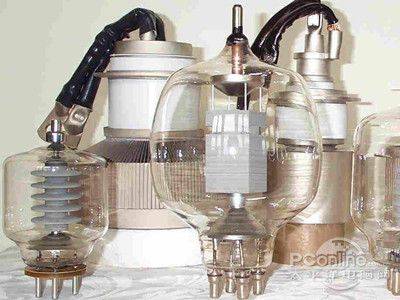
Optical multiplication tubes can be divided into four main components: pv cathodes, electro-optic input systems, electro-multiplication systems, and anodes。
Strengths
Electricity multiplication tubes are pv converters that further increase pv sensitivity. In addition to pv cathodes and anodes, multiple watt-sized multiplication poles are placed in the diodes. When used, there is a charge between the adjacent double electrodes to accelerate the electron. Pv cathodes are luminous and release optical electrons, which are projected to double the electrodes in the field, prompting a secondary launch of electrons, stimulating more electrons and then flying to the next multiplication of electrodes in the field. The number of electrons so multiplied and the last collection of electrons in the anodes increased by 10. 4 to 10. 8 times, making the photo-multiplier tube much more sensitive than the normal pv tube to detect faint light signals. The pv multiplication tube's high sensitivity and low noise characteristics make it widely applied in light measurements。
Dimensions
Photomultiplier tubes are of different sizes according to different applications, and the world's largest photomultiplier tubes are currently 20 inches, developed and produced by the japanese society of photology (hamamatsu) and first loaded into 1,1200 super-goku detectors for chai changjoon, and eventually detected microbes in the universe, resulting in the 2002 nobel prize for physics and the “iee milestone” for 20 inches of photomultiplier tubes in 2014。