When it comes to being connected, many electronic, embedded, and industry-controlled friends deal with it every day, but the general public tends to think that this is a very distant and obscure term for their profession. Instead of thinking about it at all costs, the internet is much more like a very thoughtful and intuitive “smart contact person” who hides itself in every corner of our daily lives, industrial production, city operations, but helps with all kinds of equipment, scenes, communication, self-collaboration, turning cold hardware into a sense, think, interact。
When understood in a humanized way, the internet is like an organizer who has built a super social circle. Previously, electronics were all "locked man" and air conditioners controlled only cold heat, roadlights only fixed-time switches, industrial beds operated on their own, water gauges were only manually numbered, each of which was closed to its own functions, without disturbance or communication. And the emergence of a network of things is like giving every hardware device a “sensor” “brain” and a “channel of communication” that allows them to see changes in the environment, understand command needs, communicate information with each other, and do so without manipulation on a man-by-man basis。
Let's start with the three things that it's got on it, which is the core of its ability to act as a liaison. It's not complicated to say in plain language。
The first is the ability to sense, which is equivalent to the "eyes and ears" of the network of things. And behind this is the various sensors, the mpu single machine, the radio frequency module, which we can't even get to know the electronic circle. Temperature-moisture sensors can sense the cold, dry and wet air, infrared sensors can sense human movement, pressure sensors can capture changes in equipment and liquid-level sensors can monitor water levels in tanks and pipes. These little pieces of metaware, like the nerve end of a network of things, translate all the minor changes in temperature, humidity, position, speed, pressure, etc. In the real world, into telecommunications, digital signals, full records, and nothing is missing. Without the bottom-up of the sensory layer, the web of things becomes blind, and the function of intelligence cannot be addressed。
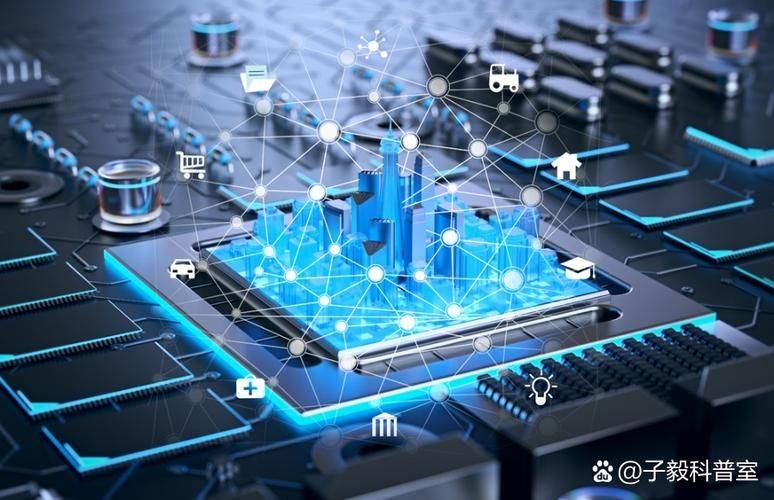
The second is the ability to transmit, which is equivalent to the “mouth and telephone lines” of the internet. The various types of data collected must not be confined to the equipment, but must be channelled and interactive. This covers all types of communication that we've been exposed to, including wifi, bluetooth, lora, nb-iot, 5g, and ethernet. Short-range devices can be easily connected by bluetooth, wifi, for example, mobile phone-connected intelligent homes; remote, wide-scale industry, urban equipment can be transmitted via the nb-iot, 5g and lora networks. It is like a reliable messenger, who should send data collected by the terminal equipment to the cloud, to the management platform, and it will be able to send the control instructions issued by the platform to each terminal with precision, without hindrance to cardon at all times, to ensure that there is no impediment to information。
The third is the ability to process and execute intelligently, which is equivalent to the "brain and foot" of the network of things. Once the data reach the cloud and the local edges, back-office systems, embedded chips collate, analyse and judge the data, without manual intervention, to enable autonomous decision-making. For example, the monitoring of excess gas concentrations at home immediately triggers the closure of valves and pushes alarm messages; equipment in industrial parks is abnormally hot, thermal heat is automatically activated and reported backstages are reported; and street lights are automatically switched on natural light and brightness is regulated. Once the instructions have been analysed, the implementers, relays, and electrics will be able to “do what they say,” perform the corresponding operations, and form a complete closed loop for the sensory – transmission – analysis。
And when we're done talking about basic skills, we'll look at what this smart liaison is really doing, and it's not an exaggerated black technology rendering。
The first is an intelligent home setting, which is also the form of networking in which ordinary people are most exposed. Home smart door locks, smart lights, smart curtains, air conditioning, ground-cleaning robots, security cameras are all linked together by the internet. The mobile phone on the way to work opened the air conditioner in advance, the door locks were automatically unlocked, the lights were lighted in turn; the system automatically shut down all electrical appliances after leaving home, and security monitoring was activated; people were detected moving late in the night and light was automatically activated. Without the dazzling head, the essence is that the equipment communicates information through a network of things, understands people's habits, and adapts itself to the rhythm of our lives, making home life easier and easier。
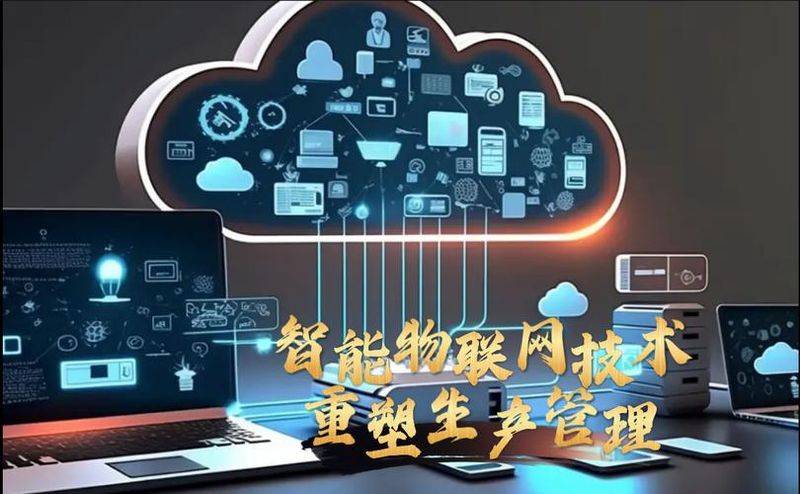
The second is the networking of industrial goods, which is a central area for industrial control, embedded engineers, and key to industrial upgrading. Most of the equipment in the traditional plants is operated independently, and equipment failure can only be detected when the stoppage takes place. Production data is manually recorded and inefficient and can be error-prone. Following the introduction of a network of materials, the production floors, current lines, air presses and transformers are equipped with sensors and communication modules, with 24-hour real-time monitoring of operating temperature, rotation, energy consumption and malfunction parameters. Transport staff are able to view the state of all equipment in real time on the backscreen without being inspected by a workshop; the system is capable of prejudicing the ageing and potential failure of equipment for preventive maintenance; and production data are automatically aggregated and analysed to help the plant optimize production and energy conservation. There has been no subversive and exaggerated change, but simply a network of goods to make industrial production more manageable, efficient and safer, which is now the most pragmatic destination for industrial digitization。
In addition, smart cities and the infrastructure of people, the web of goods has snubbed the small ends of city operations. Smart street lights in cities that automatically light up on traffic flows to save electricity consumption; smart water to monitor network pressure, flow, timely detection of pipeline leaks, network failure and reduce waste of water; smart trash classification cabinets to weigh, sweep and simplify sanitation statistical processes; traffic monitoring sensors at traffic points to reduce traffic congestion by moving red and green lights in real time. There are also smart fire fighting, smart well covers, and river level monitoring, which are unbelievably urban facilities that are automated and intelligently managed by means of a network of things that are silently improving the efficiency of urban governance。
There is also a network of agricultural goods, which has radically changed the traditional patterns of weather-dependent eating. Temperatures, soil conditions, light and pest sensors in the fields are used to collect real-time data on agricultural land, and the rear station is responsible for the automatic control of irrigation systems based on soil moisture and for the associated ventilation, cooling and shade of the sun in accordance with environmental conditions. Farmers are able to view farm conditions and remote-controlled equipment on their mobile phones, without the need to keep them on the ground, saving both human resources and precision in the control of the planting environment, improving crop yields and quality and allowing traditional agriculture to move slowly towards refinement and digitization。
Of course, we also have to look objectively at the current state of affairs on the internet, not blindly boasting or deliberately denigrating. Now the network of things has faded away from the heat of the early concept, instead of calling the empty slogan of "all-connection" and stepping down to a subdivision of industry, specific scenes. At the same time, however, there are a number of real pains: the equipment agreements of different manufacturers are not uniform and compatible, and equipment is often not connected; the signal coverage of some low-capacity terminals, the life of the voyage, and the space for improvement; data security and privacy protection in the industrial landscape are still topics that need to be continuously developed; and embedded development thresholds, network costs, and post-shipment difficulties are also real problems for many small and medium-sized projects。
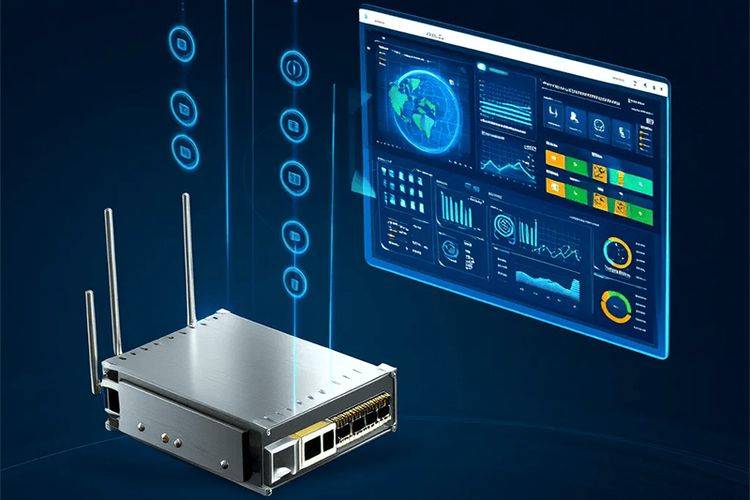
However, growth in the electronics sector, embedded development and industrial control industries has been steady. With the continued upgrading of the cmu chip performance and the decreasing amount of effort, the communication module composition is gradually being explored, together with the growing sophistication of edge computing and low-power network technology, the "smart contact" on the internet will only become smarter and more gas-intensive. It will not become a distant science-fiction black technology, but will slowly penetrate into more subdivisions, moving from a small field of specialization into a public view and becoming an essential base for electronic hardware and intelligence equipment。
For us, electronics practitioners, embedded developers, and industrial control engineers, connectivity is not an option, but a basic skill required for the industry. From sensor selection, circuit design, to communication protocol adaptation, embedded program development, to network debugging, cloud interface, each link is bound to the depth of the material network. To understand the logic of the internet of things, to understand the nature of their application, is to understand the future direction of the electronics industry and smart hardware。
At the end of the day, connectivity has never been an abstract technical term, much more like a low-key partner, a quiet web of thousands of devices, the ability to use perception, transmission, intelligence decision-making, the temperature of cold hardware, and the orderly, more intelligent, more efficient and silent integration of a complex productive life into every step of modern development。