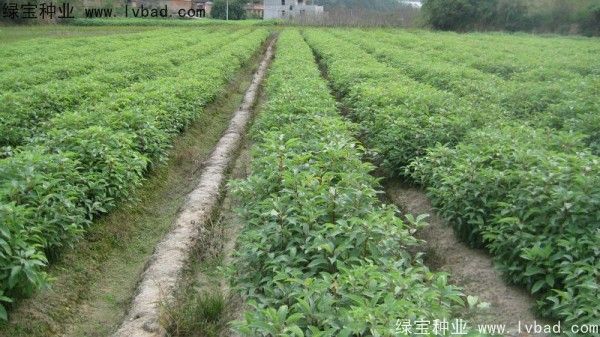
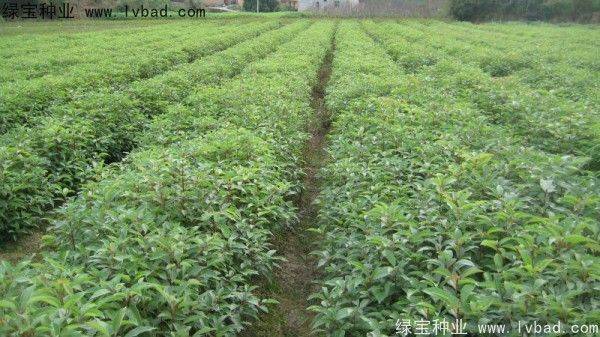
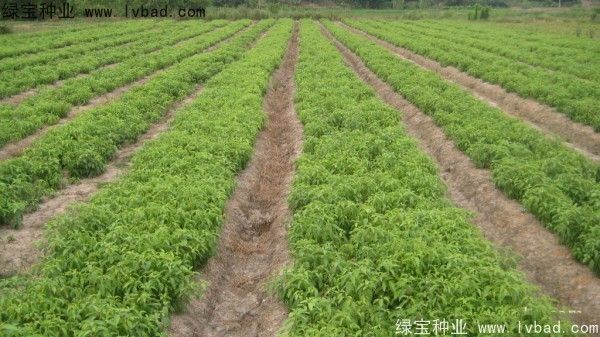
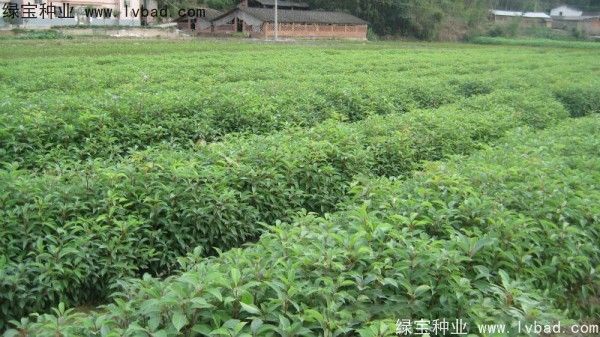
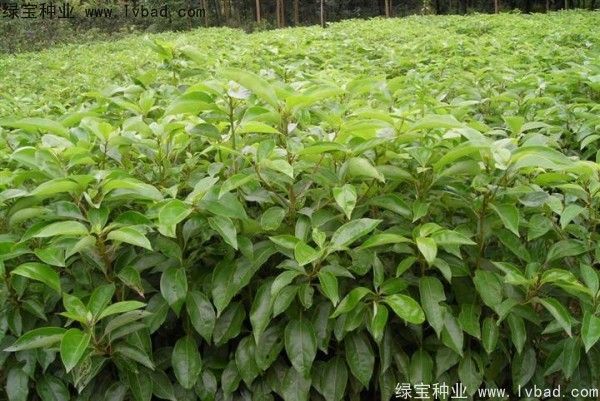
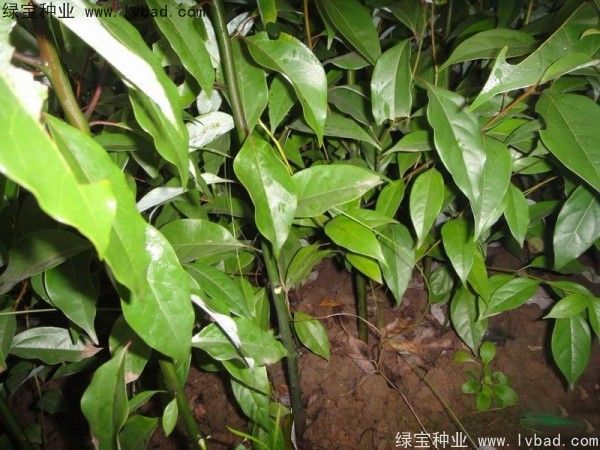
The sorghum trees, also known as sorghum trees, scavengers, scavengers, twigs, etc., are spread across the south of the yangtze river in china, with taiwan being the largest. The vanilla trees are usually green and large, up to 30 metres high, up to 3 metres in diameter, and have large ovaries of tree crowns. The leaves of the vanilla trees are egg-like ellipses of approximately 6 to 12 cm in length, with a flowering period of april to june and a fruit period of october to november. The scavengers are thick and mighty. They are excellent green trees, sideways and shades. The sorghum trees, which are resistant to short-term flooding, are the main ingredients for the production of sorghum。
Physician name: seeds of vanilla trees
High: 10 to 40 metres
Long-term: april-september
Seeding period: spring, autumn, winter
Characteristics: trees are tall, branched and growing fast。
Scattered land: suitable for deep, fertile and well drained sandy border soil medium

Seeds are "vspace" = "0" att" = "saft tree seed"

Seeds are "vspace" = "0" att" = "saft tree seed"

Seeds are "vspace" = "0" att" = "saft tree seed"
Ii. What's the suitable environment for scavenger trees
The scavenger trees are bright, they have a little shade, they are warm and wet, they are not cold enough, and they are born in slopes or valleys。
The soil is less demanding and more humid, but when transplanted, care must be taken to maintain soil moisture, and flooding can easily lead to the death of rotten roots due to lack of oxygen. The vanilla trees are resistant to drought, infertile and saline soil。
Mainly growing in the fertile subtropical soils are sunside slopes, valleys and river banks。
Iii. How to sort out the land planted by scavenger trees
Cultivation of scavenger trees requires the excavation of the pits, which are to be excavated in accordance with general technical procedures, and the cultivation of the soil should be lax and fertile. In addition, the pit must be large enough to be 50 to 60 cm in length and width, and it must be kept clean, with the base of the pit excavated from the original soil or the fine layer of the ground, filled with soil to the top of the cave and piled around the tree seedlings。
Iv. How to grow scab trees
The sorghum trees tend to be bred by seed breeding and adhesive breeding。
The successful planting of seedlings should take place in a timely manner, i. E., the scavenging saplings should be installed immediately. If the transport is far away, the roots will be covered with wet grass, plastic film, etc., to keep them wet. Cultivation times are best done before 11 a. M. Or after 16 p. M., and in winter only to avoid the harshest days。
The saplings of the saplings are removed, the saplings are set up and planted in the dens, and then the soil is inserted into the soil and continues to be filled to the top. Finally, a water trap was made around the tree seedlings。
When planted, the sapling shall be watered immediately, and in the case of saplings with earthballs, the surrounding soil of the tree shall also be convulsed with iron or wooden rods so that the surroundings of the tree can fill the soil with water. Water should be poured with care not to cause damage to the earth's cisterns, which must be filled with water, so that the water can slowly be immersed in the den. In order to further increase the rate of growth, growth factors can be added to the water so as to stimulate new roots. The growth agent generally uses neoacetic acid, which is dissolved with a small amount of alcohol and then mixed into water, which is combined with irrigation fluids at a concentration of 200 pm, which is used as the first root water。
V. How to conserve the safrole trees
In general, care is taken to water the principle of “no, no, no, no, no, no, no, no, no, no, no, no, no, no, no, no, no, no, no, no, no, no, no, no, no。
The scavenger trees often suffer from dust and black spots. Most of the platinum problems occur in nursery seedlings, where thiomers of 0. 3-0. 5 degrees are sprayed once every 10 days, three or four times in a row, and where the scavenger tree has black spots, the burning of the scavengers is uprooted and the use of 0. 5 per cent potassium permanganate or ff is used two or three times to prevent their spread. The pests frequently emit are sorghum bees, swarm moths, swarm nests, savannahs, red wax and termites. Sapphires have more than algebras in a year and, for long diabolical periods, can be sprayed with a dose of 75 to 100 kg of saplings with 0. 5 kg of flaming or reed porridge or 2,000 times more each with 90% trichlorfon or 50% marason emulant; the first generation of larvae can be sprayed with 90% trichlorfon, 50% dibromophosphate emulsifiers, 50% of the 10,000 times more liquid, every five days, two or three times in a row. If the larvae has entered the ground, 40 per cent of the larvae milk can also be sprayed with 200-300 times more liquid; the vervain nest normally endangers the sorghum seedlings and the larvae below 20 years of age, which can be killed when 90 per cent of the larvae are sprayed with 4,000-50,000 times more than the larvae before they begin their activities; when vervain pests occur, the larvae are cut artificially and the larvae, etc., are then injected by excretion vents with dichlorvos to kill the larvain; and when termite pests occur, furan particles are used to combat them。