In today's rapidly developing and changing technological landscape, we are used to shopping on the internet, and we cannot afford to choose the clothes of lin-lin, whether in the form of rags or silk, or in the form of suits or cowboys, with more diverse choices and higher quality. In zhu's home-school training, “it's not easy to eat a meal, it's hard to spend a little bit of money,” we now live a life full of the marks and achievements that our predecessors have explored step by step。
The sewing machine is an indispensable tool in the garment industry, which has undergone many changes from manual to today's electrification, intellectualization and sewing machines. Today, it leads you to the grand canal henling museum of folklore, leading the arduous development of the sewing industry and feeling different ways of sewing machines。
First-generation handshake sewing machine
With regard to sewing machines, the history of which dates back to the chinese knitting machine of song yuen chudo, which can be called the “premature of sewing machines”; after the industrial revolution in the mid-eighteenth century, textile technology began to move towards industrial sewing technology, and the world's people were exploring various kinds of sewing technology to liberate productivity。
In 1790, british carpenter thomas shant first invented the world's first single-link sewing machine for first-hand holes, then wired, and leather shoes。
In 1841, the french tailor b. Timonier invented and created a chain-wire sewing machine with a hook。
In 1846, elias hau also independently invented sewing machines。
In 1851, the united states mechanic, i. M., won the invention of a lock-wire sewing machine and the establishment of a winning company。
As can be seen, mechanical sewing machines were present during this period, although the machines were largely hand-shaked。
In 1869, li hongzhang, a representative of ocean affairs, visited the united kingdom and returned home with a gold medallion sewing machine, which was given as a gift to the queen-in-law. The incident was also covered by the british media. In around 1880, the winning company established the shanghai polytechnic company on nanjing road in shanghai (446 east road in today's nanjing). In order to market their products, winning companies employ chinese women workers on a higher salary basis, who are trained to perform along the street with sewing machines and to inform citizens about the operation of sewing machines, and soon the winning sewing machines become well-known sophisticated dressmaking machines in shanghai. For a long time, the winner has almost become a substitute for sewing machines, one of the western industrial products that entered china earlier。
In china, sewing machines were referred to as “iron vehicles”, “ocean machines”, “crawlers” and so on. The first generation of sewing machines is at a very high end in the country and in very small quantities, and in large cities tailors are used by broad wives for clothing, which is not generally available. It is said that the late emperor pyi gave queen wan yong a winning sewing machine, which was still rare in china。
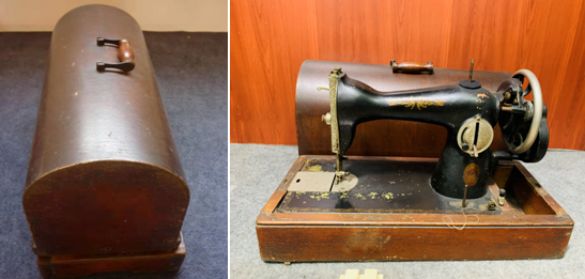
First-generation handshake sewing machine
Mid-18th century - mid-19th century
[use] sewing clothing, fabrics
It's hidden in the great canal henling museum
The sewing machines typically consist of the head, seat, movement and annex iv components. The head of the machine is the main part of the sewing machine, which consists of four bodies, such as stings, hooks, pickers, delivery units and bypasses, pressurizers, teeth drops, etc. These are the basic structures most commonly used in sewing machines (composed structures, cam structures, gear structures, transmission agencies, intermittent sports bodies, etc.) that are grouped together and time series。
Second-generation foot sewing machines
The history of hand-shake sewing machines lasted until 1859, when the winning company first invented a foot-stitch sewing machine and left the historic stage with hand-shakes. Also the winning company, in 1889, after thomas edison invented the electric motor, they invented the electric motor-driven sewing machine, which opened a new era in the sewing industry. Over the longer term, winning companies have largely monopolized the production of sewing machines worldwide。
After a shift from europe, the united states to japan, the republic of korea, taiwan and singapore, the sewing industry began a full transfer to china in the early 1990s. As competition in the sewing machine manufacturing industry increases, m&a integration and capital operations are becoming more frequent among large sewing machine manufacturing firms, and the country's excellent sewing machine manufacturing firms are increasingly focusing on research into industry markets, particularly in the industrial development environment and product buyers. As a result, a large number of domestic brands of fine sewing machines have rapidly emerged and have become the norm in the manufacturing of sewing machines。
In 1905, shanghai began to manufacture sewing machine spare parts and set up small workshops for the production of spare parts。
In 1928, the first industrial sewing machine, 44-13, was produced by the shanghai chang sewing plant. In the same year, the first domestic sewing machine was also produced by the shanghai shomi sewing plant。
In the '70s, the brand of sewing machines in our country was more popular than the "worker-farmer" brand, the "forward" brand, which is now the toughest and perfect chinese brand。
In the 1980s, there were also bees branded sewing machines from shanghai。
On the whole, the second generation of pedestal sewing machines has improved over the first generation, largely with wooden tables carrying sewing devices, the use of ankles to drive the wheel, and the use of line lines to drive gears, which are much faster than the first generation's handshakes. China began to flourish in the 1950s, with wage earners being able to buy。
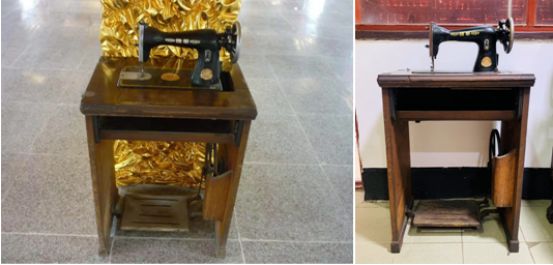
Second-generation pedal sewing aircraft
The mid-19th century, the end of the 20th century
[theoretically] the sewing machine and the principle: the coil sews
It's hidden in the great canal henling museum
The seams are in the form of panels and boxes. The tablets in the desktops function as a backstop and are used as workshops for sewing operations. The trunks of the aircraft are used to support and store the machinery, so that sewing machines can be carried and kept。
The sewing machine and the principles:
The simplest coil stitches are chain stitches, and sewing opportunities are followed by wire rings of the same length. The fabric is placed on a metal plate beneath the needle and is fixed by pressure on the foot. At the beginning of each suture, the needle pulls out a thread through the fabric. A device for coiling grabs the coil before the needle pulls out, and it moves in step with the needle. Once the needle pulls out of the fabric, the cavity device (presented later) pulls the fabric forward. When the needle again crosses the fabric, the new coil will go directly through the middle of the previous coil. The device to make the coil will grab it again and make the coil around the next coil. In this way, each loop will hold the next。
Third-generation computer sewing machine
In the 1970s, the deutsche bedford company invented a computer sewing machine, which sold extremely little。
In 1986, our “standard” brand computer suture machine was introduced, but there has been no significant development for more than 20 years because of high prices。
In 2003, the “tang zheng” computer suture was born and the national computer suturer entered a period of high growth。
Between the late 1990s and 2007, the country's sewing machine industry was at a very high stage of growth, and the production of domestically produced machinery products had reached an unprecedented peak in the industry by 2007, with over 70 per cent of the global sewing machine production in china at the beginning of the twenty-first century. After 10 years of development, the country's sewing machinery industry has emerged rapidly and painstakingly, laying the foundations of the world's largest sewing machinery and moving from it to the powerful。
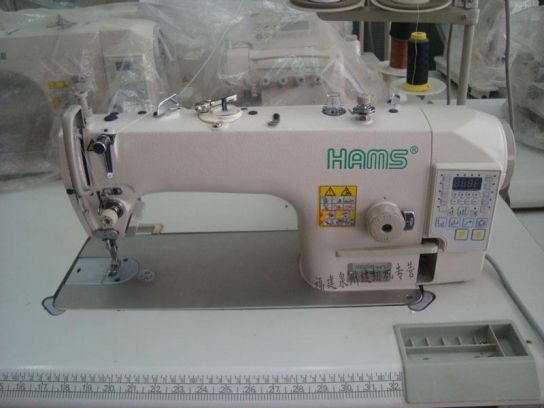
(computer sewing machine)
The popular term for so-called computer-controlled sewing machines is that of computer sewing machines, which, as the market and consumer structure are constantly adjusted, are no longer able to meet production needs in low- and medium-speed industrial sewing machines, which are moving in the direction of high-speed and serialization, and electronic and computer technology is widely used in sewing machines. Computer-controlled sewing machines not only provide smart controls, greatly improve productivity, reduce operational difficulties, but also allow machines to perform part of the operator's work and facilitate the digital management of enterprises。
Computer-controlled sewing machines are controlled by microcomputers, which automatically complete the tailoring set. Such as automatic edges, automatic tension adjustments of thin sews, automatic velocity, automatic rectangles, automatic wire cutting, automatic needle patches, etc。
Today's sewing machines are of various types and functions, whether they are mechanized large sewing machines or small home sewing machines, and different designs meet higher sewing requirements. We can wear more comfortable clothing, and the key to the development of sewing machines lies in the mastery of core technology and the development of innovative capabilities, which are the main thrust of our current struggle in the sewing industry。
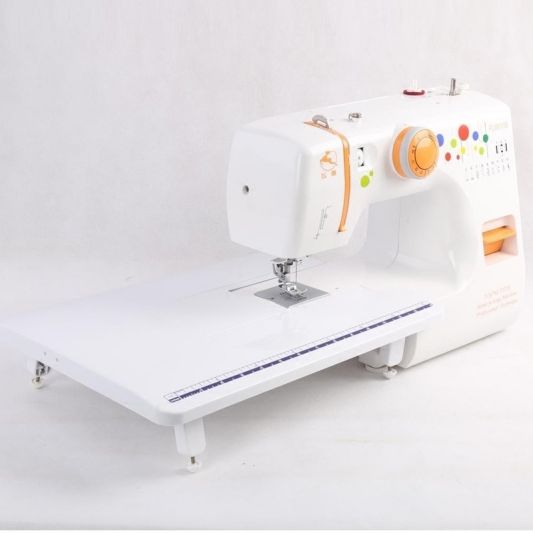
Small home sewing machine
From hand-to-hand needles to needles to sewing machines, technological advances are a result of labour intelligence。