Refrigerator complete guide: from design, construction to acceptance and transport
Cold storage (high temperature)
Refrigerated reservoirs, as a storage complex with cooling by artificial means and with good temperature protection, are made up of buildings such as storage rooms for storage items, refrigeration units providing cooling power, and transformer rooms for power supply and distribution. Refrigerated reservoirs are classified in a variety of ways and can be classified into high temperature and low temperature banks in terms of the temperature of the work. The temperature range of the high-temperature reservoir is typically between 2°c and 16°c and is suitable for the storage of fruit and vegetables to maintain their freshness. The temperature range of low-temperature banks is usually -25°c to -15°c, which is more suitable for the storage of meat and water products。
Depending on the structure of the reservoir, cold storage can be divided into civil and assembly cold storage. Of these, the housing support structure of the built-in freezer and the peripheral structure are in the form of a brick mix. The assembly freezer, also known as a condensed freezer, a combination freezer, a mobile freezer or a assembly freezer, is pre-manufactured in the plant and its sheeting and steel structures are ready for use at the construction site. Combination cold banks have a number of significant advantages, such as light weight, tight overall size and effective space utilization, as well as good temperature protection, not only in terms of ease of installation and short construction cycles, but also in terms of later maintenance. In addition, chillers could be further divided into ammonia and freon refrigerants by the type of refrigerant used。
High-temperature banks have a significant advantage over storage and ventilation tanks. It is free of geographical constraints and has little effect on its structure and storage effects from indoor and outdoor temperatures. It sustains a low temperature environment, can be used throughout the year and storage is low. However, there are also deficiencies in high-temperature banks, which are costly to build and operate, and are more energy-intensive. In general, high temperature banks apply to the preservation of most of the fruits and vegetables throughout the country, while providing a stable conservation environment that is balanced against its higher costs。
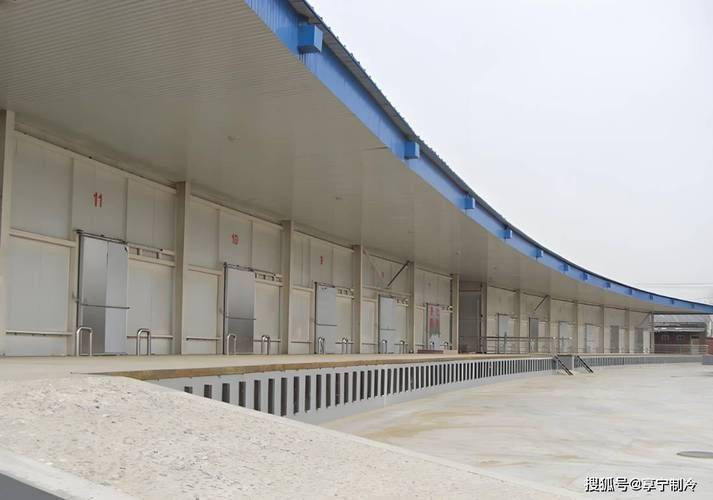
In terms of site selection, high-temperature cologne approaches the main roads in the village and uses the natural and favourable terrain for efficient land use. The site should be surrounded by sufficient water and a reliable and stable power supply. The location of the entrance to and exit from the high temperature reservoir and the size of the loading and unloading site are reasonably determined according to the size of the high temperature reservoir and the mode of transport. In addition, high-temperature banks should avoid hazardous materials, sources of pollution and areas of poor engineering geological conditions。
Design 01
The design of the high-temperature bank must first meet local planning requirements. Attention should also be given to:
(1) high-temperature bank refrigeration systems should not use refrigerants that are damaging to the ozone layer (i. E. Odp = 0) and the greenhouse coefficient should not be greater than 2000 (i. E. Gwp ≤ 2000)。
(2) selecting energy-efficient refrigeration equipment。
(3) refrigerator rooms shall be equipped with accidental ventilation units. The ammonia cooler room accident ventilator should be blastproof. In the event of an accident in the refrigeration system when the power supply is cut off, it should be ensured that the electrical supply is reliable。
(4) the adjacent wall shall have at least one firewall and the roof shall have a fire tolerance limit of not less than 1. 00 hours when the warehouse is adjacent to the cooler room, the transformer station and the control room。
(5) the wall between the cold room and the cavity shall be a fireproof wall with a maximum fire tolerance of not less than three hours, and the cooling door on the wall shall be a non-fireproof door。
(6) refrigeration rooms with an area greater than 1,000 m2 shall have at least two cooling doors (including those on the wall) and a cooling room with an area less than 1,000 m2 may have only one. The inside side of the refrigerated door shall be equipped with an emergency internal locking device and shall be clearly marked。
(7) in the case of a stand-alone fire protection section, there shall be no fewer than two safe exits for each fire protection section, and at least one safe exit shall be guaranteed outside the direct chamber, and only one safe exit may be established for the entire warehouse, which shall cover an area not exceeding 300 square metres。
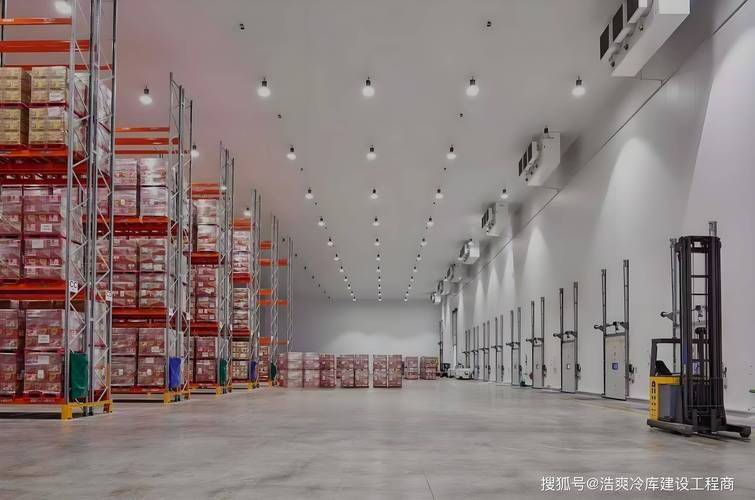
(8) the high temperature reservoir shall have an environmental monitoring and control system that allows remote detection of the storage environment and the automatic opening of equipment such as refrigeration, wetting, etc., depending on the environmental changes within the reservoir。
(9) when high-temperature reservoir refrigeration equipment is placed in the open air, rainproof facilities are required to avoid rain erosion or short circuits, electrical control tanks are required to install emergency stop buttons, and electrical units are required to install off-site facilities to ensure the safe operation of refrigeration equipment. The common specifications for high temperature banks are 100 tons, 200 tons, 500 tons and 1,000 tons, and the construction subjects can determine reasonable construction specifications based on actual needs。
02 construction
The high-temperature library should be structured according to the design, and should be constructed in such a way that:
(1) the construction site shall be equipped with the necessary security facilities。
(2) in the course of the construction of thermogenic materials, there shall be a full-time security officer, who shall strictly prohibit the detection of fires and the simultaneous construction of work with operations that produce sparks。
(3) forced ventilation measures shall be taken in the case of on-site pilfering of polyurethane。
(4) fire protection measures shall be taken at sites where thermogenic work has been completed for operations that may produce sparks。
03 acceptance
In addition to complying with the regulations governing the acceptance and acceptance of works, the high-temperature bank should be guided by the following:
(1) when the ambient temperature does not exceed 35 °c and the single chamber is 100 - 1000 m3, the chamber temperature is reduced to no more than 3 hours from room temperature and no more than 4 hours from room temperature to one °c when the single chamber is above 1,000 m3. The reservoir temperature is raised from 0°c to 5°c for no less than 20 minutes。
(2) the decomposition of the warehouse should not affect the security of the structure and the main structure. In general, the cooling doors should be gradually cooled, not more than 3°c per day, and when the temperature of the warehouse is reduced to 4°c, the temperature should be maintained for three to four days before further cooling. If receiving and inspection findings of non-compliance with standards and norms, in particular high-temperature banks where security risks exist, they must be thoroughly overhauled before they can be used。
04 usage maintenance
In the course of their use and maintenance, the high-temperature bank shall meet the following requirements, in addition to its operation in accordance with the relevant laws and regulations, norms and regulations, such as the food safety act of the people's republic of china (2018 as amended), the code of practice for the conservation and management of food and agricultural products (gb/t29372), and the refrigeration bank safety protocol (gb28809),:
(1) take care of the inoculation. No sharp instrument or hard material shall be used to touch the temperature-preservation coatings or pallets, which may be protected by the installation of a collision-proofing facility on the side of the vault. In the event of deterioration and deterioration of the stratosphere, repairs should be made in a timely manner。
(2) refrigeration equipment maintenance. Outdoor installation of chiller compressors requires installation of rain-proof facilities to avoid erosion of equipment or short circuits, emergency stop buttons in electrical control boxes and grounding facilities in the electrical system to ensure the safe operation of refrigeration equipment。
(3) wire maintenance and maintenance. Electro-wire lines are regularly inspected to prevent fires if safety hazards are detected and responded to and removed in a timely manner。
(4) focus on cold storage energy conservation management. To safeguard the thickness and quality of the appropriate conservatory layer and reduce energy consumption through the use of less open doors and the installation of screens, in order to save energy and reduce operating costs。
(5) products that meet national standards should be purchased from formal sources when using high-temperature banks for the storage of fruit and vegetables, requiring the use of chemicals for sterilisation, fungicide or preservation, etc., and strictly in accordance with instructions of use。
Refrigerated storage (low temperature)
Low temperature banks are cold storage tanks with a working temperature of -25°c ~15°c. The cryogenic bank classification is consistent with the high temperature bank。
Low-temperature banks apply to the storage of agricultural products such as meat, water products and frozen vegetables in all regions of the country. The location of the cryogenic bank requires consistency with the high temperature bank。
Design 01
The design of the cryogenic reservoir is broadly consistent with that of the high-temperature bank, and the following should also be noted:
(1) low-temperature reservoirs have a much larger cargo content than high-temperature reservoirs, and the ground must be sufficiently resistant to stress and a certain resistance to grinding。
(2) low-temperature reservoirs have lower temperatures and surface anti-frozen insulation measures are more demanding, usually using a 60-80 mm thick steel concrete layer on the insulation layer to protect the insulation and the tidal layer。
(3) when the inner pillar of the heavy structure is passed through the lawn, the lower part of the pillar shall be covered with an insulation to avoid cold running。
(4) in order to prevent the freezing of the subsurface of cryogenic reservoirs, pipes (cement pipes or tatters) are usually laid under the lawn, passing through the piping through outdoor hot air and taking part of the cooling. Mechanical ventilation or heat pipelines may also be used。
Common specifications for cryogenic banks are 100, 200, 500 and 1,000 tons. Builders can determine reasonable construction specifications based on actual needs。
02 construction
In addition to meeting the requirements of the high-temperature storage facility, special attention will be paid to:
(1) preparation of cold-bed inner-gravity structures for treatment of cold-resistant bridges through the ground。
(2) ground loads are performed and load requirements are met。
(3) underground ventilation pipes shall be secure, the interface shall be sealed, and the contents shall be removed to ensure good ventilation。
(4) the cooler doors should be equipped with hot wires to protect them from freezing and ensure that they are flexible。
(5) air curtains should be installed on the outside of the freezer door to reduce the flow of air inside and outside the freezer。
03 acceptance
In addition to meeting the acceptance requirements of the high-temperature bank, the cooling time and speed of the library should be kept in check, generally at around 25 days, and the daily cooling should be within the following limits: at 4°c or above, the temperature of the couven does not exceed 3°c per day; at 4°c or 4°c, the temperature of the couwen does not exceed 2°c per day; and at 4°c or less, the temperature of the couwen does not exceed 3°c per day. Warming is observed and recorded when the temperature is fixed for more than 24 hours. If receiving and inspection findings of non-compliance with standards and norms, particularly low-temperature banks where security risks exist, use is strictly prohibited and must be overhauled to eliminate them before they become operational。
04 usage maintenance
The use and maintenance of low-temperature reservoirs, in addition to meeting the general requirements of high-temperature reservoirs, should take note of the following:
(1) in-house drains or chillers are required to defrost and defrost in a timely manner, and no water shall be accumulated or frozen on the cooler disk。
(2) there is a strict ban on multi-water operations in cryogenic banks。
(3) the unfrozen heat shall not be entered directly into the cryogenic reservoir to prevent thermal gas from being brought into it and damage to the freezer。
(4) when entering or leaving the stores, there shall be a personal switch and the doors shall be flexible, closed and cold-proof. In the event of damage, repairs should be made in a timely manner。
(5) an underground ventilator of the cryogenic reservoir shall remain open, free of water and congestion. In the case of mechanical ventilation, the floor temperature should be measured and recorded and the ventilator periodically activated. Underground pipeline heating units should be used on a regular basis to record the temperature of incoming and outgoing oil and to open the pumps regularly。