Structure of the piston pump
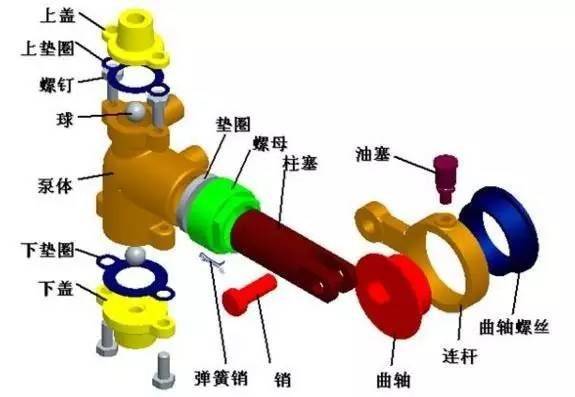
The piston pump consists mainly of two main parts of the power end and the liquid end, with belt wheels, valves, safety valves, pressurers, lubricant systems, etc。
01
Power end
(1) curve
Arc is one of the key components of this pump. Using a whole-of-axis pattern, it completes a critical step from rotation to straight-line movement, with the axes selling at 120° in order to balance them。
(2) combination
The collage conveys the thrusts from the collage to the curve axis and converts the rotational motion of the collage to the forward motion of the collage, with the cross-section of the pole in a working font, with the head in a split form, with the axle in the form of a thin wall, and the collage and positioning of the collage。
(3) cross
The crosshead connects the pole of the swing movement and the pole of the forward movement, which is guided by a closed link to the pole, linked to the pole of the pole。
(4) floating suit
The floating cap is attached to the seat of the aircraft, which, on the one hand, acts as a barrier between the tank and the contaminated tank and, on the other hand, as a floating support point for the crosspost, increases the useful life of the motion sealed component。
(5) aeroplanes
The seat is a receiving component to install a power end and connect to the liquid end, with an axle bearing on both sides of the back of the seat, a position-slice position-slice centre connected to the liquid end, neutral to the pump head centre in the front, and a liquid hole on the front side of the seat, which is used to release leaking liquid。
Liquid end
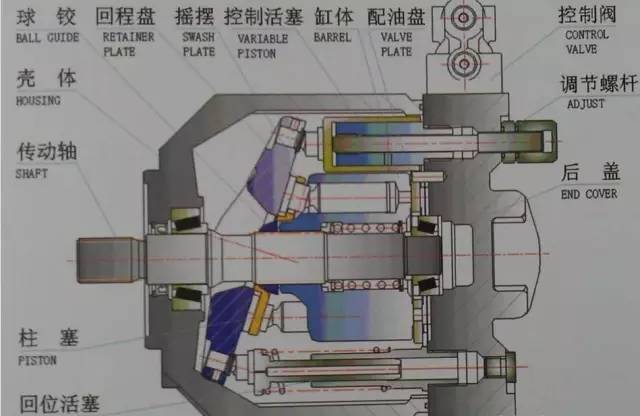
(1) pump head
Pumps are made of stainless steel as a whole and are constructed vertically with sucking, drain valves, suction holes at the bottom of the pump, drain holes on the side of the pump, which are compatible with the valve cavity and simplify the discharge pipeline system。
(2) seal
The seals are connected to the pump head in french and the cylinders are sealed in the form of rectangular soft fills of carbon fibre textiles with good high pressure seals。
(3) plugs
(4) entry valves and discharges valve
Enter, discharge valves and valves, which are suitable for the delivery of more viscous liquids, and cone valve structures, have the characteristics of decreasing viscosity. The contact surface has high hardness and sealing properties to ensure that the discharge valves have sufficient operational life。
Auxiliary component
There are mainly valves, pressurers, lubricants, safety valves, pressure meters, etc。
(1) stop valves
Liquids discharged from pump head, re-pressure valve flower high-pressure pipe through low-barrier, and when liquids flow in reverse, the stop valves are closed to prevent the flow of high-pressure liquids back to the pump body。
(2) pressure stabilizers
High-pressure pulsating liquid from the pump head, after passing through the pressurer, becomes a smoother flow of high-pressure liquid。
(3) lubrication system
It is mainly pumped from the tank by gear pumps, which lubricate the section of the curved axis, crosshead, etc。
(4) pressure table
The pressure table consists of both a normal pressure table and an electrical point pressure table. Electro-point pressure meters are instrumentation systems that achieve automatic control。
(5) safety valves
A spring micro-opening safety valve was installed along the discharge pipeline, and the article was packed by a shanghai zed pump, which guaranteed that the pump would be sealed during rated working pressure and opened on its own during excess pressure and protected by discharge。
Classification of pumps
Pumps are generally divided into single-pumps, peri-pumps, axle-pumps and proi-pumps。
1 plume pump
The structure consists mainly of a eccentric wheel, poles, springs, casks and two one-way valves. The cylinders form a closed volume between the cavity of the cavity. The eccentric wheel rotates, the corks move up and down once, and it takes oil down and discharges oil upwards. The volume of oil released from each pump is referred to as charge, which relates only to the structural parameters of the pump。
2-bed plug pump
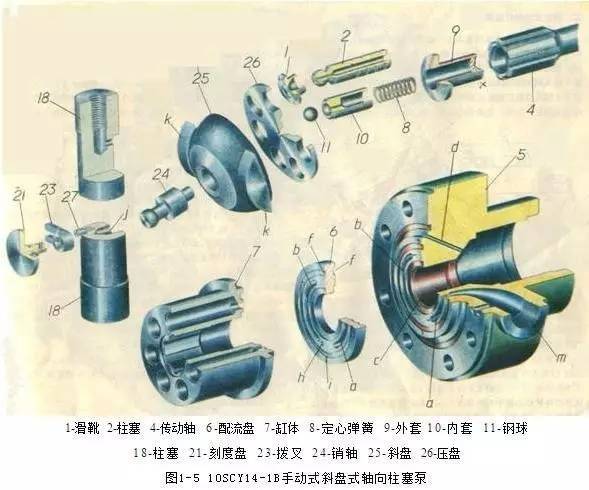
Pyramid piston pumps are installed in parallel columns of several pistons (usually three or six) and are re-propelled by a slider of a pole or by direct thrust of the pyrocardial piping to achieve a hydraulic pump that absorbs the liquid. They also use valves and mostly quantitative pumps. The emulsifiable pumps in the coal mine hydraulic stub system are generally bed-pumps。
The emulsion pump is used to extract the surface of coal, to provide emulsion for hydraulic stairs, which is based on the rotational pistons of the curved axis as a means of re-mobilizing, sowing and draining。
3-axis direction
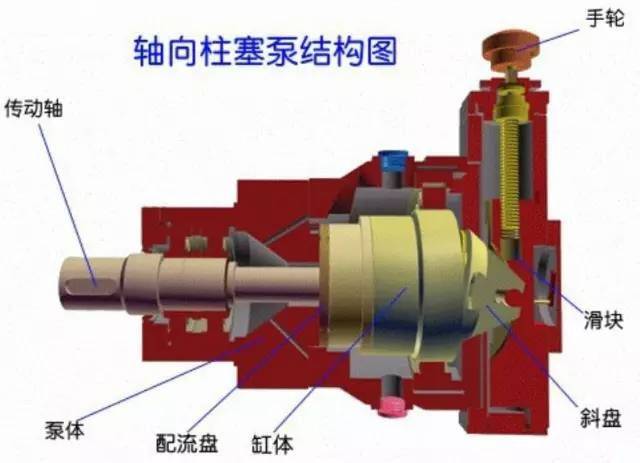
The axle piston pump is a piston pump parallel to the axle at the centre of the tank in the direction of the forward motion of the piston or piston. The axle piston pump works using volume changes resulting from the motion of the plume inside the plume of the plume in parallel with the plume. Since the pyres and pyreholes are round parts, they can be processed with a high degree of precision, resulting in high volume efficiency。
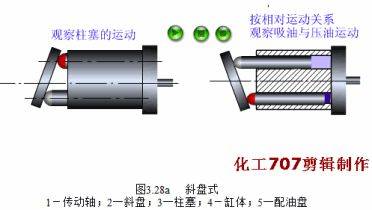
4-axis-slash
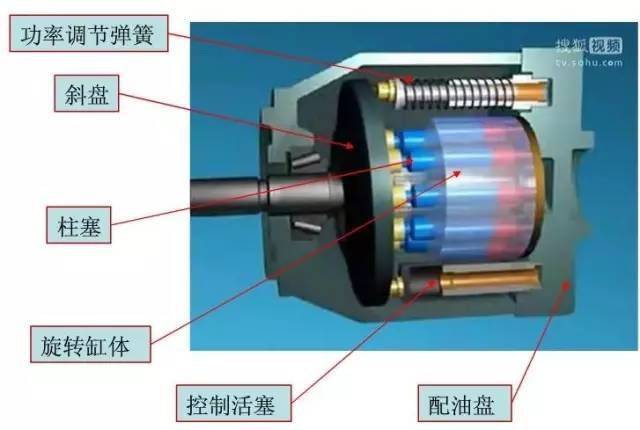
Straight-axis oscillating pistons are divided into pressure oil supply and self-sorting. Pressure-for-oil hydraulic pumps are mostly gas-for-pressure tanks, which use pressure-for-oil hydraulic tanks and, after each start-up, must wait for the pressure-for-pressure tank to reach its use. If the hydraulic tank has insufficient air pressure, it activates the machine, causing pull-out of the boots inside the hydraulic pump and causing abnormal wear on the return plate and the pressure plate in the pump。
5-range
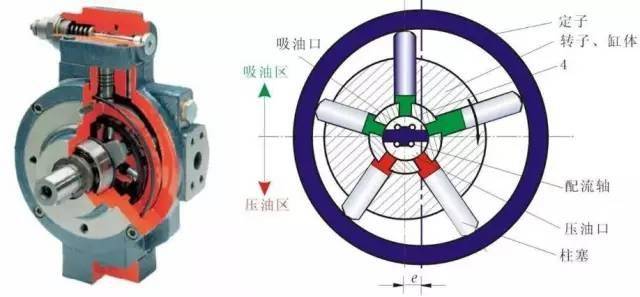
Radial pumps can be divided into two categories: valve and axis streams. The flow-rate pump of the valves to the piston has a failure rate and low efficiency. International developments in the 1970s and 1980s have overcome the shortfall in the flow-rate pump for the valves. Owing to characteristics on the structure of the radial pump, the flow path is fixed to the piston pump more resistant to impact, long life and control accuracy than the piston piping. Variable process short-pump variables are achieved by changing the eccentric distance of the fixed, with a maximum eccentricity range of 5-9 mm, depending on the size of the charge, which is very short. And the variable is designed for high pressure manipulation and controlled by a control valve. So the pump responded quickly. The design of the directional structure overcomes the problem of slipping boots like axle piping. It has significantly improved its resilience to shocks。
6 hydraulic type
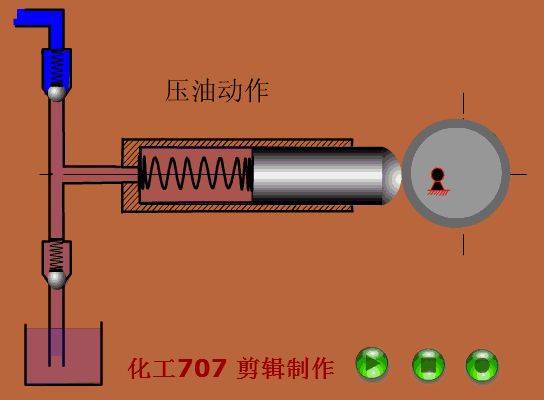
Hydraulic tanks, which are pumped by hydraulic pressure for oil, must, after each activation of the machine, wait for the hydraulic tank to reach its use before operating the machinery. Straight-axis oscillating pistons are divided into self-sorting oils of a pressure oil type. Pressure-for-oil hydraulic pumps mostly use gas-pressured tanks, and there are also hydraulic pumps with recharged sub-pumps that provide pressure oil to hydraulic pumps entering the vent. Self-sorting capacity for self-sustained hydraulic pumps is strong and does not require external power to provide oil。
The piston pump works
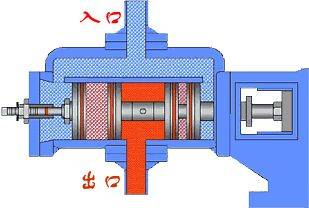
The total flow of the piston pump to re-movement l is unchanged and is determined by the lifting of the cam. The size of the oil supply per cycle depends on the oil supply route, which is not controlled by the cam axis. Oil supply does not change from time to time as the oil supply travels. The transformer plugs can change the fuel supply at the end of the period. The pumping process was divided into the following two phases:。
Oil intake
When the condensed part of the cam turns around, the plume moves down, the upper plume (known as the pump room) creates a vacuum, and when the plume on the top end of the plume opens the plume of the plume, the diesel fuel filled in the pump's upper plume enters the pumping room through the plume, the plume moves down to the end, and the plume ends
Return process
When the stubbles up to the stubbles are connected to the retorts on the drums, the pumping room low-pressure roads communicate with the hole in the head of the stubs and the tubs, the pressure drops sharply, and the ejection valves are quickly shut down by spring forces and the supply of the oil ceases. The poles will then go up, and when the condensed part of the cam is turned over, the plume will go down again. This is when the next cycle begins。
The piston pump is described by the principle of a piston, with two single-way valves on a piston pump, and in the opposite direction, a negative pressure occurs in the tank when the piston moves in one direction, when a one-way valve opens the liquid in the inhaled tank, when the piston moves in the other direction, when the other one-way valve is opened when the liquid is compressed and the liquid in the inhaled tank is discharged. This method of work has developed a continuous supply of oil after successive campaigns。