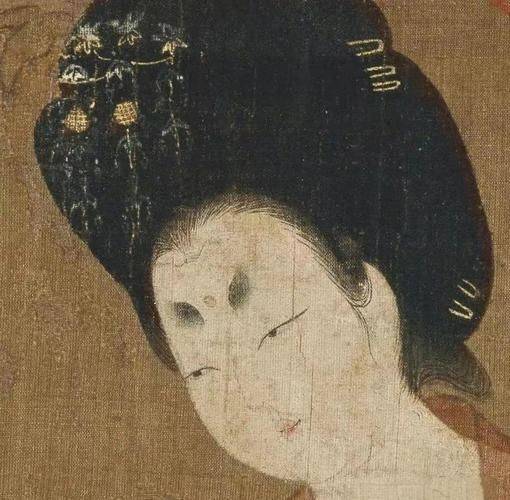
The painting of a woman is a common expression of the painting of women in china. It is very important in the history of chinese paintings, which can be traced back to the country of war and to qinhan. As a result of the changing development of society, people's aesthetic interests are changing, and the need for painting itself to develop requires us to constantly examine the value and significance of female paintings in chinese fine arts. In this context, it is particularly important to study the artistic characteristics of female paintings, especially those of female zhou yi, which have evolved gradually away from historical and religious constraints as a result of the transformation of the ideology of feudal socio-political stability and high economic prosperity, and the consequent appreciation of the ruling class of society, beginning with the appearance of female paintings depicting the lives of noble women, which have entered an ever more open age. The unprecedented expansion of the drawings, their content and scope has led to a great deal of enthusiasm on the part of don artists for the creation and presentation of new subjects. The painting of a woman in court was produced in the form of important paintings from her new subject. Zhou zhou is one of the most representative painters to paint this new subject. In his creation, he has created a harmonious and decorative form of art in order to strengthen the beauty of the times, to highlight his artistic charms, to use highly general and procedural techniques, to shape one by one, the “sweet body”, to reflect the image of the woman with the characteristic character of the times, and to truly reveal the inner world of the person by virtue of his fine gestures and subtle expression. His typical style and form features reflect the remarkable performance of the work of tang in artistic performance. The nuanced portrayal of women pushes the chinese workers to a new aesthetic level, making him an inescapable peak in future generations. His drawings have been dubbed as “the chorus” and have had a profound impact on the arena of later life. It is intended to study the artistic characteristics of women's paintings by way of an analysis of the graphics of their beautiful paintings, such as pens, colours, drawings, etc., and to explore their causes using research to find literature, comparison and reproduction, with a view to enabling authors to understand the deeper features and meanings of women's paintings and to discover their particular aesthetic orientation and broad social values, which can be attributed to the positive effects of zhou zhou zhou's paintings and buddhist paintings. It also provides a realistic basis for diversity in the image and face of women in our former tang dynasty, to test the aesthetic features and social phenomena of tang dynasty. The article is presented in four sections: the first section presents the man of zhou, provides an overview of the whole picture of the painting, and provides an in-depth analysis of the work of its representative, with a view to drawing the artistic characteristics of zhou zhou zhou zhou zhou zhou zhou zhou zhou zhou zhi. The second chapter goes back to the “rich body” as the cause of the artistic character (standards) of women's image, while the third section examines the impact of the “six-legal theory” on the artistic characteristics of women's art. Finally, chapter iv summarizes the value and significance of women's paintings in chinese fine arts. Keyword: zhou zhou zhou zhou, lady's painting, six-face theory, zhou zhou zhou