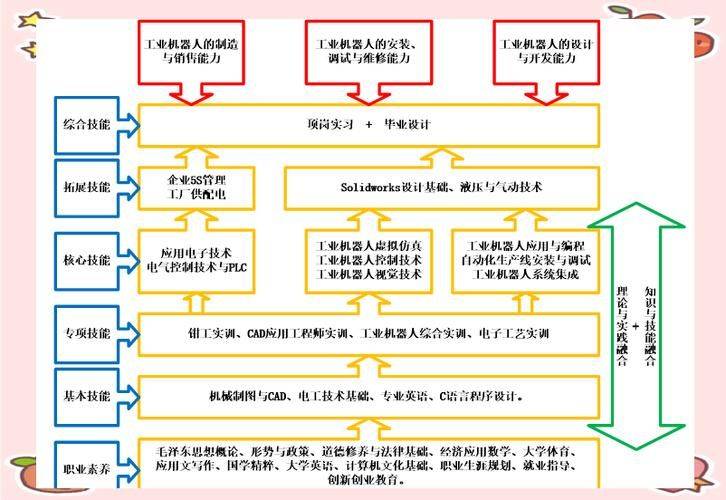
With the rapid development of technology, industrial robotics have become an integral part of modern manufacturing. It is therefore important for university students studying industrial robotics to be aware of career development in this field. This report will provide information on employment prospects for the industrial robotics profession, career orientation, and the skills and qualities required of university students to inform the career development of students. The prospects for professional employment in industrial robots are increasing with the widespread use of industrial robots in manufacturing. At present, the industrial robotics industry is concentrated in areas such as the pearl triangle, the long triangle and the kyouta sun, among which the development of the pearl triangle is most rapid. As a result, employment prospects are very wide for students studying industrial robotics. At the same time, the industrial robotics industry's demand for high-end talent is becoming more pressing as the manufacturing industry upgrades and intellectual transformation advances. As a result, university students with professional skills and knowledge will have greater opportunities to develop their talents in this area. The following are the main career paths for industrial robotics: research and development of industrial robotics and their associated technologies by engineers; improvement and refinement of existing products; promotion of technical innovation technology and technological innovation technology support engineers in industrial robotics to provide technical support and after-sales services to clients; solution of problems encountered by clients in the use of industrial robotics; marketing of industrial robotics by engineers for market promotion and marketing; communication and communication with customers; understanding of customer needs and development of solutions for the day-to-day maintenance and maintenance of industrial robots; ensuring normal functioning of robots; improving the efficiency of robotics and life-long education and training of trainers in higher education or training institutions; development of more industrial robotics; development of skills and qualities for university students in industrial robotics; continuous learning skills and qualifications; knowledge of the basic theory of industrial robotics, working principles, mechanical structures, control systems; ability to improve and refine existing products for the day-to-day maintenance of industrial robotics; ability to adapt to the evolving skills and skills of the industry; and the ability to adapt to the evolving skills of professional staff; the need to cope with the need to cope in order to be successful in their future careers, students need to constantly learn and improve their skills and qualities. At the same time, practical experience can be built up through participation in social practices, internships and voluntary service, thus providing a solid foundation for future career development。