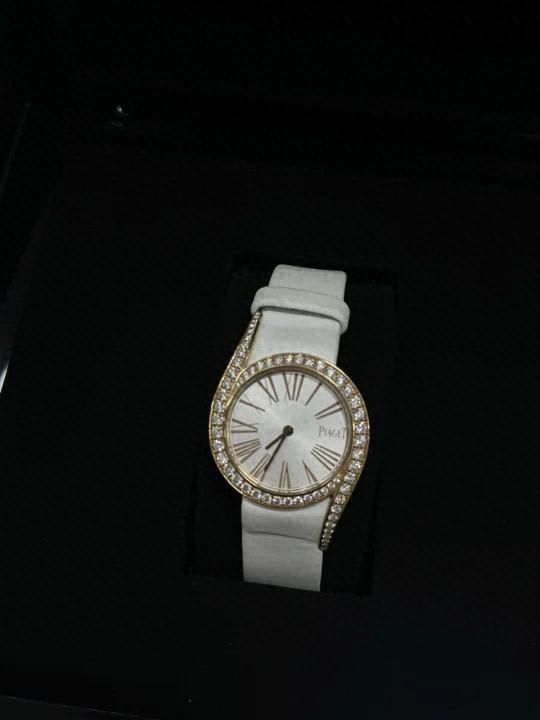
A lot of cousins have experienced such strange things: the watch is on the table and it's still and still when it's on the wrist. Many people's first reaction is "the core's broken," and they're rushing to pay for the repairs. It's mostly a small problem
I. Mechanical table: 90% power + machine core problems
Full-automatic metering is fully dependent on arm swing-driven auto-dove chains, without batteries, and static stoppage is associated with power, core state。
1. Most common: insufficient power reserves (over 48 per cent)
Reason: the automatic mechanical watch power reserve is 40-72 hours and requires 6-8 hours per day and normal arm activity. Long sits, wears too short, places more than two days in a row, with no power, and naturally stops; when you put it on your hand, your arm swings and turns up the chain, and the power goes back。
Adjudication: a 20-30 loop of power is not enough to walk normally and remain static for 1-2 days。
Solved: 8 hours of wear per day; 1 - 2 power supplements per week manually when the amount of exercise is small (sitting, waiting)。
2. Auto-doka debarment / chain inefficiency
Reasons: long periods of non-maintenance, drying of core lubricating oil, dust deposition, wear of automatic gyro bearings, resulting in non-chainability of automatic odoplasms at static times; swinging of hands, temporary lifting of external forces, and passage of cards. Maybe it's too loose, not very moving hands, and it's too low on the chain。
Adjudication: the chain of hand still stops very quickly, and when the watch moves, the sound becomes boring and inflexible。
Solving: a slight calibration can attempt to unlock the table repeatedly; frequent presence requires repair, core washing, replacement of wear bearings。
3. Magnetic / minor bumps
Reasons: access to mobile phones, computers, magnetic field strong items, magnetic binds of silks and stops in static resistance; shakes when worn to temporarily separate and resumes. Small bumps lead to a slight shift in gears, pointers and this happens。
Discretion: walking slowly and slowly, stagnating and holding hands unstable; using a compass close to the compass, the pointer is clearly defiantly magnetic。
Solving: specialized anti-magnetic repairs; malfunctions caused by bumps, which require machine calibration of parts。
4. Aging maintenance of the core
Reasons: mechanized tables require oil washing and maintenance every 3 to 5 years, long periods of non-maintenance, drying of lubricating oil, wear of spare parts, disruption of power transmission, staggering and barely sustained when worn。
Resolves: regular deliveries to specialized institutions for maintenance, cleaning of cores, replacement of lubricant, repair of wear and tear parts。
Ii. The quartz: mostly batteries + small exposure problems
The quartz watch, which is powered by batteries, does not normally stop silently, most of which occurs through circuits and battery contact abnormally。
1. Battery power deficiency (most common)
Reasons: battery voltage is low, circuit loads are stable when static, voltage is insufficient to drive the core; handshakes, short-lived exposure to the electrodes within the cell, temporary voltage is up and the watch is gone. It's often accompanied by second-second jumps (2-3 seconds)。
Resolve: replace silver oxide batteries of the same type immediately to avoid electrolytic leak corrosion cores。
2. Poor battery exposure
Reason: batteries are experiencing polar reed oxidation, ash accumulation, or loose core circuit plate contact point, with static exposure to break-off circuits; wear shakes to make the contact point temporarily bound and when the circuit is routed。
Disturbing when the battery is replaced and when moving, press the surface shell and move unstablely。
Solve: scrapers clean contact with reeds and circuit boards and reset batteries。
3. Minor core failure
Reasons: inflow of water, slight bumps, resulting in minor damage to the coil, quartz tingling, or movement to madaka, unable to start while still, and temporary recovery after shaking。
Resolves: dispatch to detect electrical circuits, wires, clean the inner cores and repair damaged components。
Iii. Quick self-checking steps (3 minutes completed)
Distinguishing tables: mechanical tables (no batteries, gyrophones); quartz tables (batteries, squirming needles)。
Mechanical chart self-check
Manually chain up 20-30 laps, static capable of walking for a day or more with insufficient power, normal wear + periodic chain up。
After the chain went up, the auto-doka was stopped very quickly/ magnetically, and it was removed and maintained。
Ishi-young self-check
The second needle jumps the second and changes the battery。
Ineffective contact after battery change/ core failure, dismantling machine cleaning or repair。
Iv. Routine maintenance alarms
Mechanistic watch: 6 hours a day, with long-suspendant clans moving up the chain manually; oil washing every 3-5 years; distance from the magnetic field and avoidance of bumping。
Quartz: batteries have a life of 2-3 years and jump seconds are immediately replaced; water is avoided and core maintenance is done every 6-8 years。
Summary: the watch is “silent, hand-held”, most of the mechanical watch is insufficient power or maintenance, and most of the quartz watch is a battery problem, with a step-by-step self-check and no solution for professional maintenance. Clean up maintenance。