Chapter 1
The plastic comb that has combed its hair is immediately near the tiny piece of paper, which will be sucked up (figures 1–1). In thunder and rain, you can see lightning tearing through the sky and thundering deafening. These are static phenomena. So, how did static power come out? Why did it come out? This section will learn how to generate static electricity and analyse electrostatic phenomena from a microlevel perspective。

Figure 1-1 generation of electrostatics from plastic combs with hair to suck up small paper crumbs
The friction of electricity is one of the common ways in which objects are charged. For example, when you comb your hair, when you walk on the carpet, when you take off your sweater... Such static phenomena are caused by friction。
We know that there are two kinds of charges to be charged to objects after friction: the charge to which a glass bar with silk is charged is positive, and the charge to which a rubber bar with fur is charged negative. The same charge is mutually exclusive and the alien charge attracts each other. The amount of the charge is referred to as the amount of the charge. In the international unit system, the amount of the charge is in coulomb, the abbreviation library, with the symbol c。
Exposure is another way to bring electricity to an object. For example, the exposure of a rubber rod that is electrocuted with fur friction to the metal balls of the electrons (figure 1-2) shows that the metal blades that were previously closed by the electrons were open, indicating that the post-exposure appliances were charged. Electrical testing is an instrument for checking whether the object is charged and for estimating how much the object is charged. When the electric rubber rod was in contact with the metal balls of the electrons, a portion of the charge was transferred to the electrons, and the metal plaques attached to the metal balls were spread out because they were mutually exclusive. The larger the angle of the sheet, the greater the charge on the object。
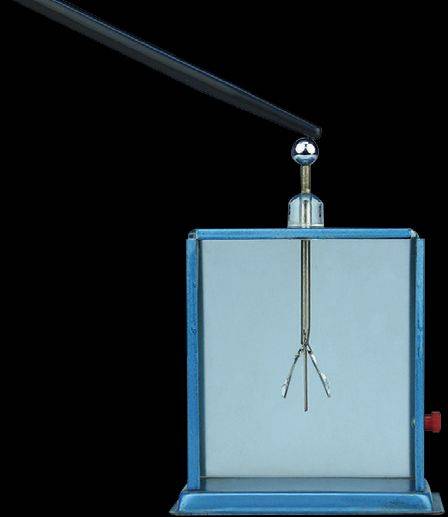
Figure 1 – 2 exposure to electro-rubber rods
There's also a way to bring electricity to an object -- sense it. What's a sense of electricity? Now let's see an experiment。
Experiments and exploration
Sensory
What can be observed when a rubber rod razed with fur is near (without contact) a metal ball of an electrical device (figure 1-3)? Why is this happening
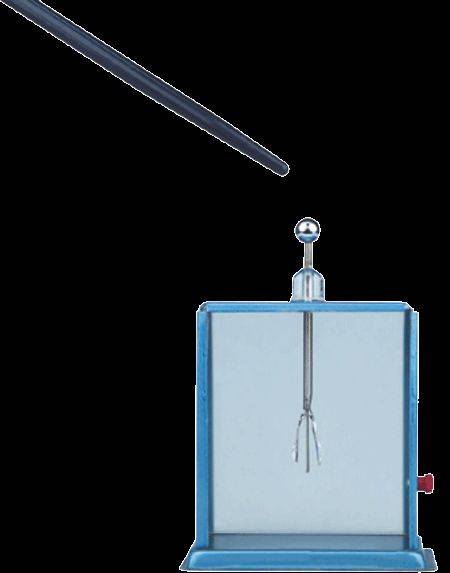
Figure 1 - 3 metals with electric rubber rods near electrical tests ball
Keep the rubber rod still, and hand-to-hand the metal balls of the appliances (figure 1-4), what do you see? Why is that
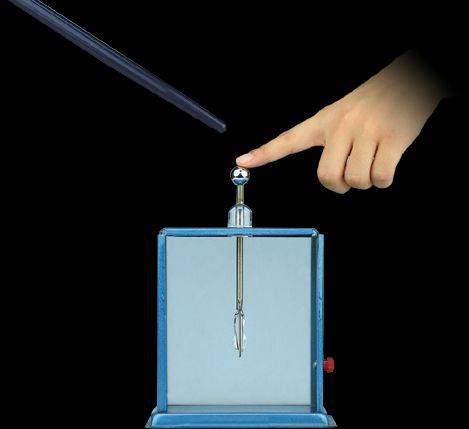
Figure 1 - 4 metallic balls with hand contact with appliances
Then move your hand, then the rubber stick, and what do you see
It is also known from the above experiments that an electrical object can be electrically charged when it approaches the conductor. The re-distribution of the charge on the conductor as a result of the effects of the nearby electric body is called electrostatic induction. The way in which the metal conductor is charged using electrostatic sensors is called induction。
Science library
The history of static electricity
Human studies of electricity begin with observations of electrostatic phenomena, and the wonders of electrostatic phenomena are constantly being explored. In about 600 b. C., thales of ancient greece, about 624 b. C. — former 547 — discovered that frictioned amber could attract light objects, and that the word “eectrity” originated in the greek language of “amber”. In the end of the year in sihan, spring, fall, coutey post contains "sucking" meaning that frictioned tacks (a sea turtle marine animal) attract light objects such as grasscrumbs. In the 16th century, the british gilbert 1544 – 1603 – discovered that not only ambers, but diamonds, crystals, etc., were able to carry electricity。
In 1660, o. Guericke, germany, created a friction-starter, prompting further exploration of the electrostatic phenomenon. In 1882, wimhus of the united kingdom invented a disk-based static sensor lifter, with two coaxial glass palettes that can be rotated in reverse at high speed, with a sense of high electrical efficiency, capable of generating and accumulating more positive and negative charges over time. Now, we often use sensor-deductors in electron experiments (figure 1-5)。
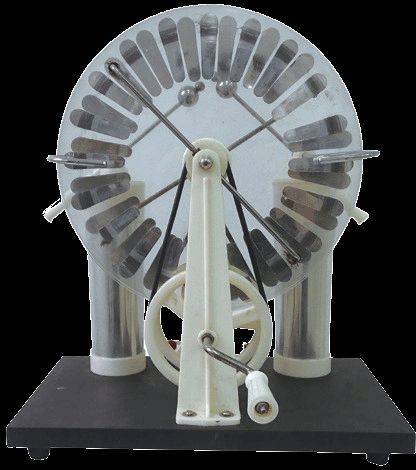
Figure 1 – 5 micro-interpretation of static from sensor-deductor 2
Here we see the nature of electrostatic phenomena from the microstructure of matter。
The substance consists of particles such as molecules and atoms. Atoms consist of active atomic nuclei and negative electrons (figures 1-6). The atomic core consists of neutral neutrons and protons with positive power. The amount of the charge of an electron is the same as that of a proton, approximately 1. 60 x 10-19 c, and the number of electrons of the atom is equal to the number of protons, so the object is not electrostatic. However, when the object is exposed to external influence, the electronics are transferred, and the object is electrostatic。
Figure 1 - 6 atom model maps
There is ample evidence that the charge cannot be created or eliminated, but can be transferred only from one part of the object to another or from one object to another. During the transfer, the total amount of the charge remained unchanged. It's called law of coNo, no, no, no。
Why does friction bring electricity to objects? This is because when two objects consisting of different substances friction each other, the electrons of some atoms in one object gain energy and break free of the atomic nucleus and transfer to another object as a result of friction. According to the constant law of charge, as a whole, one object loses its electronic positives and the other receives the electronic negatives. For example, when a glass bar is rubbed with silk, the glass bar loses the electronics and the silk acquires the electronics with the equivalent negatives (figures 1–7)。
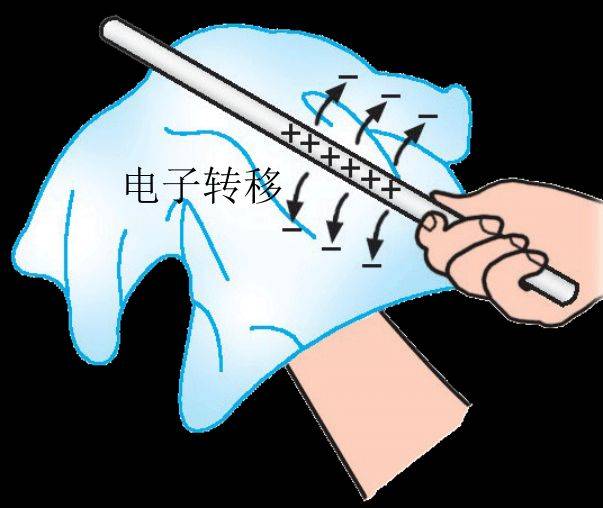
Figure 1 – 7 scatter glass bars with silk
What's the reason for that? It turns out that free electronics in the conductor are subject to charge on the conductor when it comes to the conductor, moving towards or away from it. In this section of the experiment and explorer, when the rubber rod with the negative power approaches the metal ball of the electron, the metal caps of the electrical examination are open because the free electronics on the metal ball are subject to negative charge, moving away from the rubber rod, and eventually bringing the metal ball with the rubber rod, and two metal caps with the rubber rod, away from the rubber rod, are positive and mutually exclusive. The rubber rod was kept intact and hand-to-hand contact with the metal ball, the metal blade closed, because the electrons on the metal tablet moved from the electrons to the ground through the human body, while the positive charge on the metal ball remained. The hand was then moved, the metal ball was severed from the ground, the rubber rod was removed, the metal ball and the two-metal clover were wired, and the metal clover was mutually exclusive and open. Thus, the essence of the induction is the transfer of the free charge from part of the conductor to part of the other part as a result of the charge with the electric body。
One step further
Why would a comb attract paper
Why would a plastic comb with a hair comb attract small pieces of paper? As can be seen in figures 1-8, when a comb with electric power comes close to a piece of paper, the picture shows a positive and negative distribution of the charge, as shown in the figure (this is the polarization of the medium, which appears on its surface as a polar charge, which only approximates a polar charge at two ends of the paper). Because the polarized charge near the end of the comb and the charge of the comb are alien charges that attract each other, the small piece of paper is drawn to the comb。
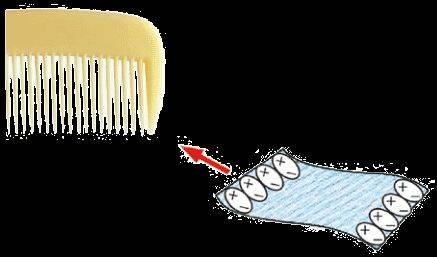
Figure 1-8 brush to attract light paper tablets for illustrative exercise
1. In a relatively dry environment, a plastic line is divided into many fine strips, with one hand lifting them, and the other hand quickly repeats the plastic strips to see if the phenomenon as shown in the figure can be observed and to explain why。
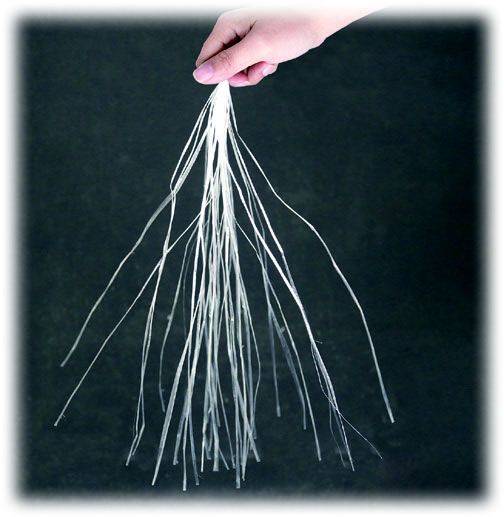
Reference solution: yes; when dry hand-stamped plastics are thin, there is a friction of electricity that separates plastics from the same charge。
As shown in the figure, two books are placed at certain distance on the table, a clean glass plate is placed above the two books, leaving the glass plate from the desktop 2-3 cm. Cut people's little pieces of paper with a wide 0. 5 cm note, put them under the glassboard, rub them on the glass with a hard-foamed plastic, and see the little paper man dancing。

(1) why would a paperman dance
(2) the experiment would have been better if the "dance zone" had been roasted before the experiment. Why
Reference answer: (1) the glass plate is wired by foam, and small paper people are attracted. The amount of charge on the glassboard is constantly changing, as is the stress of the paperman, so the paperman is dancing。
(2) the experiment is better achieved by reducing the moisture of the dance area by roasting it with fire, increasing insulation with other places and making the charge easier to remove。
3. When exploring electrostatic sensors, one of the students carried out experiments as shown in the figure: fixed the upper end of the insulation line, a lightweight small ball a, a surface coated with a aluminium membrane at the lower end, and an insulation metal ball b near a, at the beginning without electricity. If b is charged, what do the students observe? Why
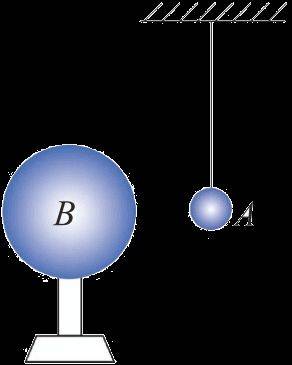
Reference answer: a ball leans first towards b and then separates from b。
When the insulated metal ball b brings the charge, the electrostatic sensor will cause a small ball a near b to carry the charge contrary to b electricity, while the one away from b to carry the charge as electrically as b. Although the amount of charge on both sides of a is the same, because of their different distance from b, the a and b balls are shown to be attractive to each other, so that a ball leans towards b. After two ball contact, the entire a ball carries the same electric charge as the b ball, and the two balls are separated by their exclusion。
4. When studying electrostatic sensors, one of the students opened the metal tablets of electrical appliances with electric metal balls close to the non-electric. The correct distribution of the sensor charge on the electrical appliance is
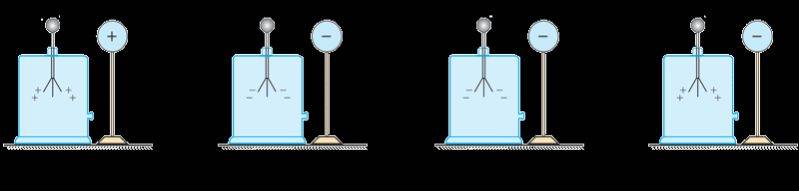
Reference: b
There are three identical metal balls, two of which have a positive charge of q and one without electricity. Please design a scheme to charge a metal ball with a charge of \\(\frac{3}{4}\q, and explain the design thinking。
Reference: contact a ball with a small ball without charge, with a charge of +\(\frac{q}2}\\\\\ last two balls, and one with a charge of +q, with a charge of \(\frac{3}{4}\q)。
Design thinking: the same metal ball is exposed and its charge is distributed equally。
I need a message