It was not the cold wind, but the instant — “push!” — that opened the door, took off the clothes, touched the tap, touched the door, even greeted people, and was “powered” the next second. It did not necessarily hurt at that moment, but it was strong enough to hold on to the heart, narrow your hands and even create a “targeting” illusion. So the question is: why is the electrostatic bias so wild in winter? Why are there people who are almost electrocuted every day and few? How did this little shock come from? Looks like a little static, but there's a whole set of physical patterns, human conditions, chain effects of environmental change。
The electrostatic phenomenon has long been documented in human history, and the ancient greek philosopher taylors observed that amber grafts attract feathers, but it was not until the eighteenth century that benjamin franklin's experiments revealed their electron nature. In modern societies, particularly in winter, static power has become a daily problem. According to one survey, the incidence of static electricity in winter was more than five times higher than in summer. This is not just a matter of “luck”, but a combination of atmospheric physics, material science and human physiology. The paper will be based on the latest scientific research, and will provide an in-depth analysis of the causes of electrostatics, seasonal differences, individual variations and prevention strategies. Through this extended analysis, we will help you understand this “winter assassin” in a comprehensive way, combining experimental data, historical stories and cross-cultural comparisons. Whether you're a frequent victim or an occasional encounter, that kind of knowledge can get you an extra one before the next one. Let's start with the nature of static power。
I. Electronic electronics are not “suddenly”, but are always achieved
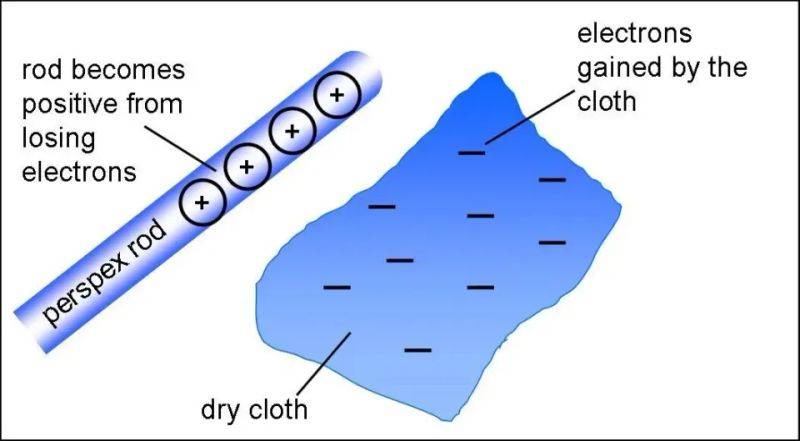
Many people think that static electricity was created "at that moment." in fact, electrostatic power was ready before you were electrocuted. Static electricity, which is essentially charged on the surface of the object, cannot be released in time. The human body is itself a conductor, a storeable, moving carrier. You walk, you dress, you rise, you undress, and every move is likely to save power quietly。
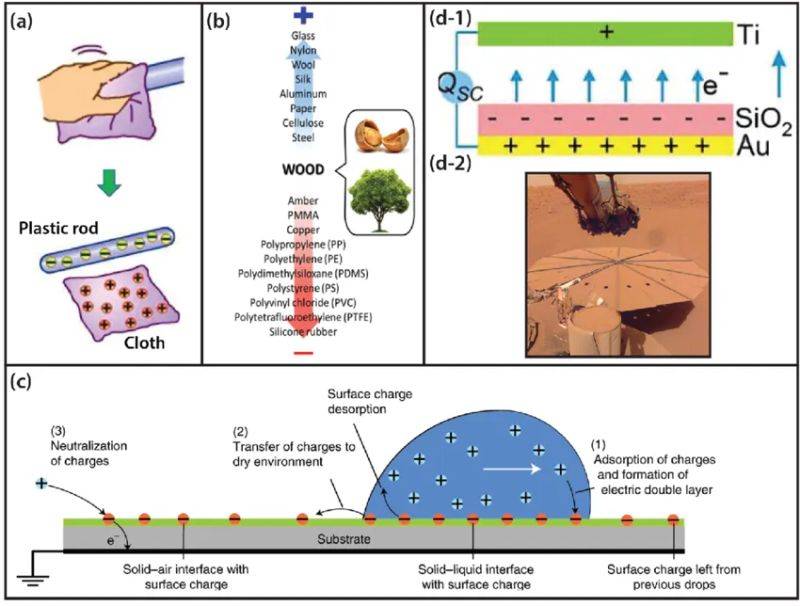
What's static? From a physical point of view, electrostatic is the electronic transfer resulting from friction or exposure, resulting in a positive or negative charge of the object. This phenomenon is referred to as friction. When the two different materials are frictioned, the electronics move from one to the other, creating an imbalance in the charge. For example, when a foot-bed shoe rubs a carpet, electronics may move from a carpet to a shoe, and your body carries a negative charge. The human body, like a capacitor, can store these charges until the conductor is found to be released。
Why accumulate? The charge needs to be leaked. In a damp environment, hydro-molecule conductive electricity helps spread the charge. But when it's dry, the charge's "constricted." an experiment has shown that electrostatic voltage can reach thousands of volts when relative humidity is below 30 per cent. Day-to-day movements, such as the removal of sweaters, generate a voltage voltage that is small enough to produce sparks。
In history, static power is considered a mysterious force. Medieval europeans think it's the touch of the devil. Modernly, nasa studies the impact of electrostatics on space, which drys up like winter。
Static electricity is dangerous in industry, such as the electrostatic detonation of gasoline at gas stations. Prevention needs to be localized. In short, static electricity is the result of continuous accumulation and is not sudden。
Winter is the perfect stage for static power
In the winter, electrostatics were caused mainly by dry air and thicker clothing. In summer, the air is highly humid and water molecules help to release the charge; in winter, the air is dry and the charge is “tucked” on the surface of the object, with no place to walk, but only more and more. In winter, they wear sweaters, feathers, wool, fibres, which are particularly susceptible to charge transfer in friction. Every step you take, you're actually charging yourself。
Dry air is the key. Cold air holds low water and indoor heating further reduces humidity. Studies indicate that indoor humidity is often below 20 per cent in winter, well below 60 per cent in summer. Water vapour-guided electricity, enhanced insulation during drying and charge accumulation。
The thicker clothes increase friction. Synthetic fibres such as nylons, polyesters are electric and wool frictions generate positive electricity. The friction sequence (triboereectrich series) shows glass, hairy positive electricity and plastic negative electricity。
In the north, static electricity is more frequent and dry. Wetting. In the future, smart clothing may be embedded in conductive fibres for static。
Why is the “last moment” particularly obvious
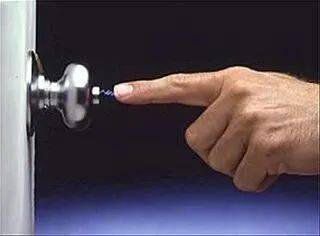
It really happened at the moment when the charge was found to release the exit. The body is a “mobile capacitors”, and when you touch the metal doorknob, the car door, the faucet, these conductors are like a sudden-opening “discharge vent”. All the accumulated charges were released in a very short period of time, so you felt “electricity”。
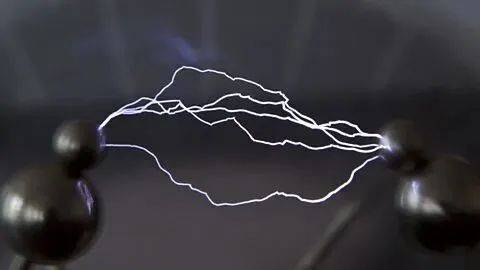
Why is it so painful sometimes? Depending on the high voltage, discharge rate, area of exposure. The faster and the more concentrated, the more obvious the feeling becomes. At the time of the discharge, the air piercing creates sparks at temperatures of up to thousands of degrees, but lasting in microseconds with small heat。
Iv. Why do people always get electricity
It's not about luck. Physical differences include the dryness of the skin, sweating conditions, and the susceptibility to sweating. The more dry the skin, the more difficult it is to “batter”. The effects of wearing habits are enormous: fibre + fibres are typically a “static mix”, while cotton, silk, water-rich materials are less likely to accumulate electricity。
Skin drying reduces electrical conductivity, and sweaty people have light charge. Clothes: the cotton is neutral in the friction sequence and the fibre is highly polar。
Why do metals always “electrify you”
Because metal conductivity is extremely high, it is capable of receiving large amounts of charge instantaneously. But the metal is not the killer of “making electricity”, it's just helping you release the electricity once and for all. The real power saver is yourself。
Metals are free and electronic, fast and medium。
Vi. Is electrostatic harmful to the body
The good news is that static electricity in life can hardly cause physical harm. This is due to high voltage, very small currents and extremely short durations. The bad news is, it's enough to scare you or even cast a psychological shadow。
The voltage can be as high as 10 kv, but the current is micro-graded, with no risk of burns. Psychological: repeated static can cause anxiety。
How can the probability of being electrocuted be reduced
It's not “dive”, it's “break”. Increased air moisture, extra cotton clothing, touch the key before touching the metal, and exercise hand cream (increased skin conductivity). It's not water, it's roads。
The humidifier increases the humidity to 40-60 per cent. Keys spread out. Hand cream is hydro-conductive。
I'm telling you something
We used to treat static as a problem, but rarely realized — it was an extremely visual physical demonstration. It tells you that you keep exchanging energy with the environment, that you're not an isolated individual, that every friction leaves a mark。
The electrostatics reveal that everything is interconnected. In science, it promotes electrical development。
The moment you got electrostatic, you're not in luck, but you're just standing at the exit of nature. The invisible charge, the invisible air, the invisible laws of physics were all visible at that moment. The world is not quiet, but most times it chooses not to disturb you. And static, just a little knock on you。