The birth abnormal。
Car tail gas also found a polycyclic aromatic hydrocarbons, including carcinogenic substances such as benzopylene。
When the concentration of benzothion in air is reached, there will be a marked increase in lung cancer among the population。
The closer the road, the greater the traffic on the road, the higher the lung cancer mortality rate。
In london, there were photochemical smokes in london, which killed more people in the sky than in the same period of time, with the highest number of deaths over age, about twice as many children under normal age。
Lead is a toxic heavy metal element, most of the oil used in automobiles is mixed with blast-proof tetraethyl lead or methyl lead, and lead resulting from combustion and its compounds are toxic substances。
The information indicates that the organic matter of this lead is very toxic and is twice as toxic as inorganic lead。
More than lead in the urban atmosphere comes from the burning of leaded gasoline in cars。
In the case of cars, most of the tetraethyl lead is drained to the atmosphere with its tail gas。
According to medical studies, excess levels of lead in humans can cause cardiovascular system diseases and affect the functioning and nervous system of important organs such as liver and kidney spleen and brain。
And lead compounds can breathe into the blood and accumulate rapidly into human bones and teeth, disrupting the erythroglobin synthesis to erythrocytes, causing anaemia to damage the nervous system, seriously damage brain cells, cause brain damage and thus chronic hazards。
Lead, when introduced into human brain tissues, binds to critical parts of brain cells, leading to severe consequences such as mental development disorders and the creation of disorders。
Lead in car tail gas is distributed around the surface of the ground and is the breathing belt of young children, which, when the blood of children is at concentrations, affects the growth and intellectual development of children and even the symptoms of dementia。
Lead can also enter the placenta through the mother, endangering the foetus, and contamination of lead can be seen to be extremely harmful to children and adolescents。
Although co2 is less directly harmful to humans than the above, today, when carbon dioxide is growing steadily, it has already warmed our planet's climate and destroyed our ozone, thereby defusing the glaciers of the southern arctic and threatening our very survival。
So we also need to focus on carbon dioxide growth。
The second chapter, the generation of organic pollutants from diesel-diesel pollutants, will spray diesel into gas cylinders, mix and burn with air, transform chemical energy stored in diesel fuel into mechanical energy, and release residual exhaust gases, which contain several substances harmful to humans and the environment。
Its main components are carbon dioxide nitrogen oxides (co2) oxides (nox) sulphur dioxide (sulfur dioxide) plume substance, formaldehyde substances, etc。
Compared to gasoline, diesel exhausts are low and usually amount to only about a tenth of gasoline。
Emissions are roughly the same as those of gasoline。
However, emissions are much higher than those of gasoline, which is about twice as high。
In addition, as diesel fuel is more sulphur-containing than gasoline, the gas content in diesel engines is higher。
In cases of inadequate combustion, carbon oxide, hydrocarbons and formaldehyde substances are generated in exhaust gases, and engine lubricants are an important source of hydrocarbons。
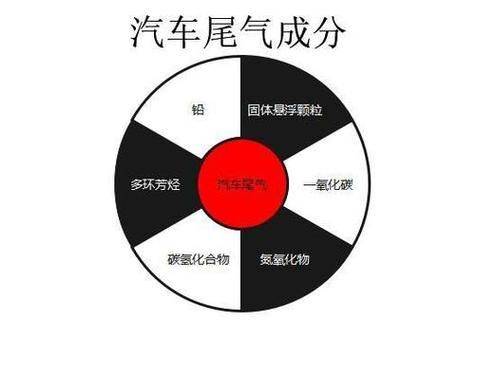
Of these, carbon oxide is the most harmful to humans, and when inhaled with carbon oxide-containing gases, it results in oxygen deficiency in parts of human tissue, headaches, dizziness and inefficiency, and death in serious cases。
Hydrocarbons and formaldehyde substances stimulate the eyes of humans and cause breathing difficulties. Hydrocarbons and formaldehyde substances are also the main constituent elements of the diesel odour as the main component of the smoke, and hydrocarbons pose significant environmental hazards。
The following is an analysis of several major pollutants with nitrogen oxides and nitrogen dioxide combined。
The diesel combustion process is mainly generated, about the total。
There are three main ways in which combustion processes can be generated, depending on the mechanism for their generation, which can be classified as high-temperature fuel and fast。
Thermal power is generated mainly by the reaction in the air to the oxidation of the flame temperature into the fuel, which is the fast combustion product of the nitrogen-containing fuel, and by the reaction in the fuel to the decomposition of hydrocarbons during the combustion process to the same atoms or atoms in the air to produce nitrogen, which reacts to progress in large quantities in the flame。
However, the lower nitrogen-containing rate of car diesel is more frequent in the case of higher combustion, i. E. When hydrocarbons are higher and oxygen concentrations are relatively low。
Fuel and speed can be largely ignored in diesel combustion。
As a result, diesel exhaust is mainly a result of combustion, i. E. Heat, in air and at high temperatures in combustion rooms。
Thermal processes are now generally accepted for the expansive ghesion reaction principle, with concentrations considered largely constant during combustion in diesel engines, so that the amount of generation depends primarily on the concentration of oxygen at the fire peak temperature and the duration of stay。
It is generated by excess oxygen in the combustion chamber。
Oxygen combustion processes in diesel engines provide favourable conditions for generation。
The higher the amount of excess air, the higher the likelihood that it will be generated, the higher the temperature of the combustion process, the higher the temperature of the diesel combustion process can last for as long as it lasts。
It is the main contaminant in the atmosphere。
In addition to secondary contamination, it can lead to photochemical reactions and secondary contamination。
Its hazards primarily include effects on human health。
It is a non-colored toxic gas that can be combined with blood hemoglobins into nitroglycerin or nitrous high iron hemoglobins, reducing the capacity for blood transmission。
Overinhalation in humans can cause central nervous paralysis and convulsions。
It oxidizes with air。
At room temperature is a red brown toxic gas with a strong irritant odour, boiling point, special irritant odour, which is the element of the odour in diesel exhaust。
Nitrates and nitrous acids can be produced slowly with water。
Inhalation can have a strong irritation effect at the deep part of the lung, premature damage and failure of the agent, which should be removed from the repair plant as soon as possible。
Special care should be taken not to bottom up, as most of the three-channel catalysts are catalyst carriers formed by beehive pottery, which are vulnerable to break-up after collision, blocking the catalytic and exhaust systems。
Chapter iv of the auto tail gas control measures are the most fundamental and final ways of changing motors such as the development of electric vehicles and alternative fuel vehicles。

This means that cars do not produce or produce only a small amount of polluting gas。
In this regard, there are several options available to replace the gasoline methanol vehicle, which is a new type of low-intensity energy-saving car, which uses alcohol methanol as a fuel。
The maximum speed of a methanol car is similar to that of a normal car, such as horsepower, but lead nitrogen oxides from the exhaust gas are also reduced by half and are largely non-smoking。
The sources of methanol for fuel are extensive and can be extracted from materials that produce carbon oxide and hydrogen, such as gas-deficient coal, oil sand and wood crumbs。
Furthermore, methanol production is characterized by simple processes, low equipment and ease of transport。
The use of clean alternative fuels such as methanol liquefied gas in lieu of gasoline will significantly reduce vehicle tail gas pollution。
It is a good thing to replace gasoline with gas, which in recent years has become increasingly popular on the streets。
Decrease in combustion products compared to gasoline。
There is no doubt that the control of acid rain is beneficial and is currently achievable。
Electric vehicles are converted into communication power through direct currents in high-energy batteries, which drive the rotation of permanent magnetic-magnetic machines and thus drive vehicles。
In the absence of processes such as inflationary exhausts of gasoline engines, electric cars do not release harmful gases such as oxides containing lead sulfur, as is the case in ordinary cars, while noise is about the same power as ordinary cars。
As emissions from power plants that provide electricity needed for electric vehicles are easily and effectively controlled, and the energy efficiency of power plants is much higher than that of ordinary vehicles, electric motor vehicles emit far less polluting materials than ordinary cars and save energy。
It's a very promising low-energy-efficient car。
I believe that, in order to improve the environment, the government can reduce taxes, provide secondary subsidies, etc., to promote the spread of low-fat vehicles, and oblige the automobile market to traffic in a proportionate proportion of electric cars, while at the same time providing for large-scale diffusion of low-fat-efficient vehicles by adding charging equipment and fuel supply networks in urban areas。
Automobile companies have also sought to develop new products to reduce the cost of low-hazard vehicles。
Now that low-intensity fuel-efficient cars are becoming the key word for the century, in the near future low-intensity energy-efficient cars will become environmentally friendly and, by the beginning of the century, they will become fashionable for young people. Improving existing car power units and fuel quality with well-designed engines to improve combustion room structures with new materials to improve fuel quality will reduce vehicle exhaust pollution, but will not reach zero emissions。
Instead of piston turbines and triangular pistons, exhaust emissions are clean water droplets, steam and carbon dioxide new-style rotor rotor engines have been successfully tested in kunming and are functioning on stage。
The gear rotor engine is a mechanical device that converts thermal energy into mechanical energy。
The main feature is thermal conversion of motors with sophisticated gears, which, in combination with ingenuity organically, achieves the automatic conversion of high-temperature and high-voltage energy to rotation power and the off-axis output, with exhaust vents。
The rotor rotation engine changed the four-string work cycle of the internal combustion engine, overcoming the inertial and energy-intensive disadvantages of the piston re-mobilization, and altered the winding theory of the turbine engine and the leakage of the lobes。
As a result of this innovation, significant progress has been made in the area of energy efficiency and low-energy pollution compared to traditional engines。
The pilot operated through the platform and was tested to indicate that the maximum speed of rotation was above the transfer point, that it was only about the two-fold minimum of the maximum rate of rotation of the internal combustion engine, that it was at the minimum rate of transfer, and that it also had a good non-radical velocity feature and the advantage of a zero-speed start without external capacity。
The rotor rotation engine in the experiment can be made of gasoline kerosene and petroleum liquefied gas. Fuels, after operation, are smoke-free and fumes-free and discharges are white water vapours and droplets。
This technology is certainly good news for solving the problem of polluting the environment in traditional engines。
The use of vehicle tail gas purification techniques, such as some advanced infra-mechanical purification techniques, to decontaminate vehicle-generated exhaust gases to reduce pollution, is also not a means of zero pollution。
The exterior purification technology currently used is the installation of purification devices in vehicle exhaust systems to reduce pollutants in exhausts using physical chemistry。
It can be divided into catalytic thermal reactors and filter collectors。
The former is used mostly in petrol-based vehicles and the latter in diesel-based vehicles。
The tri-channel converter technology is the most currently applied purification technology。
When the engine works, the tail gas vent enters into the catalyst, with nitrogen oxides and reduction agents, such as oxidized hydrocarbons in the tail gas, decomposed into nitrogen and oxygen under catalytic action, while hydrocarbons and oxidized carbon are fully oxidized under catalytic action with the oxygen remaining in the exhaust gas and the oxygen generated by the reaction。
Since the catalyst in the tri-channel is a hive structure, where the surface of the hive is coated with catalytic material and the surface area of exposure to the exhaust gas is very large, its purification is highly efficient。
As such filters can simultaneously decontaminate three contaminants, the catalyst is called a tri-channel converter。
Waste gas recycling has been identified as the generation of fuel in high temperature combustion。
Waste gas recycling is the introduction of parts of the waste gas into the combustion chamber to reduce the temperature and speed of combustion of the cylinders, depending on the condition of the engine, and thus progress in reducing emissions。
The secondary air supply system is a reactor set up at the upper end of the exhaust pipe, introducing a suitable amount of fresh air through air pump control valves such as one-way valves and jet tubes, at high temperatures, and continuing to burn in and within the heat reactor, thus reducing emissions。
In some cases, the engine provides a three-channel catalyst with secondary fresh air to enable and obtain a fuller oxidation reaction burn within the catalyst。
The three representative international emission control systems for reducing the environmental impact of diesel tail gas have developed emission limits for car diesel engines in europe and japan。
While the three emission regulatory systems have adopted their own testing methods and stage limits, the trend is increasing。
To meet increasingly stringent emission regulations, fuel quality and advanced engine technology must be improved。
The achievement of emission limit values at the various stages requires the assurance of appropriate engine technology。
For diesel vehicles of all types, both stable above european i emission standards and guaranteed high motor and fuel economy of diesel motors, the use of exhaust turbines and medium-cooling technologies is essential。
Corresponding to different emission limit stages, the improvements and enhancements of pressure boosting techniques are applied at all stages, with the exception of other advanced technologies, such as high-pressure injection multi-gas door technology, pre-jet vent prejet boosters。
There will be more than 10,000 diesel sedans, approximately of them diesel sedans, using turbine boosters。
Major factors contributing to the development of heavy-duty diesel vehicles are power-density fuel economy and environmental protection。
Turbo-pressure-in-air cooling can significantly increase power density to reduce emissions and improve fuel consumption。
Compared to the previous model, the power density of heavy-duty car diesel machines has improved, fuel consumption has improved, and particulate emissions have decreased and decreased, respectively。
Recommendations and responses to protect the natural environment and national resources from pollution of the atmosphere by car tail gas