It is a common practice of many people to take drugs on their backs, to give them a drink, to break them up or to use water to dissolve them, but you know that if the drug is taken in an incorrect way, it affects the absorption of drugs, reduces the efficacy of the treatment and increases the adverse effects and endangers life. Next, sun ha rong, a pharmacist and deputy director of the medicines inspection (medical devices) hospital in nanjing city, came to say “what needs to be noted in the proper administration of medicines”。
What's a drug
Medicine is in fact a special commodity, which is closely linked to the health of the population. This is defined in the act on the administration of medicines, which refers to substances used to prevent, treat and diagnose diseases of a human being, to provide for the purposeful regulation of the physical functioning of a human being and to provide for the treatment, use and use of adapted diseases or functions. It includes tablets of chinese medicine, medium medicine, chemical raw materials and their preparations, antibiotics, biochemicals, blood products of radioactive drugs, diagnostics, etc。
What are the common names of medicines, trade names and differences between international generic names
The common name is the name of a drug established by the national pharmacy commission in accordance with certain principles, that is to say, it is the legal name of a drug, and each drug may have only one common name, just as each of us has only one school name。
The trade name is the name given to the product by the manufacturer of the drug in order to distinguish it from other producers. Drugs of the same composition, because of different manufacturers, have different trade names。
The international generic name is the only name of a feedstock or active ingredient recommended by the world health organization (who). They are mainly used by professionals in a number of disciplines, such as medicine, chemicals, etc., in labelling, advertising, pharmaceutical rules, scientific literature, etc。
What are the pharmaceutical types
Spectrums: these include ordinary suppressed, sugared, bubbled, chewed, slow-out, etc. The production of tablets is accurate, of stable quality, easy to take and generally relatively inexpensive。
Injecting: includes sterile or sterile solution, water needle, powder, etc. Injectives are effective quickly, dosages are accurate and reliable. Injecting agents enter the human body directly and therefore have a lower safety factor than oral agents and do not advocate their first use。
Capacitors: these can be classified as hard capsules, soft capsules and intestinal capsules, which are generally oral. The capsule can mask the odour of drugs and improve their stability and bioavailability。
Oral liquids: including solvents, syrup, emulsants, adhesives, etc. The use of liquids is easy to control and adjust, especially for infants and elderly patients. It is also highly dispersed, readily fully absorbed and effective, but liquid formulations are improbable and not easily carried。
Particle agent: also known as a flush agent, can be classified as a soluble particle agent, a suspended particle agent, and a bubbled particle agent. Particle agents are a more rapidly developing formulation in recent years and are particularly popular with children。
Soft ointment: includes fatty base ointment, emulsifiable base ointment and water soluble base ointment. It is mainly used on skin, mucous surfaces, which are resistant to skin infection, protection of the skin, skin moisture, air insulation and stimulant growth of meat。
Embolisms: includes rectal use, vaginal use, urethal embolism, etc. Suppressants can perform better local effects and are suitable for patients who are unable or unwilling to take drugs, such as unconscious persons and young children。
Aerosols: aerosols can act locally or in their entirety in the respiratory, skin or other cavity. Rapid and low doses and low side effects。
The usual types of agent used in chinese medicine include: soup, bulk agent, pill, ointment, embolism etc。
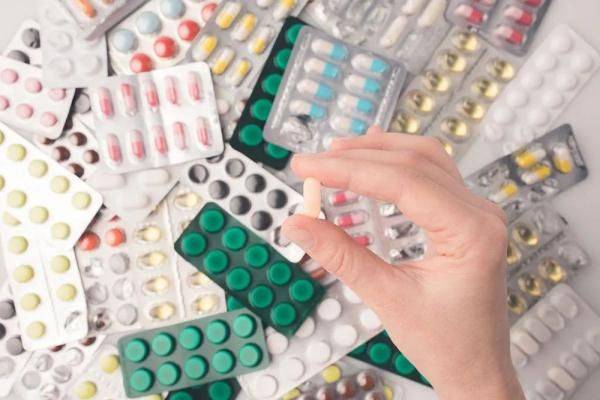
What's wrong with the drug
01
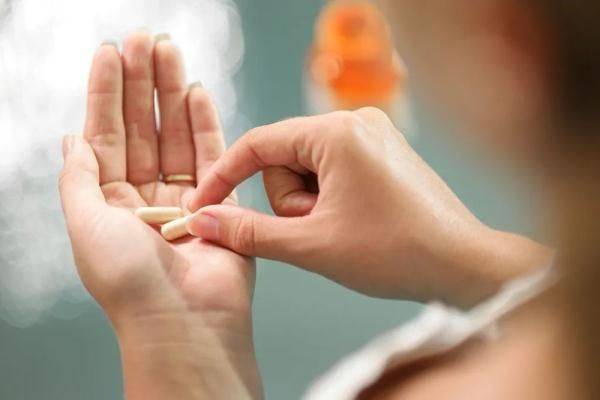
Dry swallowing pills. In order to save time, some patients do not drink water while taking drugs, but simply swallow them. In fact, it is also very dangerous: on the one hand, it is dangerous for the body, and the dry-eating drug is stuck in the esophagus to stimulate the oesophagus mucous membranes, causing oesophthalitis, ulcers, etc. On the other hand, there is not enough water to help dissolve, and some drugs can easily form stones in the body, such as sulfamides such as cotrimoxazole。
02
Lie down and take your medicine. On its feet, it binds the drug to the walls of the oesophagus, slows down or remains in the oesophagus, prevents timely entry into the stomach, causes coughing and oesophagus and even burns the oesophagus and creates an ulcer. The correct position should be to stand or sit and take medication for about two minutes。
03
Delivery of drugs with drinks. Drinks such as tea, coke, soybean, coffee and milk contain a variety of chemical components that tend to react to drugs and affect their efficacy. Drugs are best taken with white water, but not with too hot water, unless special requirements exist。
04
Drink directly to the bottle. This is mostly the case with liquid formulations, such as cough syrup. This, on the one hand, is susceptible to contamination and accelerates deterioration; on the other hand, failure to accurately control ingestion may result in inefficiency or overdose increases side effects。
05
The tablets are broken or dissolved with water and taken. Some people take larger medications, fearing that they will “swallow” or that their children will choke, and then take them on their own initiative, either in pieces or when water is dissolved, which not only affects the efficacy of the treatment but also increases the adverse effects of the drug。
06
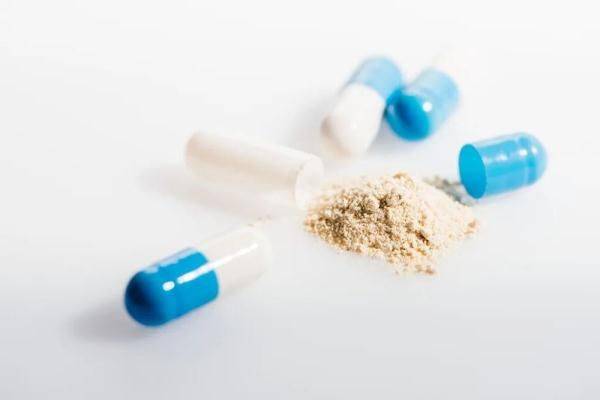
The capsule can't be taken. The effect of drug-forming capsules is mainly to eliminate or conceal the bitter and insinuation smell of certain drugs. To avoid the irritation of oral and stomach mucous membranes by some drugs. If the drugs in the capsule are thrown out and taken, there may be nausea, vomiting, abdominal pain, an appetite, etc., or gastric acid damage, resulting in a gastrophate that would otherwise require intestine soluble in the stomach, which would not be well absorbed and would not achieve the desired treatment。
07
No food taboos are observed during medication. When taking chinese medicine, we need to pay attention to the associated taboos, including those related to disease and medication。
What are the bad drug habits
A cure requires a cure in order to be effective. In practice, however, many people take drugs with unwanted bad habits, which not only reduce the efficacy of the drug but also increase the side effects. The following are common malpractices:
01
The principle of medicine is reversed. Drugs are dual in nature, with different delivery routes and different risks of drug use. External use, oral use, injection, intravenous fluid are four common modes of delivery. Whether in terms of safety or ease, it is preferable to follow a sequence in which an iv is injected with an external oral. Therefore, the principle of non-oral use, oral non-injection, muscular inoculation, should not be reversed。
02
Precious medicine is good medicine, new medicine is good medicine, imported medicine is good medicine. The price of medicines is often determined by a combination of factors such as the cost of research and development of medicines, the cost of raw materials, the process, the distribution chain, etc. The price is not necessarily good。
03
Some patients are unable to take their medication on time and on a quantitative basis without having to adjust the dose, as prescribed by the doctor. This is reflected mainly in a slight improvement in the state of the disease, the neglect of the drug when working and the heart-to-heart increase in the quantity of medication prescribed by doctors. These irregularities may result in adverse effects on medicines or delay treatment by reducing the use of medications to a level that does not achieve the desired treatment effect。
04
Using health-care food as a panacea. Health-care food is not a substitute for medicines. The most fundamental difference between health-care foods and medicines is that health-care foods do not have a precise therapeutic effect, cannot be used to treat diseases and have only health functions。
05
The chinese medicine has no adverse effects. Chinese medicine is also a drug that is inappropriately administered and can cause adverse effects。
06
He diagnosed himself with a disease or imitated someone else. Some chronically ill people, with their own “old experience” of taking medications for long periods of time, go to the pharmacy to buy them. Indeed, the triggers for the recurrence of old problems are not identical, and some symptoms are not entirely consistent. There is also a risk that a drug may be used repeatedly for a long time, resulting in a source of disease or resistance. Therefore, in the event of a recurrence, it is advisable to go to the hospital to see a doctor and use the medication as prescribed by the doctor。
07
Children take adult medicine. Some parents want their children to recover as soon as possible and to give them medications for adults, in the belief that they can treat the disease as long as they can. Every time a child gets sick, he takes half of his adult medicine. Not only do children and adults have different weights, but there are also many biological and pathological differences, in particular incomplete development of organs such as the liver and kidneys. Some drugs are available to adults, but children cannot eat。
What are the concerns about rational drug use
Reasonable use refers to safe, effective and economical use. The principle of non-use, non-use, non-use, non-infusion is followed。
01
You don't need it, you don't need it, you don't need it. All drugs have adverse effects, so be careful. The combination of multiple drugs should be avoided, and there is a risk of interaction between the different components of the drug, some of which may be ineffective, affecting not only the original therapeutic effects but also the health risks。
02
It's not mystical, it's not mystical. Oral treatment is the safest, most convenient and economical method of delivery, and the choice of the route of delivery should be based on internationally accepted principles, i. E., non-injection based on oral exposure, inoculations or infusions that can be injected under the skin or within myus。
03
As prescribed by the doctor, no medicine may be taken without permission. There is no clear diagnosis and patients are not allowed to use drugs without permission. Medical treatment programmes are determined by doctors taking into account a combination of factors such as the patient's condition and physical characteristics and must not be altered at will。
04
The medication is followed closely by changes in the condition. When medicines are given by a doctor, the patient is prescribed to use them, and is kept under constant observation to provide timely feedback on the anomalies that arise for the doctor to adjust the treatment programme. In the case of serious adverse effects, there is a need for timely stoppage。
It is no big deal to use safe medicine. Please ask the doctor if you can't get it. Sun ha rong