I. Structure of nuclear achievements and rivality
1 level i structure of nucleic acid
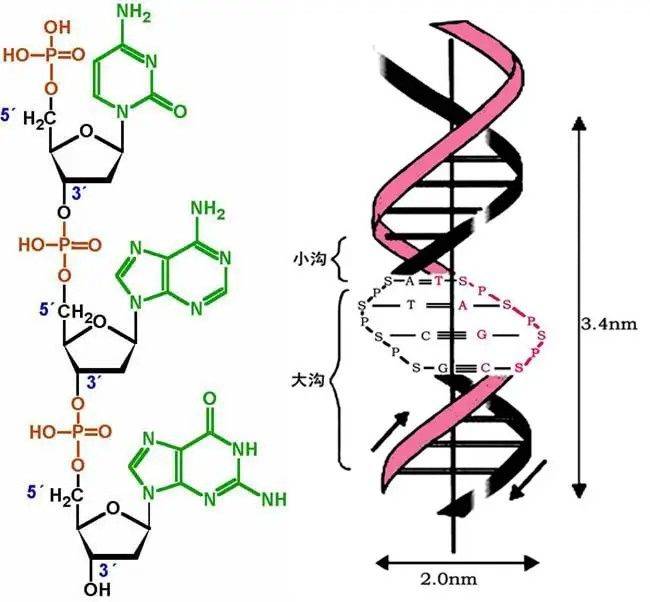
The nucleic acid first-level structure is the sequence of nucleotide in the polychlorinated nucleotide chain, also known as the nucleotide sequence. The stable covalent key connecting the nucleotide is 3 ' , 5 ' -phosphate. The primary structure is the molecular basis for carrying genetic information with nucleic acid。
2. Secondary structure of nucleic acid
The most representative secondary structure of dna is the double helix. Its stability depends mainly on three non-covalent forces:
Hydrogen keys: between complementary base pairs (a-t, g-c)。
Base-based reactor build-up: longitudinal hydrophobic interactions between adjacent base-levels are the main force for maintaining the stability of the double spiral structure。
Water drilling: the role of the base-based water-sorting component in avoiding the water, leading to a spiral internal。
Rna molecules can also form local secondary structures, such as double helix, via chain base pairs。
3. Advanced structure of nucleic acid
On the basis of a secondary structure, the nucleic acid can further fold, collide and combine with proteins to form more sophisticated advanced structures. For example, dna in a nuclear cell is condensed and entangled at multiple levels, and ultimately forms a highly organized chromosomal structure, such as protein。
4. Diversity of nucleic acids
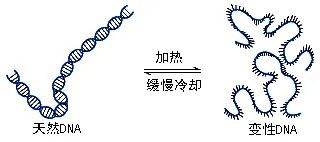
Nucleic acid variability is the process by which hydrogen keys that sustain the double-spiral structure of dna and the build-up of the base piles are destroyed by physical (e. G. Heating) or chemical (e. G. Extreme ph, variant) factors, leading to the decomposition of the double-chain dna into a single chain。
Chemical key changes: hydrogen keys are fractured with hydrosis, which can be partial or total, reversible or irreversible。
Structural change: the variability is essentially a change in the spatial composition (secondary structure) and does not involve a breakdown of co-priced keys of the nucleotide sequence (level 1 structure)。
5. Recoverability and ablaze of nucleic acid
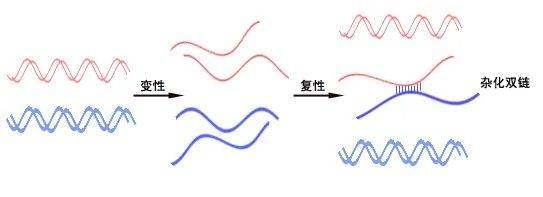
(b) cotrimacy: the process of restoring the double-helix structure by pointing to two complementary nucleic acid chains that are separate from the variability and, after removing the variation conditions, re-integrated in accordance with the principle of base-based complementarity. Resumption is a reverse process of variability。
Repulsion: specially refers to the classic experimental method of compounding by slowly cooling thermally modified dna solution. This concept can be extended to the rna twin-chain zone or the re-establishment of the hexagen nucleic acid twin chain。
6. Intersection of nucleic acid molecules
The nucleic acid multiplicity is an important application of the principle of compoundity, which refers to the process of forming an amphibious bi-chain complex through alkaline complementary pairs under suitable conditions, based on two complementary single chains of different nucleic acid molecules (which may be dna-dna, dna-rna or rna-rna)。
Nature: under certain conditions, the specificity of a single chain of nucleic acids occurring between different sources with serial complementarities. This technology is one of the core tools in molecular biology for the identification of nucleic acid sequence homogeneity, genetic positioning and detection。
Ii. Rationale and type of nucleic acid molecular junction
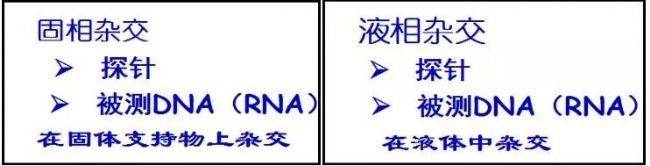
The nucleic acid molecular hybridism is based on the alkaline complementarity twinning principle, which combines the known sequence single chain of nucleic acid (probes) marked with the complementary sequence specificity in the sample of nucleic acid to be tested, forming a stable heterogeneity twin chain, which leads to techniques of qualitative and quantitative analysis of specific target sequences. According to the state of the response system, there are two main categories:
Solid interlocking: the nucleic acid is fixed on solid phase support (e. G., nylon, nitric acid cellulose membrane) and then mixed with a probe in a liquid。
Mixture of liquids: mixture reactions take place in solution, with both nucleic acid and probes to be detected in an isolated state。
Iii. General flow of molecular multiplicity
Standard nucleic acid molecular hybrid techniques usually follow the following operational steps:
1. Preparation and marking of probes: selecting or synthesizing specific nucleic acid fragments as probes and marking using isotopes (e. G. 32p) or nonisotopes (e. G. Geo-hexasin, biotons, fluorescent groups)。
2. Preparation of samples to be tested for nucleic acid: the target dna or rna is extracted from the sample and purified, and, if necessary, the enzyme cutting, electro-simulation, etc。
3. Mixed reactions: in a hybrid system that strictly controls temperature, ion strength, etc., the marking probes are combined with complementary sequences in the nucleic acid to be detected. For experimental purposes, liquid phase, solid phase or in situ mixing may be used。
4. Mixed post-treatment: reduction of background signals through a series of scrubbing steps to remove probes that are not combined and that are not specific。
5. Results detection and analysis: depending on the type of probe marker, hybrid signals are shown and qualitative or quantitatively analysed using radiation self-image, chemical luminescence, fluorescent detection or colour。
Iv. Main hybrid technologies and their applications
1. Inverse point hybrids: multiple specific probes are pre-fixed to the membranes and mixed with marked samples of nucleic acid. Mainly for:
Genetic stratification: e. G. Human white cell antigen stratification, human papilloma virus and hepatitis c virus gene stratification。
Genetic mutation detection: screening of genetic mutations associated with beta-thalphaemia, phenylketoneuria-related mutations, nodule branch bacterium and hepatitis b virus resistance。
2. Intersection of southern footprints: transfer of dna fragments separated by gel electron swimming to a solid membrane, followed by hybrid analysis with a specific probe. Mainly applied to:
Genetic diagnosis of monogenetic diseases: diagnosis of sickle-cell anaemia, for example。
Genetic structure analysis and point mutation testing: for example, identification of mutations at specific genetic locations (e. G. Potassium ion channel gene a635g)。
3. Northern footprints are hybrid: their principles are similar to those of southern, but they are used for rna analysis. Mainly applied to:
Rna virus detection: e. G., identification of hepatitis c virus。
Genetic expression level studies: e. G. Detection of the abundance of a given gene (e. G. Associated with breast cancer) in cells or tissues。
4. In situ hybrid: the technique of directly detecting specific nucleic acid sequences in tissues, cells or chromosomes while maintaining their morphological structure. The advantage is that the nucleic acid can be precisely located in the morphological context. The main applications include:
Genetic positioning: physical mapping of specific genes in chromosomes。
Genetic expression in situ analysis: test the temporal and temporal expression of a specific mrna in tissue or cell。
In situ detection of pathogens: nucleic acids directly located in infected tissues in pathogens such as viruses and bacteria。

V. Key factors influencing the hybrid response
The success and specificity of hybrid experiments are influenced by various parameters, including:
Probe properties: type of probe (dna, rna, oligonucleotide), serial specificity, length and marking efficiency。
Probe concentration: directly influences the hybrid rate and signal strength。
Mixtures dynamics: including hybrid rates and response times。
Mixtures: the temperature, ion strength and degenerative concentrations (e. G., methamide) in the hybrid and washing processes are the main factors used to regulate the specificity of the hybrid。
Reaction enablers: e. G., lusoline sulphate or polyethanol, which accelerates the process of nucleic acid compoundation in the liquid phase and increases the efficiency of the hybrids。
Vi. Which company provides the in situ hybrid experiment service
Labex provides you with a complete solution for a professional, precise in situ hybrid experiment. Using in situ hybrid techniques, we can accurately locate and visualize specific dna or rna sequences on tissue, cell or chromosome slices. Our services cover the whole process from needle design and marking, pre-sampling, hybrid reaction to signal magnification and visibility, and provide high-resolution visible field or fluorescent imaging. Whether for genetic expression positioning, mrna spatial distribution analysis, non-coding rna research, or chromosome abnormality detection, labex's technical team can use a wealth of experience to optimize the conditions of the experiment, ensure high-specificity and low-background noise of the results, and provide authoritative evidence of the intuitive, reliable morphology combined with molecular biology for your research。
Since its establishment in 2018, the national experts in experimental services focused on the provision of high-quality protein testing and tissue analysis services have continuously sought breakthroughs, and the company's service technology platform has been expanded to include single-cell sequencing, spatial multigrouping, current testing, hypersensitive electrochemistry light, luminex multifactor testing, antibody chip, pcr array, erisa, elispot, pla proteomic, polychromic immunisation, dsp space multigrouping, etc., and a complete detection system covering genetic, protein, cell and tissue-level experiments has been established。
Original click: precise location of molecular probes: mixing technology resolution and application of nucleic acid